Last updated November 2, 2026
 Wrought iron
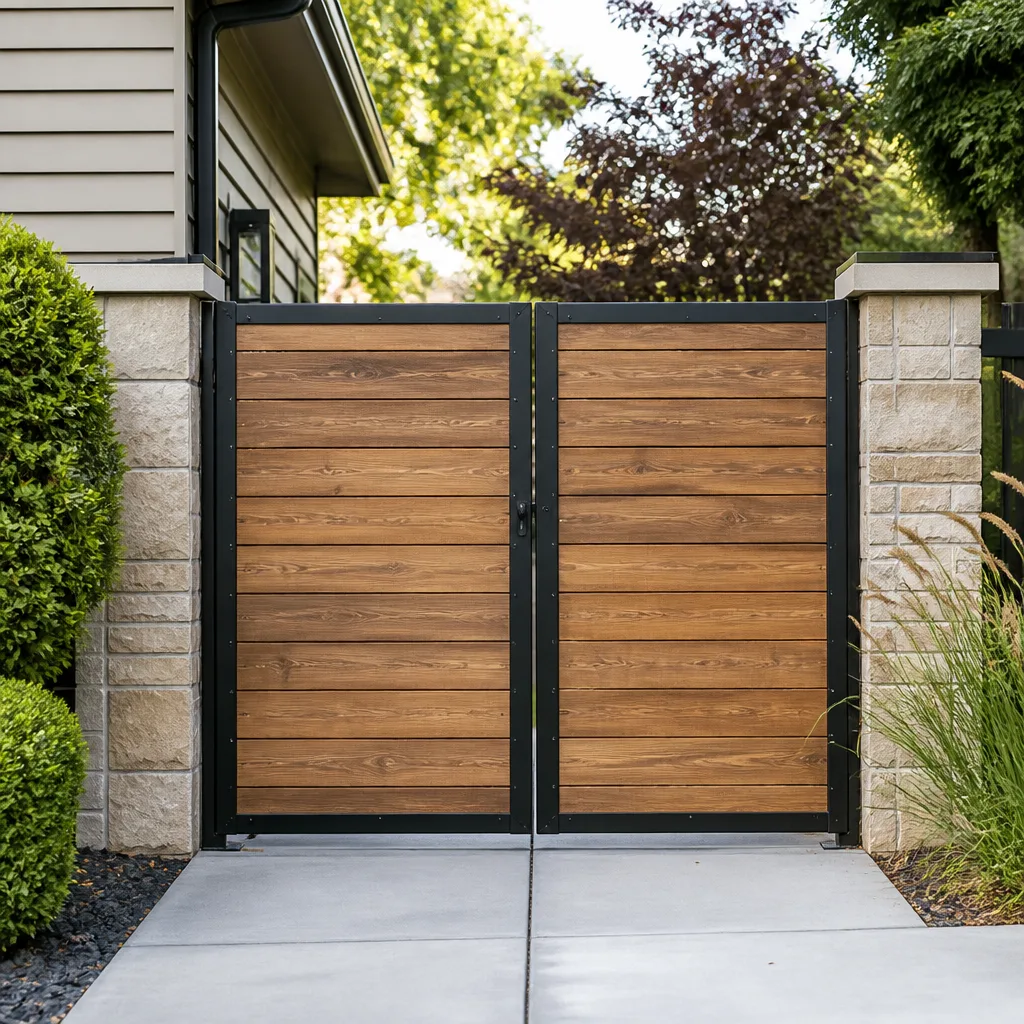 Wood & steel frame
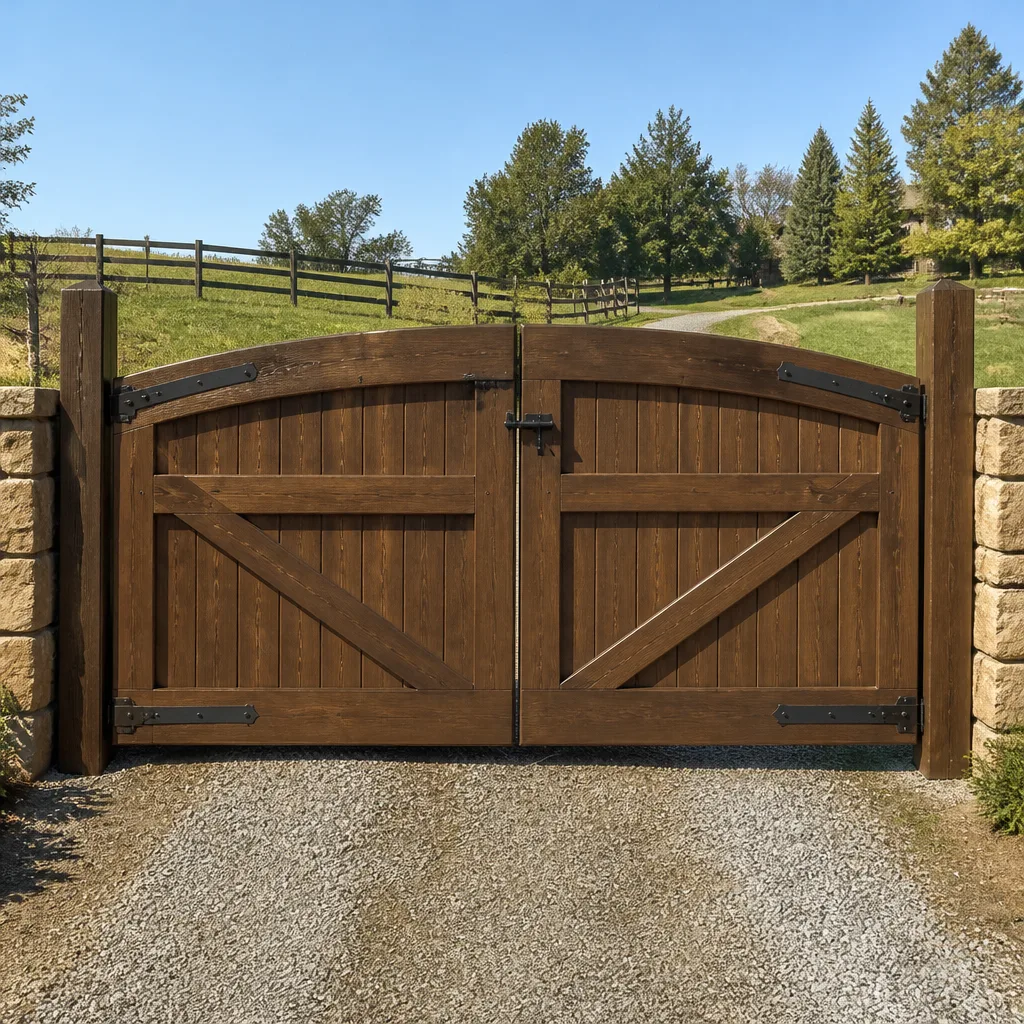 Farm & ranch
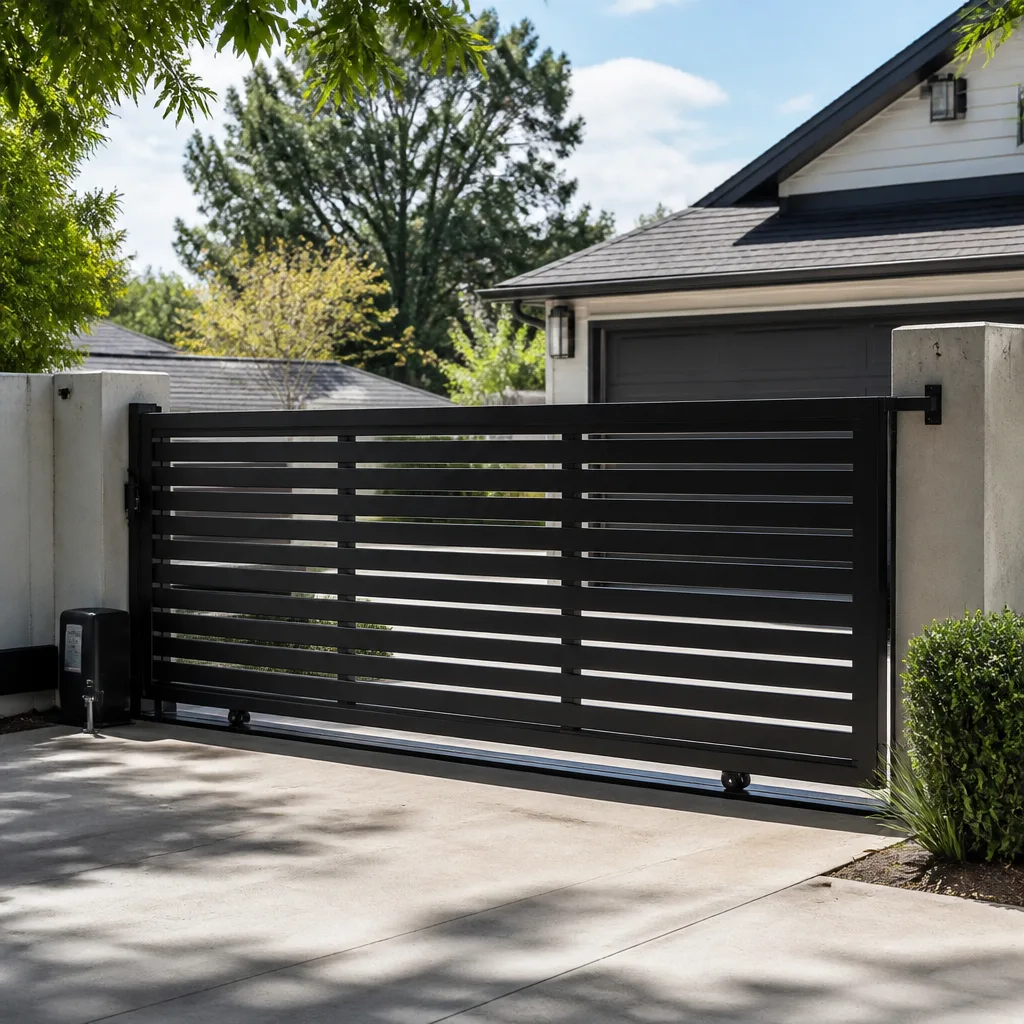 Sliding driveway gates
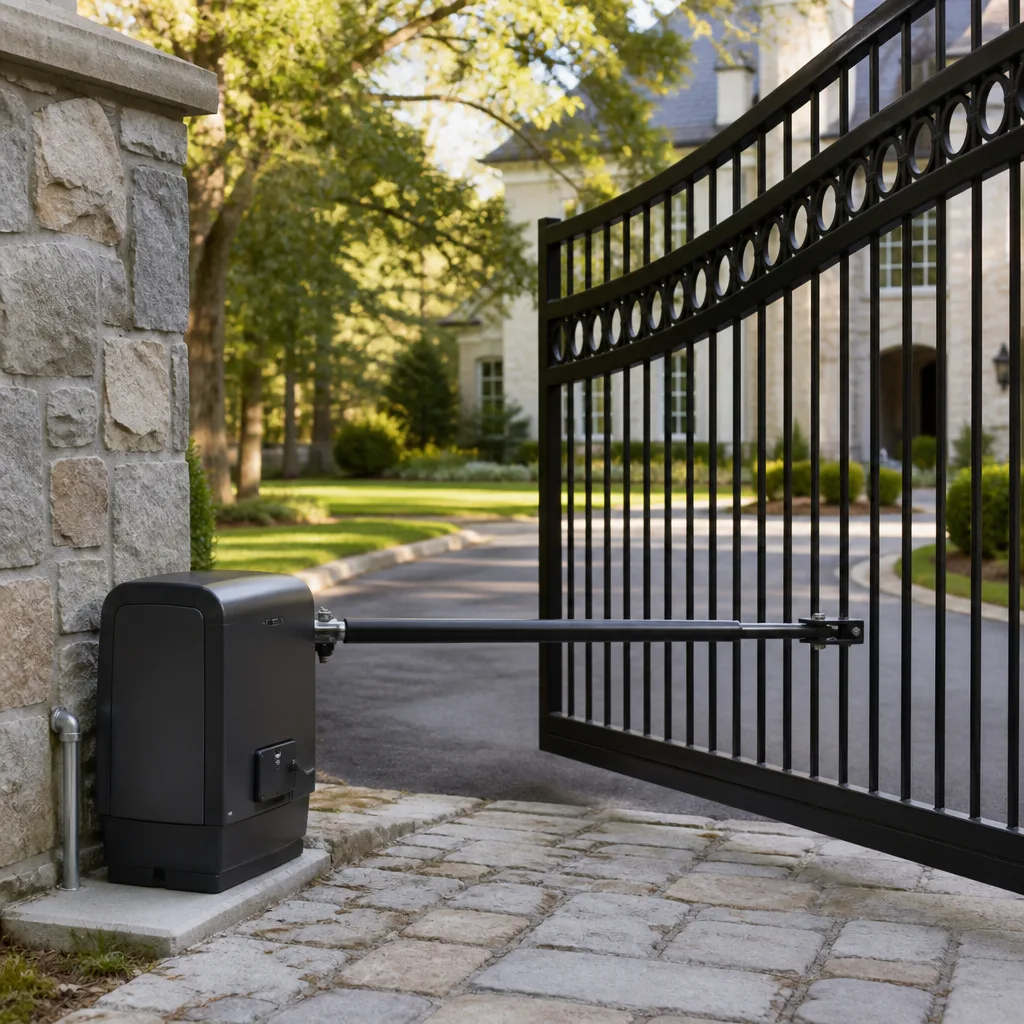 LiftMaster operators
Free on-site gate assessment - hinges, posts, and your LiftMaster or Nice gate operator checked before anything is quoted
The assessment is free and the quote is the invoice.
Get your free estimateGate Repair Emergency Preparedness Guide for Livermore Homes
Every automated gate has a manual release, but roughly 40% of homeowners with automatic gates either don’t know where it is or have never tested it. The first time you need it is not the time to find out the release cable has seized from disuse. This guide walks through exactly what to do when your gate fails at the worst possible moment, whether it’s stuck open, stuck closed, or making sounds that suggest the operator is about to give up. It’s written from the perspective of technicians who respond to these calls in Livermore year-round, where summer heat and winter rain each create their own failure patterns.
Styles & brands we work with
- Wrought iron
- Wood & steel frame
- Farm & ranch
- Sliding driveway gates
- LiftMaster operators
Quick Answer
Your first move in any gate emergency is to determine whether the gate is stuck open or stuck closed, because the security risk and the response are completely different. A gate stuck open is a security problem you can temporarily solve with a chain and lock, while a gate stuck closed is a convenience and safety problem that often requires disengaging the manual release. Before calling for gate repair in Livermore, know your operator brand, whether you have power to the unit, and what the gate was doing right before it stopped, because those three details tell a technician more than a 10-minute verbal description of the symptom.
Table of Contents
- How to Find and Use Your Manual Release: Five Common Livermore Operators
- Securing a Gate Stuck in the Open Position
- What to Do When Your Gate Is Stuck Closed
- Which Failures Are True Emergencies and Which Can Wait
- What Information to Have Ready Before Calling a Technician
- How Livermore’s Climate Affects Gate Failures
- Temporary Security Measures for an Open Gate Overnight
- Common Mistakes to Avoid
- When to Call a Professional
- Frequently Asked Questions
- The Bottom Line
How to Find and Use Your Manual Release: Five Common Livermore Operators
Most gate emergencies in Livermore involve one of a handful of operator brands, and each has a slightly different manual release mechanism. The manual release disconnects the gate from the operator’s motor, letting you swing or slide the gate by hand. On most residential swing-gate operators, including Mighty Mule and Ghost Controls units installed throughout Livermore neighborhoods, the release is a small lever or pull-pin located on the operator arm where it connects to the gate. On linear-arm operators like FAAC and BFT, the release is typically a keyed cylinder on the operator housing itself. Viking and DoorKing slide-gate operators usually put the release behind a small access door on the side of the unit.
Here’s the step-by-step for each common configuration. You’ll need to know which one you have before the gate fails. For more guides & resources, explore our blog.
- Mighty Mule swing operators: Locate the operator arm attached to the gate. There’s a small L-shaped pin or cotter pin where the arm meets the gate bracket. Pull that pin straight out. The gate now moves freely by hand. To re-engage, line the arm back up and push the pin through the hole.
- Ghost Controls swing operators: Find the release handle on the operator’s main housing, near where the arm extends. Pull the handle outward until it clicks into the disengaged position. The gate will swing manually. To re-engage, push the handle back to its original position and operate the remote once so the arm re-seats.
- LiftMaster swing operators: These have a manual release lever on the operator arm itself, near the gate bracket. Pull the lever toward you. You’ll feel the arm go slack. To re-engage, push the lever back and cycle the operator.
- FAAC and BFT linear-arm operators: Look for a keyed release cylinder on the top or side of the operator housing. Insert the key, turn it a quarter turn counterclockwise, and the piston will release. The gate moves manually. Turn the key back and run the operator through one full cycle to re-lock it.
- Viking and DoorKing slide-gate operators: Open the small metal access door on the front of the unit. Inside, you’ll see a release handle or a chain-driven mechanism with a pull lever. Pull the lever to disengage the chain from the motor sprocket. The gate slides manually along its track.
In our experience, the most common emergency call we get in Livermore is from someone whose gate went dead and who never tested the manual release. A release cable that hasn’t been pulled in five years can seize, and the last place you want to discover that is in your driveway at 11pm. Test your manual release twice a year, including once before the rainy season starts, because moisture accelerates corrosion on exposed release mechanisms.
Securing a Gate Stuck in the Open Position
A gate stuck open is a security problem. Anyone can walk or drive onto your property, and in Livermore, where many homes back up to open space and rural unincorporated areas, that’s a real concern. The good news is that a gate stuck open can almost always be secured temporarily without doing any damage to the operator, as long as you follow a few rules.
First, never force the gate closed against a jammed operator. The operator’s gear train and limit switches are designed to handle the gate’s weight within a narrow range of force. Forcing the gate manually when the operator is still engaged can shear gears, bend the arm, or strip the travel limit and turn a $150 repair into a $900 day. Always disengage the manual release first, using the steps above for your brand.
Once the gate is released and moving by hand, close it and secure it. Here’s the sequence we recommend for Livermore homeowners:
- Disengage the manual release so the gate moves freely.
- Swing or slide the gate fully closed, checking that it meets the closed stop or latch cleanly.
- Run a chain through the gate frame and around the nearest fixed post. Use a chain rated for outdoor use, and a padlock with a rubber or plastic cover to keep rain out of the keyway.
- If your gate has a separate pedestrian gate, lock that too, since it’s now the only easy entry point.
- If you have a security camera covering the driveway, angle it to capture the gate area and lock the footage.
- Leave the operator disengaged and the breaker off, so a power surge or false signal doesn’t try to run the operator against the chain.
Do not use bungee cords, rope, or zip ties. They’re temporary in a way that fails exactly when you need them to hold, and a gate swinging free in a Livermore windstorm can damage the operator, the fence line, or a parked car. A proper chain and lock cost less than $25 and give you real overnight security.
What to Do When Your Gate Is Stuck Closed
A gate stuck in the closed position at 11pm is not the same emergency as one stuck open, but it can feel that way if you’re trapped in or locked out. The first thing to do is check whether the gate responds at all to the remote, the keypad, and the intercom. If it responds to one input but not another, you have a control problem, not an operator problem, and that changes the diagnostic path substantially. If it responds to nothing, check the breaker before you do anything else.
In Livermore homes, the gate breaker is often in a subpanel in the garage or on a dedicated exterior box near the operator. A tripped GFCI, especially after rain, is one of the most common “dead gate” calls we get. Reset the breaker, wait 30 seconds, and try the remote again. If the gate hums but doesn’t move, the capacitor may have failed. If it clicks but the gate doesn’t move, that’s often a limit switch or control board issue. None of these are things you should try to fix yourself.
If the gate is truly dead and you need to get a vehicle out, the manual release is your path. The steps are the same as above: release, push or pull the gate open by hand, and then decide whether to leave it open or close and secure it with a chain. If you need to leave for work and can’t secure the gate behind you, consider parking a vehicle across the opening as a temporary block, and call a repair service from the road. For guidance on permits and legal requirements, see our article on Gate Repair Permits, Codes & Inspections in CA: What You Need to Know.
It’s worth saying clearly: if your gate is stuck closed and you force it open against a powered operator, you can do serious damage. The gears inside a FAAC or BFT 24-volt operator are precisely machined and not designed to be back-driven. If the gate won’t move by hand after release, stop and call for help. That resistance is telling you something, and the something is usually mechanical, not electrical.
Which Failures Are True Emergencies and Which Can Wait
Not every gate failure needs an immediate dispatch. In fact, most don’t. Livermore’s distance from 24-hour gate specialists means response times vary widely, and if the job can safely wait until morning, it usually should. The key is knowing which category your problem falls into.
True emergencies, call right away:
- Gate stuck open and the property can’t be secured: If you can’t chain the gate closed and the opening exposes your home, vehicles, or business to an unsecured street or trail access point, this is a legitimate emergency.
- Gate stuck closed with a vehicle trapped inside and no alternate exit: Some Livermore properties, especially on the south side near the vineyards and in the hills, have a single driveway access. If your gate is the only way out and you have a medical appointment in the morning or need to get to work, that’s an emergency.
- Gate that has become dislodged or fallen off its track: A slide gate off its rail is a hazard. If left overnight, it can fall further, damage the fence, or injure someone. This needs to be dealt with now, not tomorrow.
- Operator making a continuous grinding or sparking sound: Kill the breaker immediately and call. A motor running against a mechanical bind is a fire risk, and the longer it runs, the more expensive the repair.
Can wait until next-day service:
- Gate moves but stops partway: This is usually a limit switch or obstruction sensor issue. Unless the gate is stopping in a position that leaves a security gap, this can wait.
- Remote works but keypad doesn’t: Annoying, not dangerous. You can use the remote until a technician arrives.
- Gate squeaks or groans but operates: That’s a lubrication or hinge bearing issue. It won’t fail catastrophically tonight.
- Gate operates slowly: This can indicate a weakening capacitor or a low battery on a solar unit. It’s worth investigating, but it’s not an emergency unless the gate fails completely.
- Opening is jerky or uneven: Usually a chain tension issue on slide gates or a hinge alignment problem on swing gates. Make a note and schedule service.
The rule of thumb: if the gate is closed and secured, or if it’s open and you can secure it, you can wait. If the opening is uncontrolled and can’t be secured, or if there’s any sign of electrical fault, call now. A gate that’s humming, clicking, or grinding while doing nothing at all is a gate that’s actively damaging itself.
What Information to Have Ready Before Calling a Technician
When you call an emergency gate service in the middle of the night, the dispatcher wants three things, and they want them fast. Every minute you spend describing the problem without these details is a minute the technician spends guessing. Here’s what to have ready before you pick up the phone, even before you have a gate problem.
- Operator brand and model: The model number is printed on a sticker on the side or inside of the operator. Brands like Linear, Viking, and BFT all have diagnostic procedures that differ in meaningful ways. If you can’t find the model, the brand alone is a strong start.
- Power status: Is there power to the unit? Is the breaker on? Is there a GFCI that has tripped? Have you tested the outlet or verified that other things on the same circuit are working? A technician who knows the gate is dead, versus one who knows the gate has power but the control board is unresponsive, arrives with a completely different set of diagnostic expectations.
- What the gate was doing right before it stopped: Was it mid-cycle? Had it just opened or closed? Did it stutter, slow down, or make any new noises in the days before the failure? Gate failures rarely happen all at once. They telegraph their arrival for weeks, and the homeowner’s memory of those warning signs is often the fastest diagnostic tool a technician has.
- How long the gate has been in service and the last time it was serviced: A well-maintained operator that’s 5 years old failing suddenly is a different problem than an 18-year-old operator that has never been serviced. These are different conversations about repair versus replace.
- Whether anything changed recently: Landscaping work near the gate, a new irrigation line, a power outage, a storm, a car bumping the gate. In our experience in Livermore, where many homes sit on larger lots with mature trees, root growth shifting the gate posts is a surprisingly common cause of sudden alignment failures.
Write this information down and tape it inside the operator access door or keep it in a notes app on your phone. When the gate fails, especially if it fails late at night, you’ll be tired, stressed, and possibly standing in the rain. That is not the moment to start looking for model numbers.
How Livermore’s Climate Affects Gate Failures
Livermore’s climate is hard on outdoor equipment, and gates are no exception. The summer heat is more intense than most people realize. Surface temperatures on a south-facing operator housing in July and August can exceed 140 degrees, and heat is one of the most common killers of capacitors and control boards. A capacitor that’s been in service for five or six years in Livermore, where daytime highs regularly reach the 90s, is living on borrowed time. When it fails, the gate hums but doesn’t move, and that failure often happens on the hottest afternoon of the year, because that’s when the component is under the most thermal stress.
Winter brings a completely different set of problems. Livermore gets moderate rain, but the city’s hills, especially on the north side and up toward the Altamont, see enough wind and moisture to accelerate rust on exposed metal parts. Hinges, chain drives, release cables, and limit-switch housings are all vulnerable. A release cable that hasn’t been moved in six months and gets rained on is far more likely to seize than one in a drier climate. This is why we tell every Livermore customer with a gate to test the manual release before the first big storm of the season.
Wind is another factor that homeowners underestimate. Livermore sits in a corridor that funnels wind through the valley, especially in the afternoon. A swing gate that’s not properly adjusted, with worn hinge bearings or a weak close stop, can be pushed around by a 25-mile-per-hour gust. That repeated battering loosens the operator mount, wears out the gear teeth, and eventually causes a misalignment that shows up as a gate that closes and then bounces back, or one that opens fine but won’t close without help.
The takeaway is not that Livermore is uniquely harsh, but that the failure modes here are predictable. Heat kills electronics. Rain and wind kill mechanical parts. Testing your manual release, lubricating hinges and chains, and listening for new sounds in July and in December covers most of what goes wrong.
Temporary Security Measures for an Open Gate Overnight
If your gate fails in the open position and you can’t close it, even manually, you need a plan for overnight security. The simplest and most effective option is a chain and padlock, but only if the gate can be pulled closed and secured to a post. If the gate is jammed mid-track or the operator arm has failed in a way that physically prevents the gate from moving to the closed position, you’re dealing with a different problem: an opening that can’t be closed at all.
In that case, here’s what you can do short of calling for immediate dispatch.
- Block the opening with a vehicle: Park a car, truck, or SUV across the driveway opening, as close to the gate line as possible. This doesn’t stop someone on foot, but it stops a vehicle from driving onto the property, and it sends a clear signal that the property is still occupied and watched.
- Light the area: Motion-activated floodlights are the single most effective deterrent for residential property crime. If you have them, verify they’re working. If you don’t, even a work light run from an extension cord is better than darkness.
- Bring valuables inside: Bicycles, tools, barbecue equipment, anything visible from the street. An open gate is an invitation, and the fastest way to invite a property crime is to leave something worth taking in plain view.
- Notify your neighbors: In Livermore, where many homes sit on quiet courts and cul-de-sacs, a quick text to a few neighbors is meaningful. They’ll keep an eye on the property during the early morning hours, when a suspicious person is most likely to take advantage of the open access.
- Turn off the operator breaker: If the gate is stuck open and the operator still has power, it may try to cycle at its programmed time or in response to a stray signal. A gate that unexpectedly closes on a car or a person in the middle of the night is a serious injury risk. Kill the breaker.
If you have a security system, arm it. If you have cameras, make sure they’re recording. None of this replaces a properly functioning gate, but it gives you a reasonable overnight stopgap while you wait for the next available service window. When you call electric gate repair in Livermore the next morning, mention the security measures you’ve taken, because the technician should know the gate is chained, blocked, or braced before they arrive.
Common Mistakes to Avoid
- Forcing the gate against a powered operator: This is the most expensive mistake we see. If the gate is engaged with the operator and you push or pull it hard enough, you can shear gears, bend the arm, or snap the chain tensioner. Always disengage the manual release before moving the gate by hand.
- Assuming every gate uses the same release procedure: A Viking slide-gate operator and a Mighty Mule swing-gate operator have nothing in common in terms of release mechanism. Livermore homes run the full range of these brands, and guessing wrong wastes time and often makes things worse.
- Calling a general contractor or fence company for an electrical fault: Gate operators are electromechanical systems. A fence company that builds fences is not equipped to diagnose a control board failure on a BFT or a Linear operator. We regularly repair gates in Livermore where a generalist made the problem worse by treating the symptom instead of the cause.
- Ignoring warning signs for weeks: A gate that has been opening slower, groaning, or stopping short for two weeks doesn’t fix itself. It fails completely, usually at the worst moment. Early service is always cheaper than emergency service.
- Using the gate while it’s mid-failure: If the gate is opening partway and reversing, or making new mechanical noise, stop cycling it. Every additional cycle adds damage. Kill the breaker and call a technician.
- Leaving a chained gate connected to a live operator: If you chain the gate closed for the night but leave the operator powered on, the operator may still try to open on a timer or remote signal. It will strain against the chain, overheat the motor, and possibly strip the gear train. Turn the breaker off.
- Not testing the manual release until you need it: A release cable that has corroded into place is a completely avoidable emergency. Test it twice a year, and if it’s stiff, spray it with a penetrating lubricant and work it free before it becomes your 2am problem.
When to Call a Professional
Some gate failures are simple enough to diagnose yourself, but none are simple enough to fix safely without training and the right parts. When your gate has stopped working and you’ve tried the manual release and the breaker reset, the next call should be to a specialist. Specifically, you need a professional when the operator has power but the gate doesn’t move, when the control board shows error codes or no lights, when the gate has come off its track, when the arm or hinge has bent, or when you see or smell anything that suggests an electrical fault. These are not problems that resolve with lubrication or adjustment. For professional Gate Repair services in Livermore, call Gate Repair Livermore at (877) 752-3814 for a free estimate. We work on the brand you already have.
Frequently Asked Questions
Call a gate specialist, not a general contractor. For a gate repair in Livermore, you want a technician who works on your specific operator brand, whether that’s a residential Mighty Mule or a commercial-grade Linear, because the diagnostic path is different for each system. Gate Repair Livermore works on nine distinct brands and offers free estimates at (877) 752-3814.
Yes, every automated gate has a manual release that disconnects the motor so the gate moves by hand. The release mechanism varies by brand, so check the steps above for your operator type. Test the release twice a year so you know it works before you actually need it.
That depends on your property and what’s exposed. If you can close the gate manually and chain it to a post, it’s safe. If the gate can’t be closed at all, block the driveway with a vehicle, secure valuables, and alert your neighbors. A gate stuck open is a security problem that deserves same-day or next-morning service, not a week of waiting.
Emergency gate repair pricing depends on the brand, the nature of the failure, and whether parts are needed. Common repairs like capacitor replacement, limit switch adjustment, or release cable servicing fall in one range, while control board replacement or gear train overhauls fall in a higher one. Any reputable service will quote a price and get your agreement before any work begins, Gate Repair Livermore is no exception. Call (877) 752-3814 for a specific quote on your symptom.
Yes. Our team works on LiftMaster, FAAC, BFT, Linear, Viking, Ghost Controls, DoorKing, Elite, and Mighty Mule. That covers most of what’s installed in Livermore, including gates that were originally DIY projects and systems that have been in the ground for 20 years. If we can’t get parts for a discontinued model, we’ll say so plainly and recommend options rather than forcing a workaround.
When a gate is too far gone to repair, gate installation in Livermore is a service you should get from the same specialist who diagnosed the failure, because they already know your site, your posts, your power supply, and what went wrong. That continuity saves you money and prevents repeating the same failure on a new system. Gate Repair Livermore handles installation as well as repair, so you don’t need a second vendor.
The Bottom Line
A gate emergency is manageable if you know your manual release location, your operator brand, and your power status, and if you have a plan for securing the opening. The gate itself almost never fails without warning, even in Livermore’s heat and wind, so pay attention to new noises, slower operation, and partial cycles. When you do have a failure, don’t force anything, don’t run a damaged operator, and don’t call a generalist for an electromechanical problem. Gate repair in Livermore is a specialty trade, and the difference between a technician who works on every gate brand and one who guesses is the difference between a one-visit fix and a recurring problem. Prepare now, because the gate will fail eventually, and the version of you standing in the driveway at 11pm will be glad you did. For Gate Repair Maintenance Checklist for Livermore Homeowners and other preparation tips, see our resources.
Written by the team at Gate Repair Livermore.
See the difference
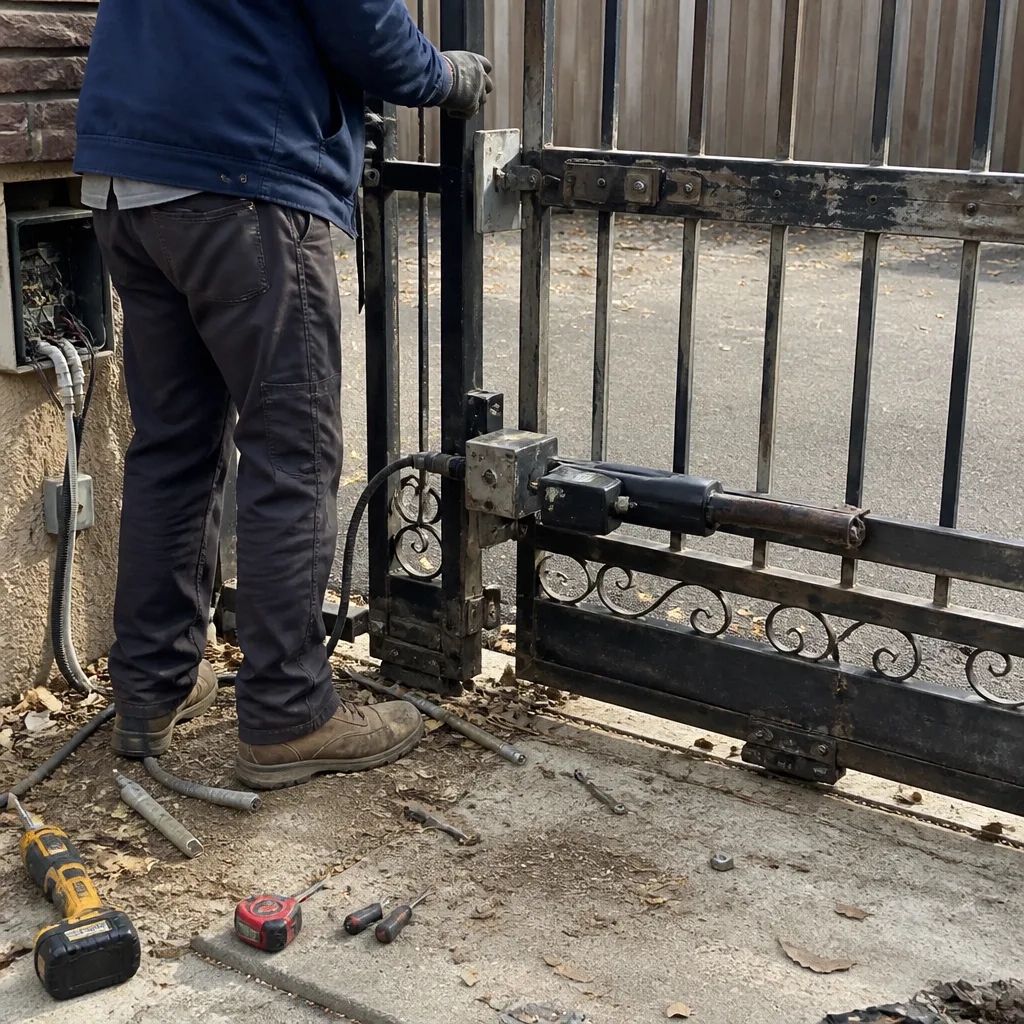
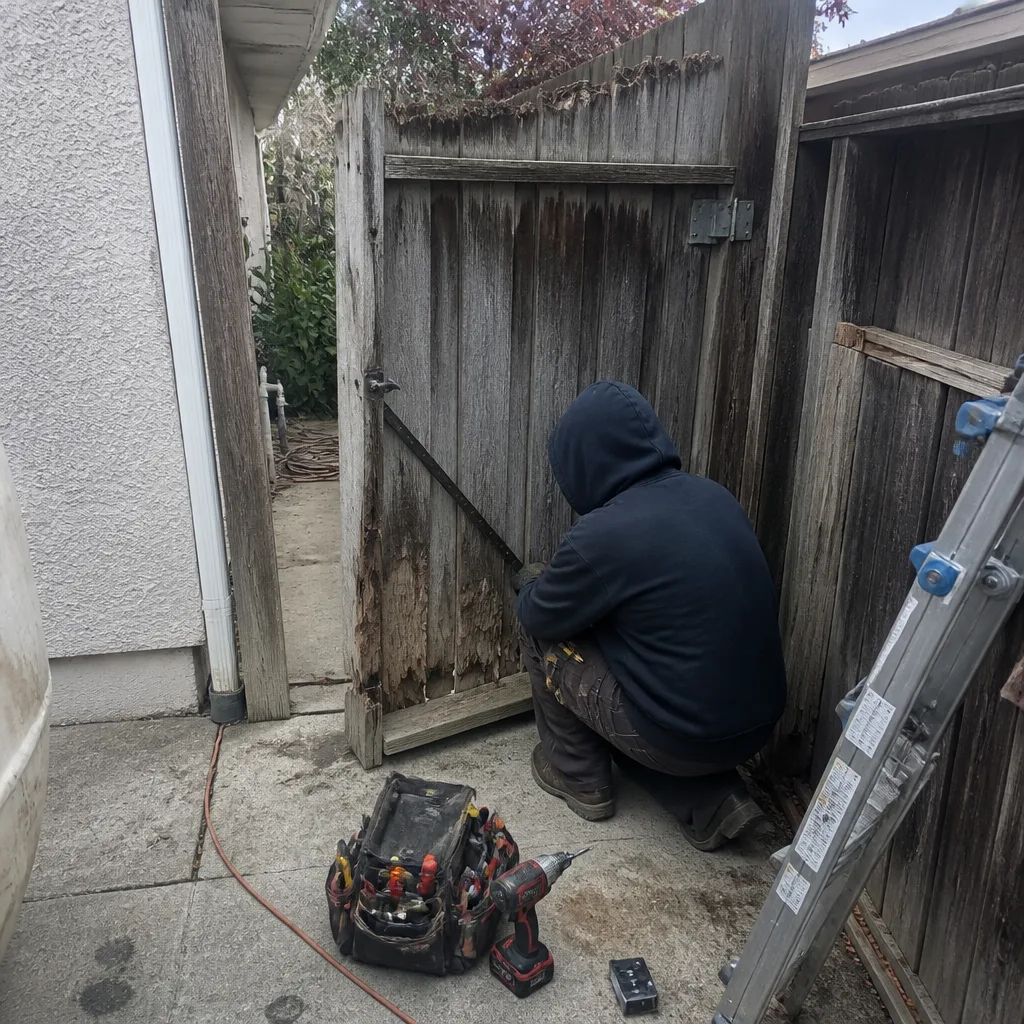 Before
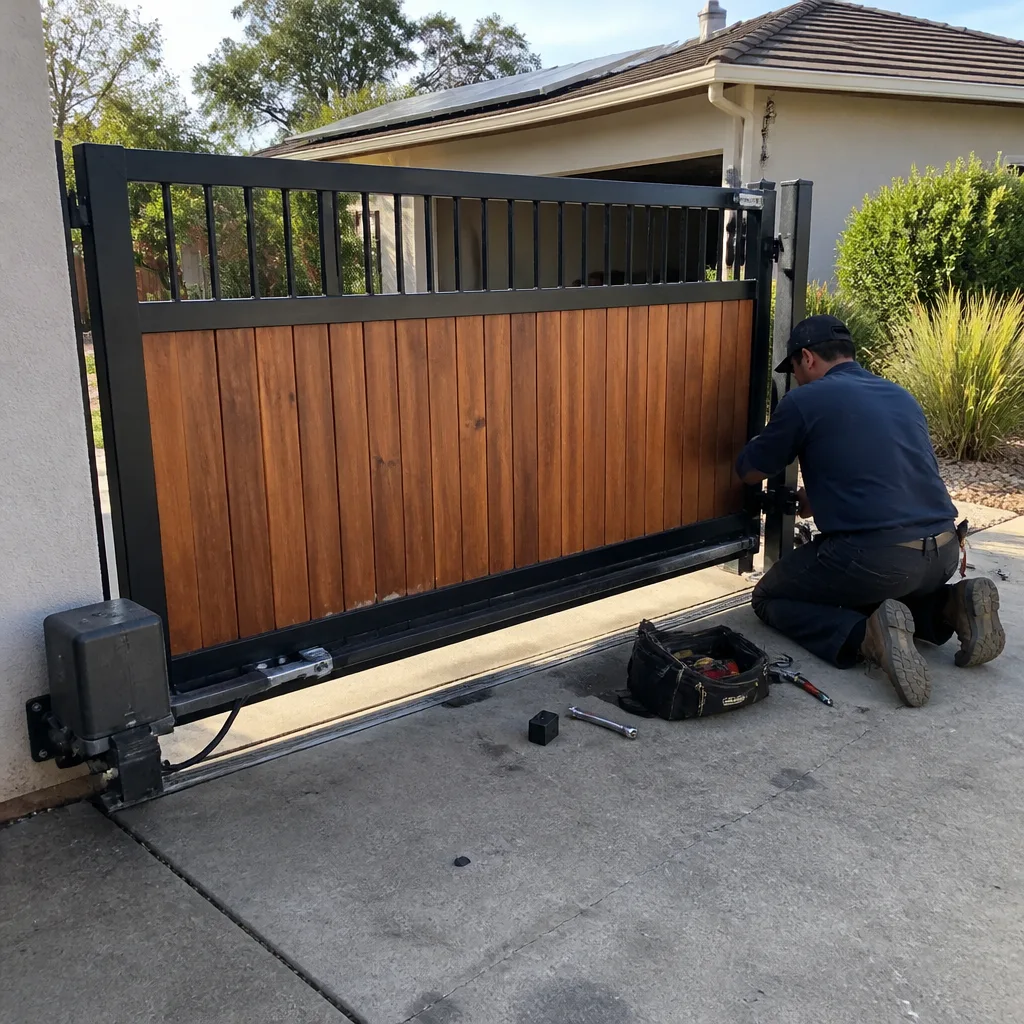
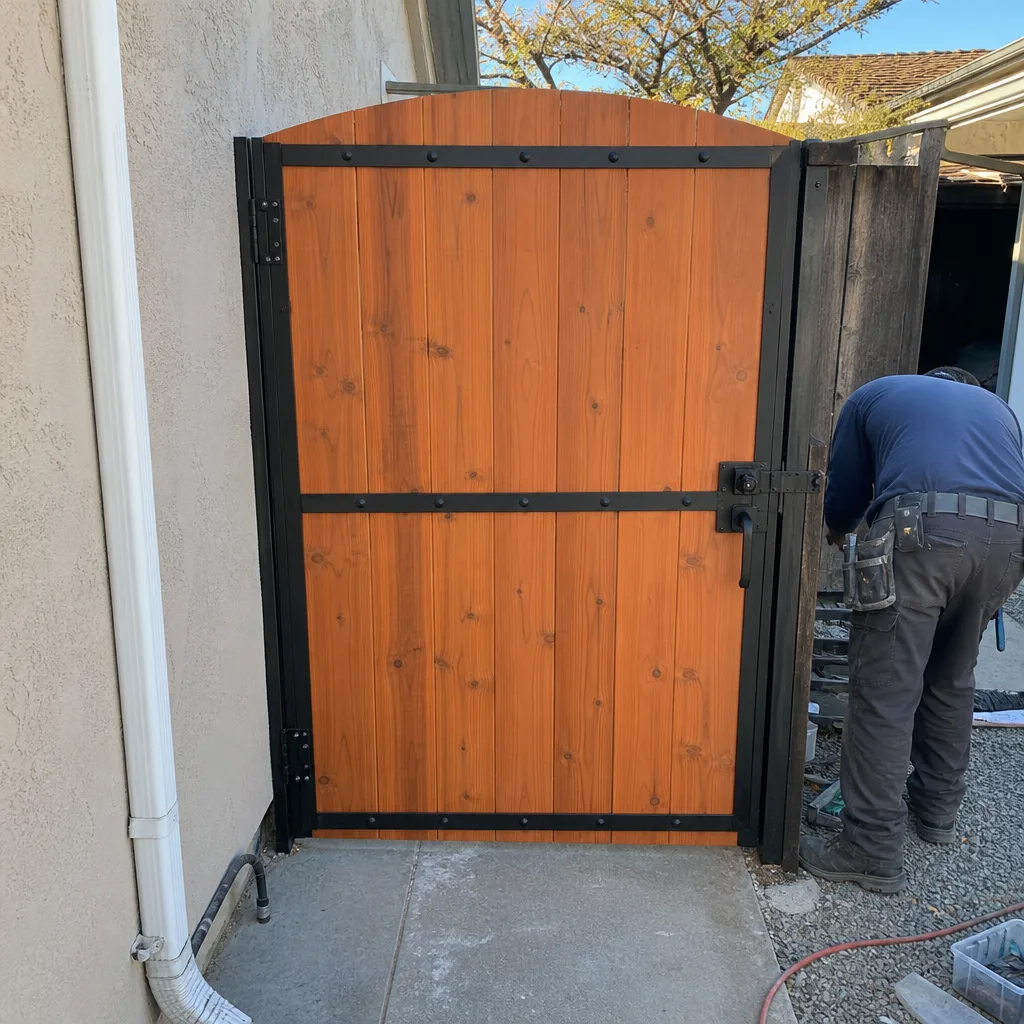 After
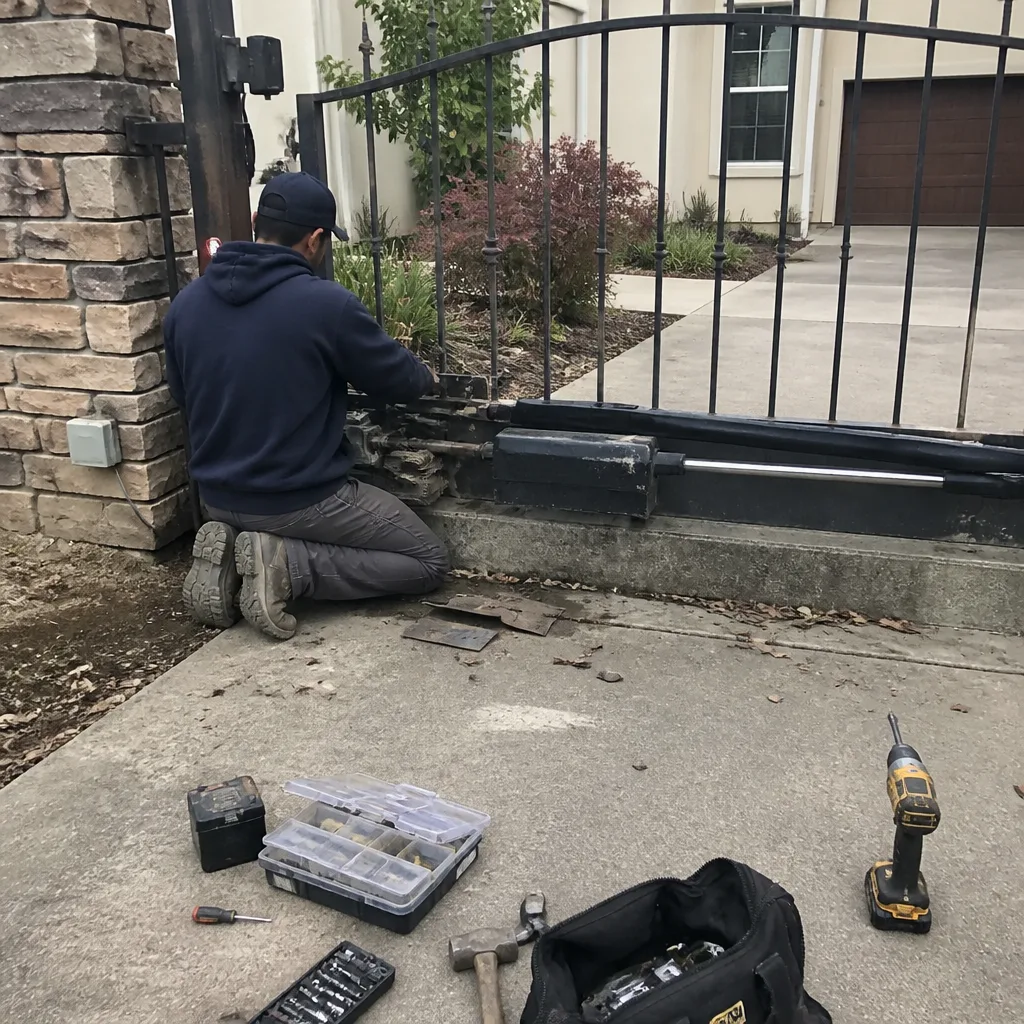 Before
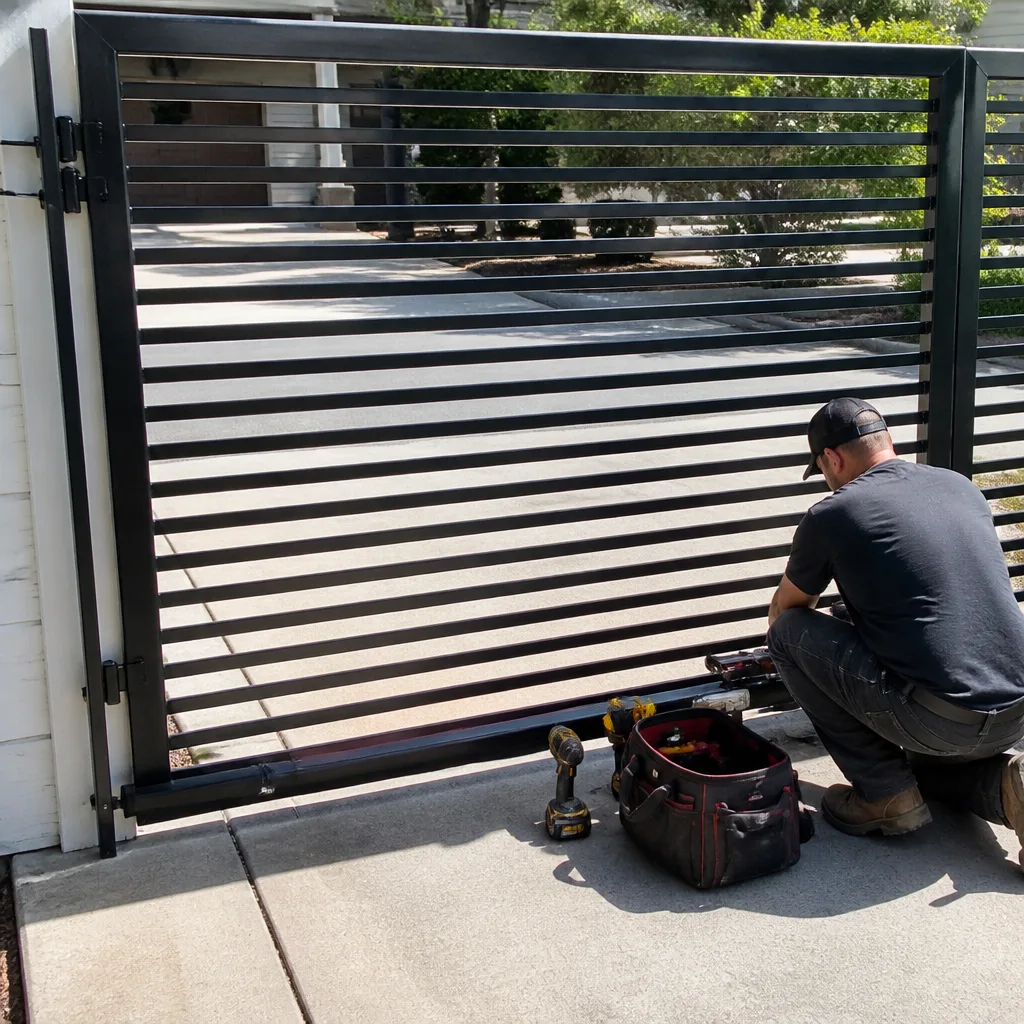 After
 Before
 After