Last updated November 2, 2026
 Wrought iron
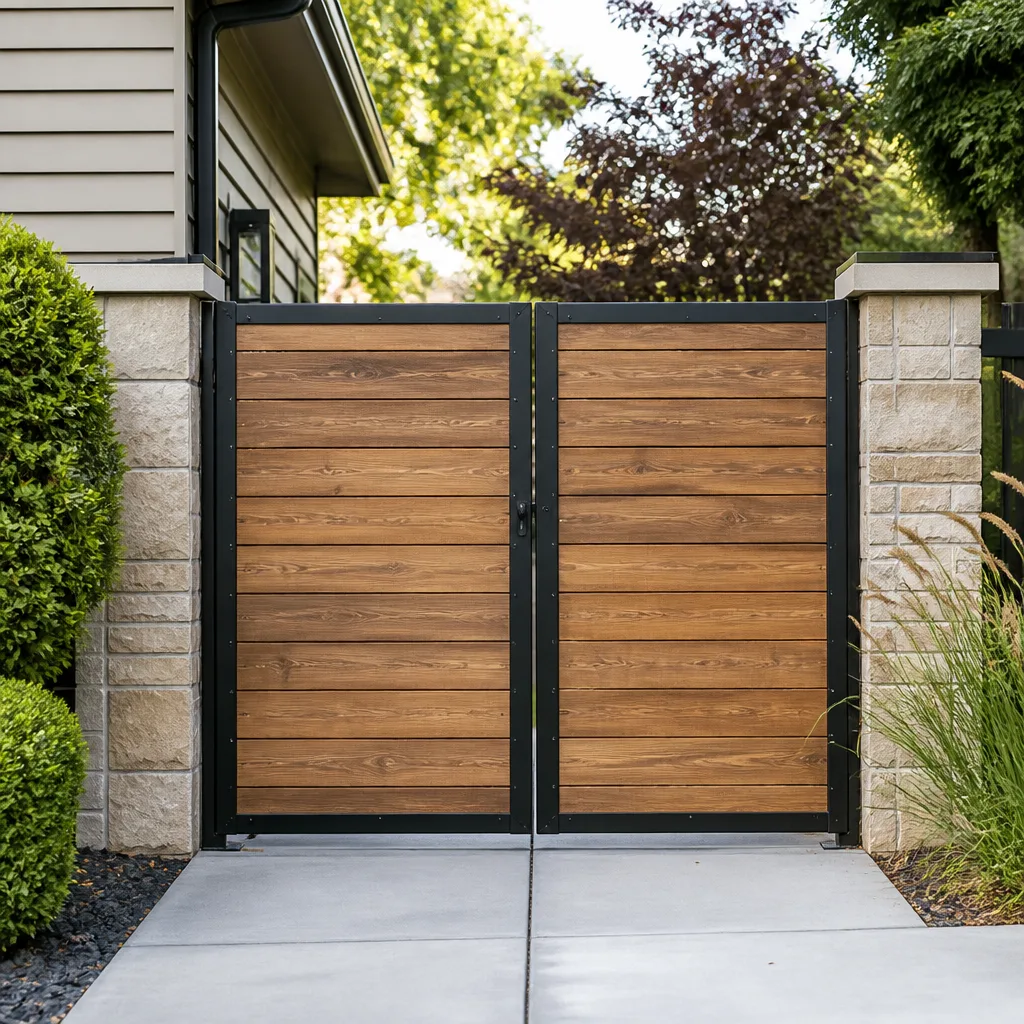 Wood & steel frame
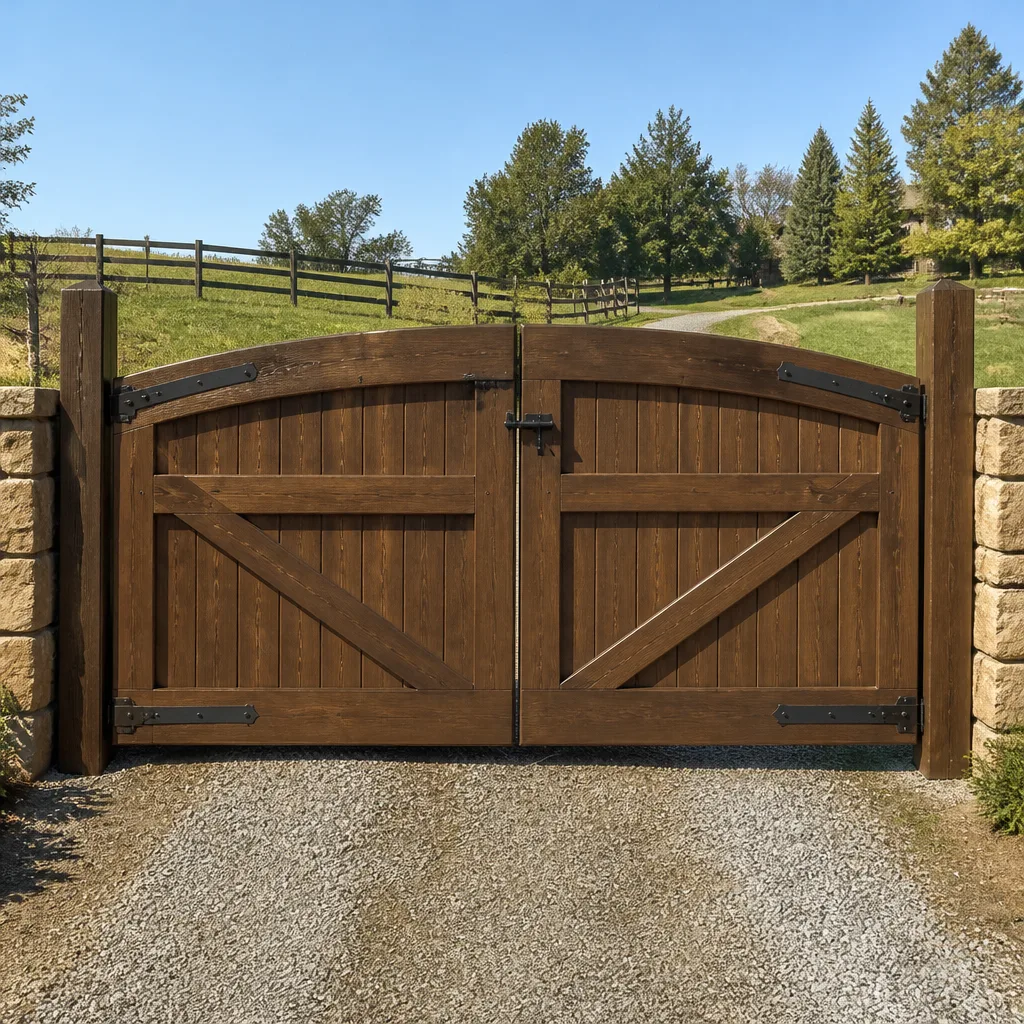 Farm & ranch
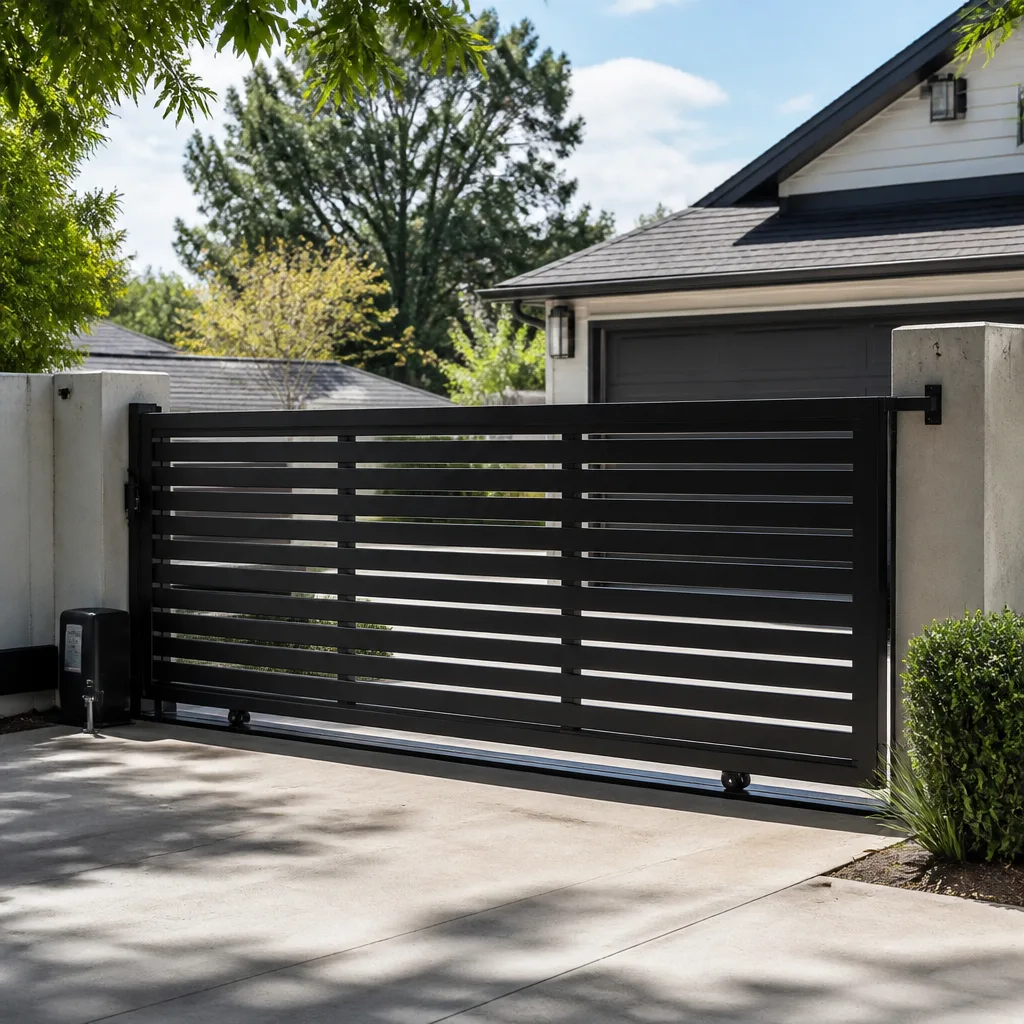 Sliding driveway gates
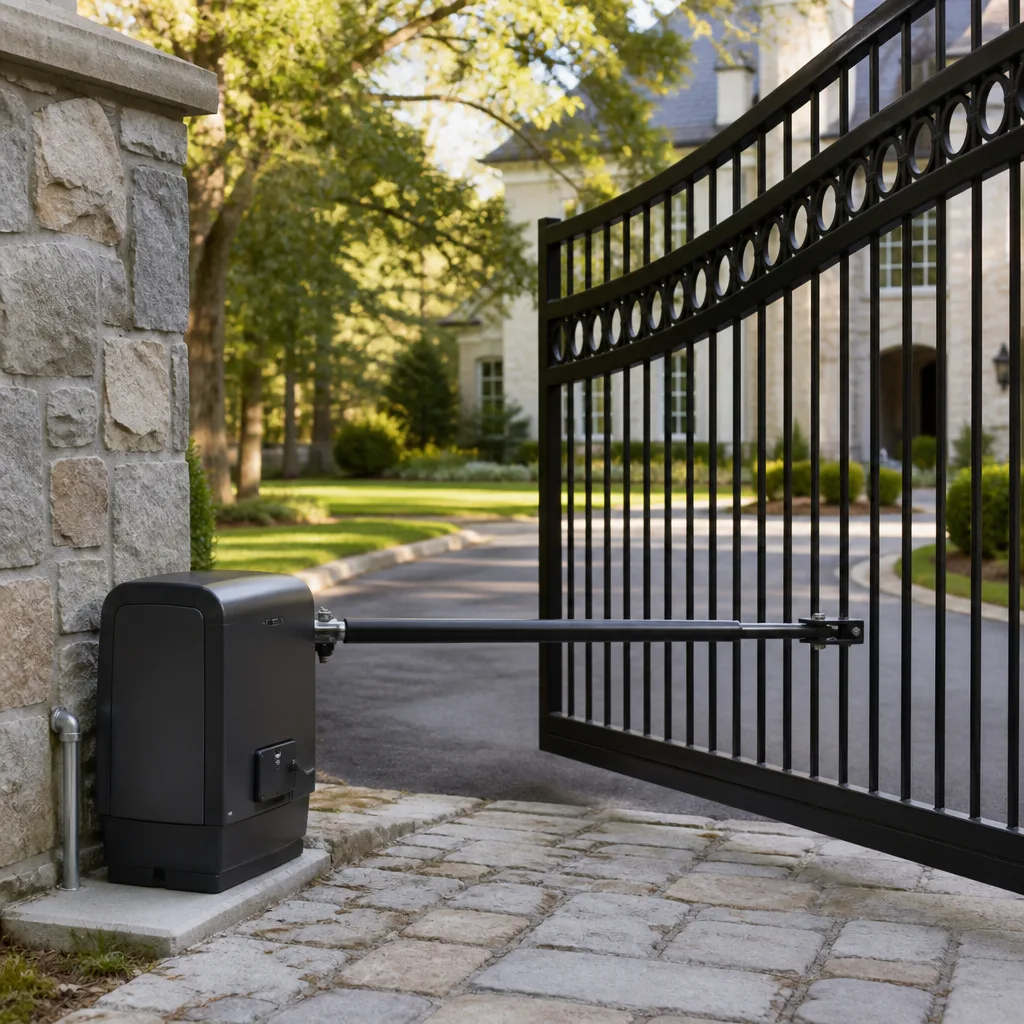 LiftMaster operators
Free on-site gate assessment - hinges, posts, and your LiftMaster or Nice gate operator checked before anything is quoted
The assessment is free and the quote is the invoice.
Get your free estimateGate Repair Permits, Codes & Inspections in CA: What You Need to Know
Here’s the counterintuitive truth about gate repair in California: replacing your broken gate operator with a different model isn’t a repair in the eyes of the building code. It’s a new installation. That one distinction trips up more Livermore homeowners than any other single issue, and most people don’t discover it until their home sale inspection flags the unpermitted work. Replacing a like-for-like part on your existing swing gate usually requires nothing. But swap that Mighty Mule for a LiftMaster, add a safety loop to your driveway, or bolt a new slide gate onto a different track, and you’ve crossed into modification territory. This guide explains exactly where that line sits, what UL 325 compliance demands, how Livermore’s permit office handles gate applications, and what a failed inspection actually costs you.
Quick Answer
Gate repair in California does not require a permit when you’re replacing components on an existing gate without changing its operational characteristics. Gate replacement, operator swaps with a different model, new automated gate installations, and structural modifications all require permits and must meet UL 325 entrapment protection standards. In Livermore, the city enforces these requirements through its building division, with additional HOA overlays common in communities like Sunset East and Del Prado.
Styles & brands we work with
- Wrought iron
- Wood & steel frame
- Farm & ranch
- Sliding driveway gates
- LiftMaster operators
Table of Contents
- Repair vs. Modification: Where the Permit Line Actually Sits
- UL 325 Compliance: What It Demands and Why It Exists
- How Livermore’s Permit Office Handles Gate Applications
- HOA Overlays in Livermore: When the City Says Yes and the HOA Says No
- Failed Home Sale Inspections: The Expensive Discovery
- What Gate Permits Cost and How Long They Take
- Electric Gate Inspections: What Inspectors Actually Check
- Common Mistakes to Avoid
Repair vs. Modification: Where the Permit Line Actually Sits
California Building Code defines repair as restoring something to its original condition. Modification means changing how it operates, where it sits, or what it does. The distinction sounds academic until you’re standing in front of an inspector who’s asking why your BFT operator isn’t on the permit record for your property.
A repair, in practical terms, means swapping a failed component for an equivalent one. Your Gate opener’s control board dies and you replace it with the same board. A hinge wears out and you install a matching hinge. A wheel on your slide gate grinds to a stop and you replace the wheel. None of these change the gate’s operational profile, so none require a permit.
A modification triggers the permitting process. Here’s where most homeowners get caught:
- Operator model changes: Replacing a Viking operator with a different Viking model, or switching from a Ghost Controls opener to a LiftMaster, is classified as a new installation. The code treats it as if the gate never had automation before.
- Gate replacement: A new gate structure, even if it mounts to existing posts, is a modification. The gate’s weight, wind load, and swing arc change, which affects safety calculations.
- Adding or removing entrapment devices: Installing photo eyes where none existed, adding a reversing edge, or changing the gate’s travel direction all fall under modification.
- Structural changes: Widening the driveway opening, moving posts, or converting a swing gate to a slide gate are all substantial modifications.
In Livermore specifically, the city follows the 2022 California Building Code with local amendments. The building division publishes a gate permit application that covers both pedestrian and vehicular gates, and their inspectors focus heavily on the UL 325 compliance component. If you’re uncertain whether your project is a repair or a modification, calling the city before you start costs nothing and saves you the headache of an after-the-fact permit.
For work that stays firmly on the repair side, our team at Gate Repair in Livermore handles everything from hinge and wheel replacement to control board diagnostics without the permit paperwork. The moment the scope shifts toward modification, we alert our customers before the first tool comes out.
UL 325 Compliance: What It Demands and Why It Exists
UL 325 is the safety standard that governs automated gate operators in the United States. It exists because gates have killed people, and the standard is designed to ensure that a moving gate stops, reverses, or otherwise fails safe when something gets in its path. In California, UL 325 compliance is mandatory for every new automated gate installation and every operator swap, no exceptions.
The standard has evolved significantly since 2000, when entrapment protection requirements became mandatory for all newly installed operators. The current version requires:
Primary entrapment protection: The operator itself must have an inherent reversing mechanism. When the gate meets resistance, it must reverse direction. This is built into modern operators like those from BFT, Linear, and FAAC.
Secondary entrapment protection: In addition to the inherent reversing mechanism, most installations require at least one external device. This is typically a photo eye beam, a reversing edge, or both. The placement matters enormously. Photo eyes must cover the full travel path of the gate. Reversing edges must be positioned to detect contact at the leading edge, trailing edge, and any pinch points.
Gate configuration matters:
- Swing gates: The hinge area is the primary pinch point. UL 325 requires that the gap between the gate and the post be guarded or that the operator’s reversing force be sensitive enough to prevent injury.
- Slide gates: The leading edge of the gate is the primary hazard. A reversing edge or photo eye must cover the point where the gate meets the stationary fence or wall.
- Vertical pivot gates: These require protection at both the bottom edge and the sides where fingers can reach through.
What inspectors in Livermore check most often is whether the secondary protection devices are actually positioned correctly. We regularly see installations where a previous owner mounted photo eyes at knee height, which fails to detect a small child or a pet. Another common failure is photo eyes aimed across the gate opening but positioned so the gate itself never crosses the beam. The devices are installed, but they protect nothing.
UL 325 compliance isn’t a one-time checkbox. The standard applies to the entire life of the installation. When we service automated gates in Livermore, we verify entrapment protection as part of every our Gate Repair services call. A gate that opens and closes but has dead photo eyes is a liability waiting for an accident.
Our Electric Gate Repair in Livermore service includes a full UL 325 safety check on every visit, because we’ve seen too many gates that move fine and protect no one.
How Livermore’s Permit Office Handles Gate Applications
Livermore’s building division processes gate permits as part of its general building permit workflow, but gate applications have distinct requirements that differ from fence permits. Understanding these differences saves time and rejected applications.
The city treats a fence as a static structure. A gate, particularly an automated one, is a dynamic system that includes electrical work, structural load considerations, and safety compliance. That means your gate permit application in Livermore needs:
- Site plan: A drawing showing property lines, the gate location, dimensions, and setback distances from sidewalks and streets.
- Gate specifications: Manufacturer, model, weight, dimensions, and operator specifications. The city uses this to verify that the operator is rated for the gate’s size and weight.
- Electrical plan: If the gate is automated, the electrical run from the power source to the operator must be documented. Livermore requires a separate electrical permit when new circuits are added.
- UL 325 compliance documentation: The manufacturer’s installation manual typically includes a UL 325 compliance statement. The city wants to see that the operator and safety devices are UL listed.
Livermore’s planning division also checks for setback compliance. Automated gates that swing outward toward a sidewalk must maintain adequate clearance. Slide gates that cross a public easement need additional review. Homes in older Livermore neighborhoods like Old Northside and Granada often have gate placements that predate current setback rules and face scrutiny when the gate is replaced.
The permit process follows a predictable sequence:
- Submit the gate permit application with plans and specifications to the building division.
- Pay the plan check fee. Plan review for a typical automated gate takes 5 to 10 business days.
- Receive plan corrections if the city finds compliance gaps. Common corrections include missing UL 325 documentation and insufficient site plan detail.
- Obtain the permit and schedule the rough inspection if electrical work is involved.
- Complete the installation and schedule the final inspection.
For homeowners who want the process handled end to end, our Gate Installation in Livermore service includes permit application management. We prepare the drawings, submit the application, and coordinate inspection scheduling.
HOA Overlays in Livermore: When the City Says Yes and the HOA Says No
City permits govern safety and structural compliance. HOA rules govern aesthetics and community standards. In Livermore, these two layers frequently collide on gate projects, and homeowners get caught between them.
Livermore has a high concentration of HOA-governed communities. Sunset East, Del Prado, Portola Glen, and parts of Springtown all have architectural review committees with authority over gate appearance, materials, and placement. Even in older neighborhoods without formal HOAs, some communities have recorded CC&Rs that restrict gate height, material choices, and operator placement.
The interaction works like this:
- HOA approval comes first: Most Livermore HOAs require architectural review approval before you submit a city permit application. The HOA cares about whether your gate matches the neighborhood character. The city cares about whether it’s safe and structurally sound.
- HOA restrictions often exceed city requirements: The city might allow a six-foot gate. Your HOA might cap it at four feet. The stricter rule wins. We’ve seen HOA rules in Del Prado that prohibit certain operator arm styles because they consider them visually intrusive.
- HOA approval does not waive city permits: This is the mistake that creates the most expensive problems. A homeowner gets HOA sign-off, installs the gate, and skips the city permit because the HOA approved it. Five years later, the home sale inspection surfaces the unpermitted gate, and the seller pays double permit fees plus a retrofit to meet current UL 325 standards.
- City approval does not waive HOA approval: Same mistake in reverse. The city issues the permit, the gate gets built, and the HOA sends a violation notice demanding changes. Now the homeowner has a compliant gate that must be modified to satisfy the HOA, which may require a new city permit.
If you live in a Livermore HOA community, check your CC&Rs before you call anyone about a gate. Ask specifically about gate height limits, material requirements, color restrictions, and operator placement. Some HOAs prohibit operators mounted on the exterior face of the gate, which changes the entire installation approach.
We’ve worked in enough Livermore HOA communities to know which ones have demanding review processes and which rubber-stamp standard applications. That experience matters when you’re planning a gate project and want to avoid a six-month battle between two different approval bodies.
Failed Home Sale Inspections: The Expensive Discovery
The scenario plays out the same way every time. A homeowner lists their Livermore property. The buyers make an offer. The home inspection reveals an automated gate operator that doesn’t match any permit on record. The buyers’ lender demands resolution before closing. And the seller discovers that the unpermitted gate they’ve lived with for years is now a negotiating weapon.
Home inspectors in California are increasingly trained to spot unpermitted gate work. The tells are obvious to anyone who knows what to look for: an operator model that postdates the home’s permit history, photo eyes missing from a gate that should have them, an electrical run that doesn’t appear on any electrical permit, or a gate structure that clearly replaced an older gate without documentation.
What a failed gate inspection costs depends on what the inspector finds:
- Operator swap without permit: The fix is an after-the-fact permit, which Livermore charges at double the standard fee, plus the cost of any UL 325 compliance upgrades. Typical range: $800 to $1,500 above what the original permit would have cost.
- Missing entrapment protection: If the gate lacks required photo eyes or a reversing edge, the seller must add them before the sale closes. Add $400 to $900 in parts and labor.
- Improper electrical work: An unpermitted electrical run to the gate operator can trigger a full electrical inspection. Depending on what’s found, remediation can run $1,000 to $3,000.
The worst case we’ve seen in Livermore involved a slide gate installed without any permit on a property in the Sunset East area. The gate itself was sound, but the operator lacked secondary entrapment protection, the electrical run was exposed Romex stapled to a fence rail, and the home inspector flagged all of it. The seller ended up paying just under $4,000 to retrofit the gate to compliance before the deal could close.
The lesson is simple: the permit you skip today becomes the buyer’s leverage tomorrow. Livermore’s real estate market is competitive enough that unpermitted gate work rarely kills a deal outright, but it almost always costs more to fix after the fact than it would have cost to permit correctly from the start.
What Gate Permits Cost and How Long They Take
Livermore’s gate permit fees are published in the city’s fee schedule and updated annually. As of the most recent schedule, a standard automatic gate permit runs between $300 and $600, depending on the gate’s size and the complexity of the electrical work. Plan check fees are typically included in that range. If your gate project involves a new electrical circuit, add an electrical permit at roughly $150 to $250.
Timeline expectations in Livermore:
- Plan check: 5 to 10 business days for standard gate applications. Complex projects involving setback variances or easement reviews take longer.
- Permit issuance: Same day to 2 business days after plan check approval and fee payment.
- Rough inspection: Scheduling typically runs 2 to 5 business days out. The inspector checks the electrical rough-in if applicable and the gate’s structural mounting before surfacing is completed.
- Final inspection: After the gate is operational and all safety devices are installed. The inspector verifies UL 325 compliance, tests the reversing mechanism, and confirms that the installation matches the approved plans.
For a straightforward operator replacement with existing power, the entire process from application to final inspection takes about three to four weeks. For a full new gate installation with new electrical service, expect five to seven weeks including plan check and both inspections.
These timelines assume the application is complete and the plans are correct on the first submission. Applications with missing documentation get bounced back, and each correction cycle adds one to two weeks. This is where working with a contractor who has navigated Livermore’s permit process repeatedly pays off. We know what the building division’s plan reviewers look for, and we prepare applications accordingly.
Electric Gate Inspections: What Inspectors Actually Check
When a Livermore building inspector arrives for a final inspection on an automated gate, they’re working from a checklist. Knowing that checklist in advance means the difference between passing on the first visit and scheduling a re-inspection.
The inspection covers five areas:
- UL 325 compliance verification: The inspector confirms that the operator and all safety devices carry the UL listing mark. They check that the operator model matches the approved plan and that the entrapment protection devices are present and positioned correctly.
- Operational testing: The inspector runs the gate through full open and close cycles. They test the inherent reversing mechanism by applying resistance. They test photo eyes by breaking the beam during operation. They test reversing edges by applying contact pressure.
- Electrical safety: The inspector verifies that the power supply is properly grounded, the operator is on a dedicated circuit if required, and all electrical connections are in weatherproof enclosures. In Livermore, outdoor electrical installations must also meet specific weather-resistance standards.
- Gate travel and clearance: The inspector checks that the gate’s full travel path is clear of obstructions and that pinch points are guarded or protected. For slide gates, this includes checking the track and roller system for smooth operation. For swing gates, it includes checking hinge integrity and post mounting.
- Plan conformance: The inspector compares the finished installation to the approved plans. Deviations from the approved plan, even improvements, can trigger a correction notice.
The most common inspection failures we see are photo eyes mounted at the wrong height, reversing edges that fail to trigger, and operators installed without proper grounding. Each failure means a correction notice, a fix, and a re-inspection fee.
For homeowners with existing gates they suspect may not be compliant, a pre-emptive inspection from a qualified gate technician can identify issues before the city gets involved. We offer this service as part of our standard Gate Repair Livermore diagnostic visit. It’s cheaper to fix a safety gap voluntarily than to fix it under an inspector’s deadline.
Common Mistakes to Avoid
- Treating an operator swap as a repair: Replacing your Ghost Controls opener with a different model is a modification requiring a permit. This is the single most common violation in Livermore, and it’s the one most likely to surface during a home sale.
- Skipping the HOA review: City approval does not override HOA authority. In communities like Sunset East and Del Prado, installing a gate without architectural review approval can result in a demand to remove it.
- Installing photo eyes incorrectly: Photo eyes mounted too high, too low, or aimed outside the gate’s travel path fail to provide the required secondary entrapment protection. An inspector will catch this every time.
- Running electrical without a permit: The electrical run to your gate operator is part of the permit scope. Unpermitted electrical work triggers a separate electrical inspection and typically costs more to correct than the original permit would have.
- Waiting until the home sale to resolve compliance: After-the-fact permits cost double the standard fee, and the sellers under deadline pressure pay whatever it costs to close. The same fix done voluntarily costs half as much.
- Hiring a generalist for automated gate work: Fence contractors who install gates as a side service rarely know UL 325 well enough to pass a Livermore inspection on the first try. The re-inspection fees and correction cycles wipe out any upfront savings.
See the difference
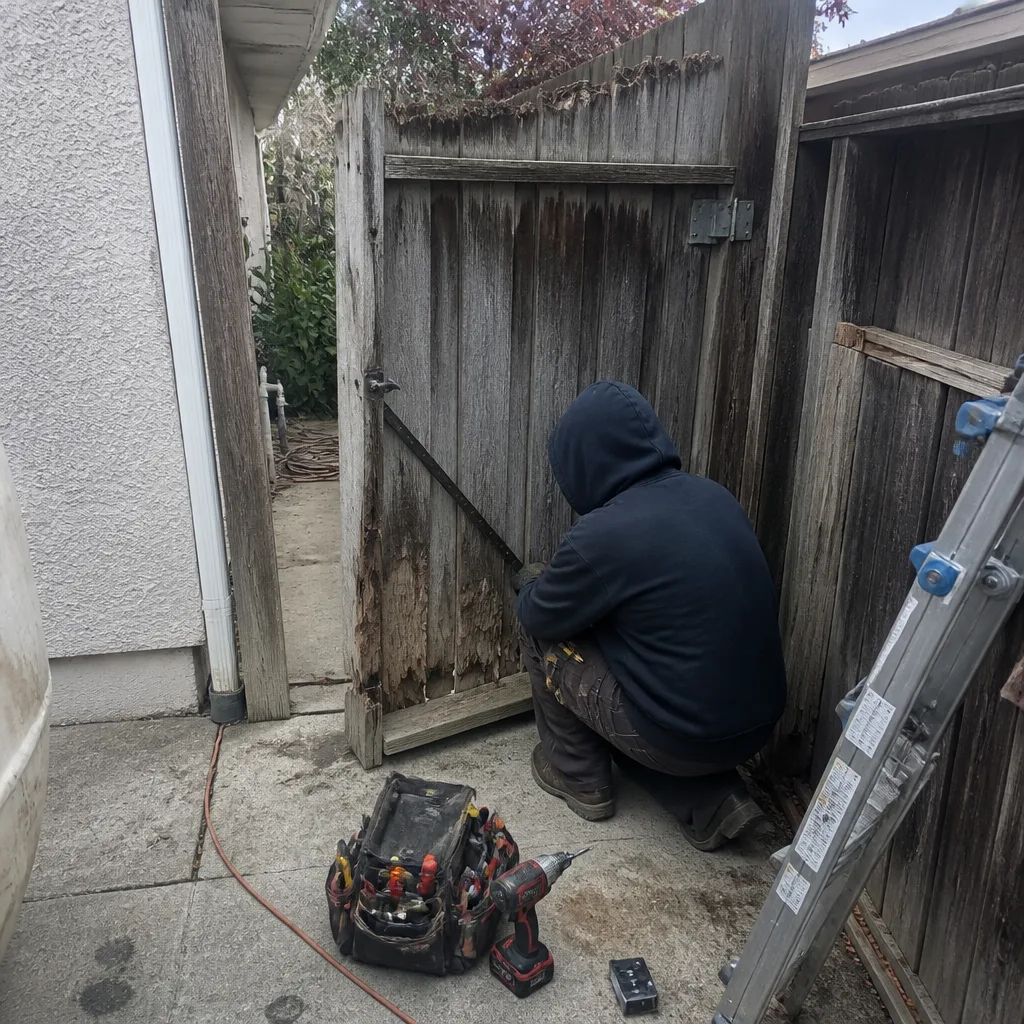 Before
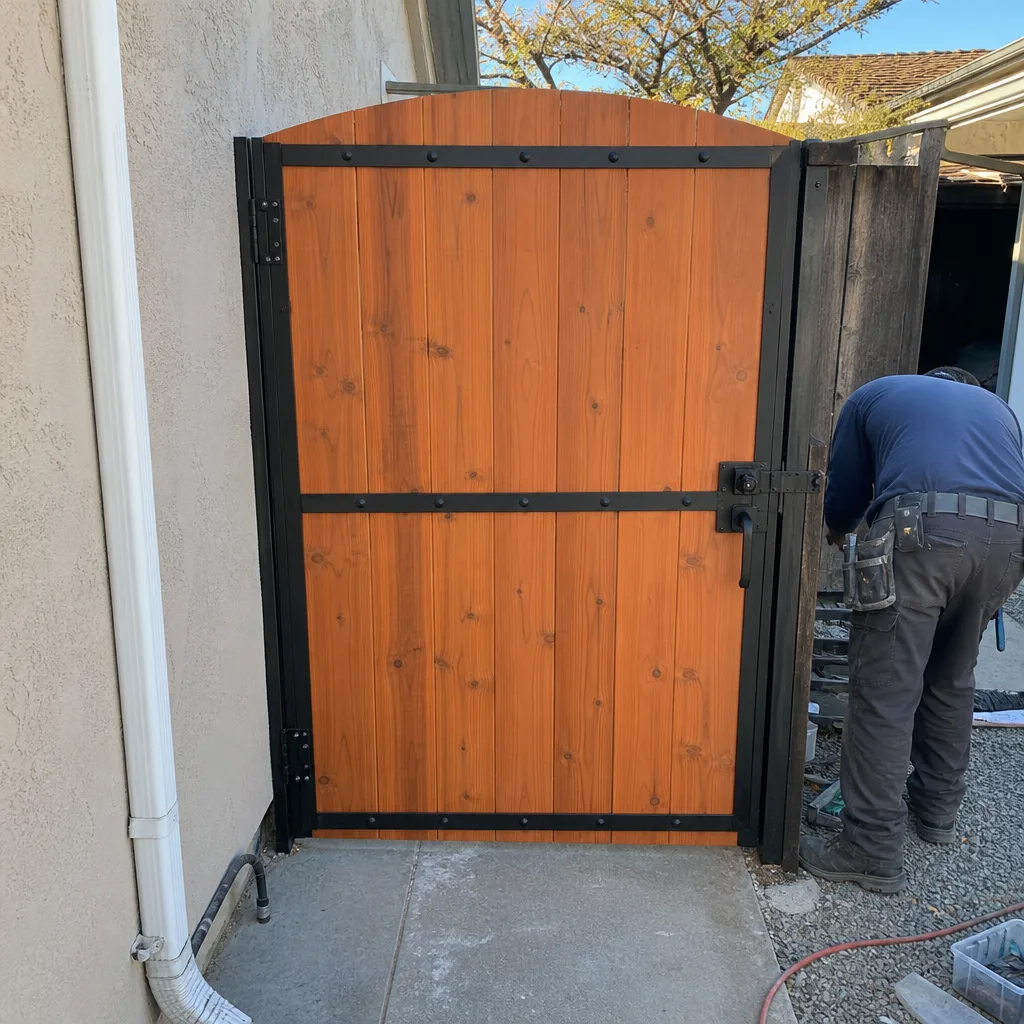 After
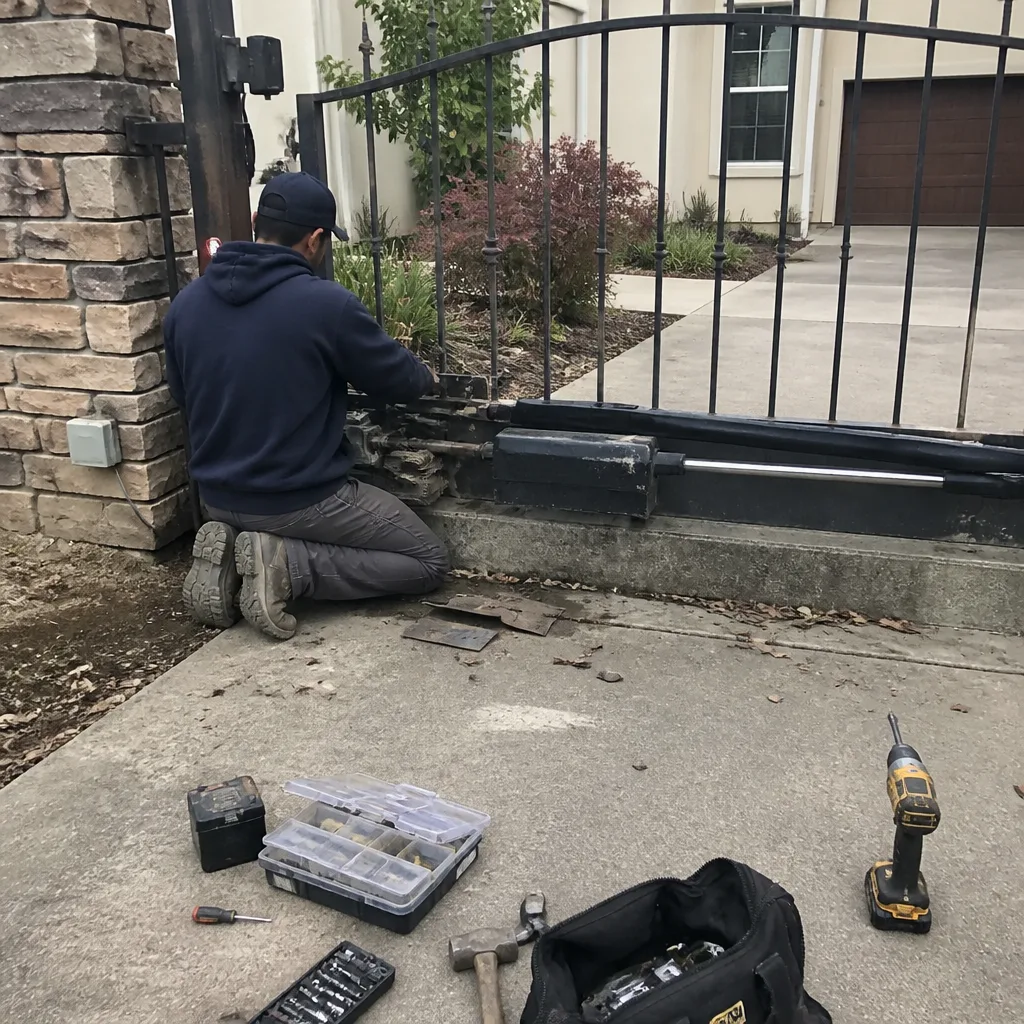 Before
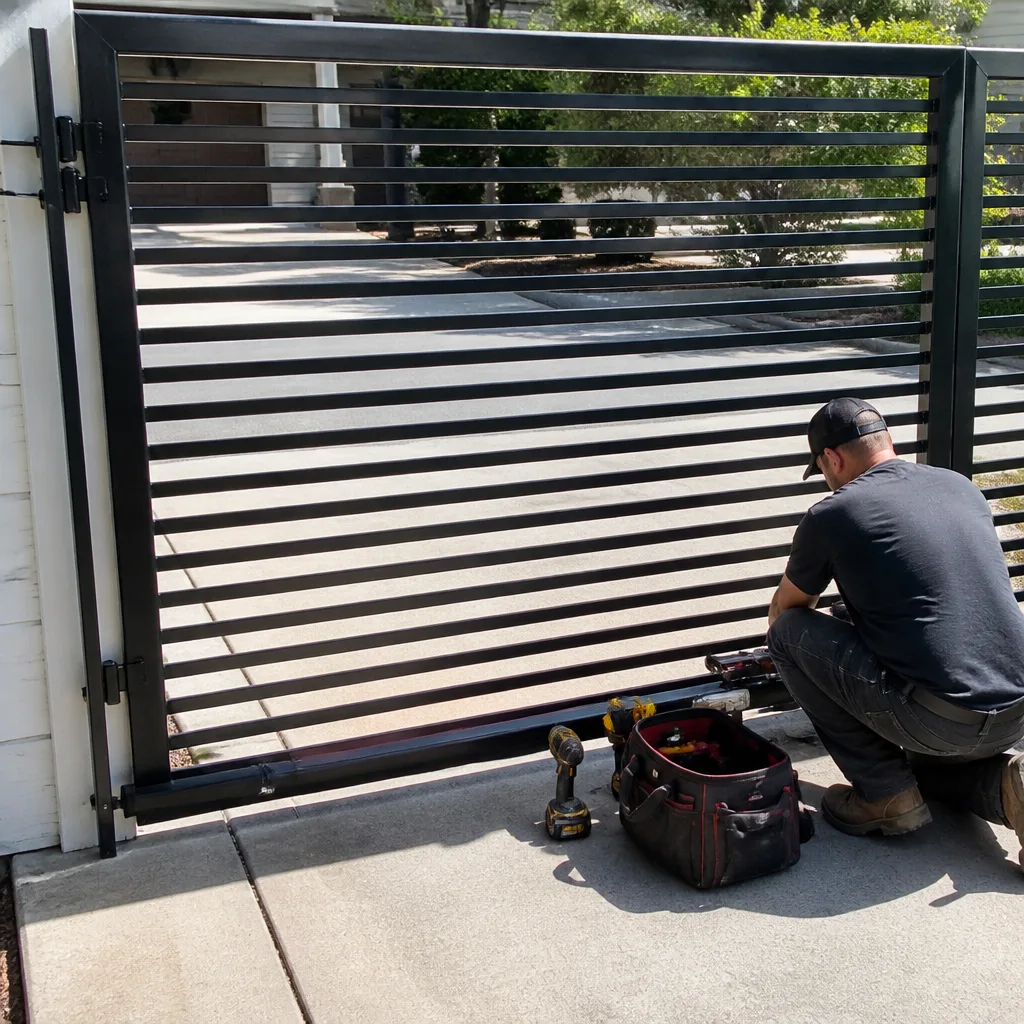 After
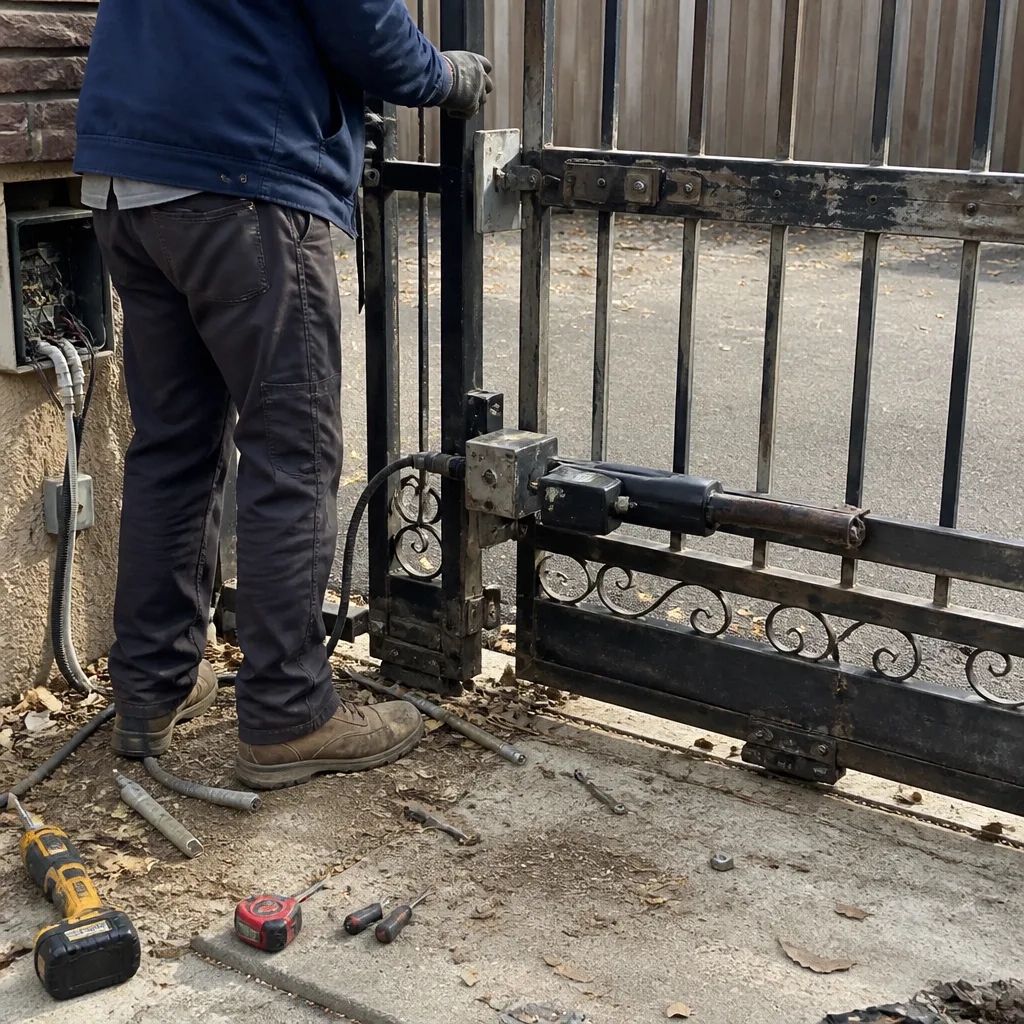 Before
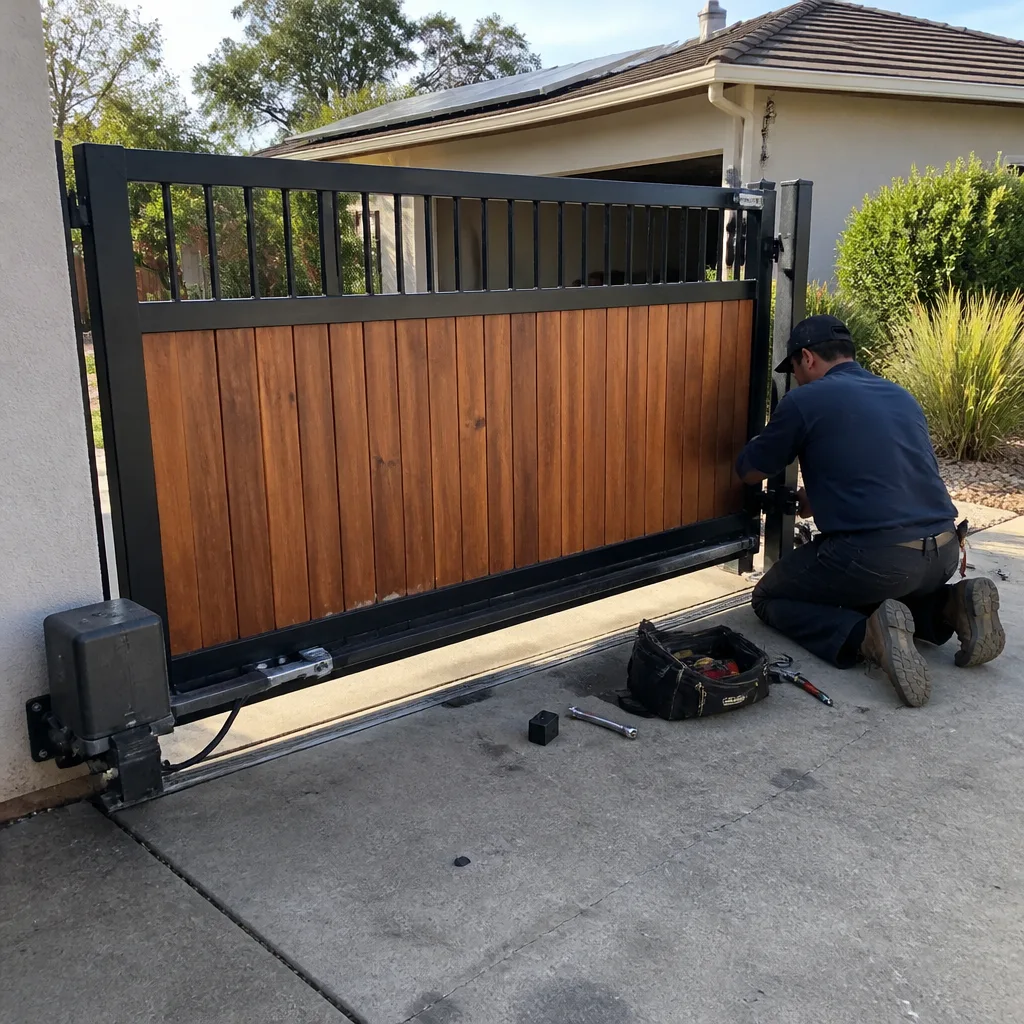 After
When to Call a Professional
You need a gate specialist when the project involves automated gate operators, UL 325 compliance, or permit preparation – see our Gate Repair Troubleshooting: Common Problems and How to Fix Them for related guidance. If your gate is stuck, your operator won’t respond, your photo eyes are dead, or you’re planning a new automated installation, the permit and inspection process is part of the job. A specialist handles the permit application, installs to pass inspection the first time, and stands behind the work if corrections are required.
Gate Repair Livermore offers free estimates in Livermore. We handle the full lifecycle of gate projects, from repair of existing systems to new automated installations with complete permit management. Call (877) 752-3814 to schedule an estimate.
Frequently Asked Questions
No permit is required to repair a gate by replacing components that match the original specifications. Replacing a failed hinge, wheel, control board, or motor with an equivalent part is a repair. Anything that changes the gate’s operation, size, or automation system is a modification requiring a permit. Call (877) 752-3814 if you’re unsure which category your project falls into.
UL 325 is the federal safety standard governing automated gate operators, requiring both inherent reversing mechanisms and secondary entrapment protection devices like photo eyes or reversing edges. Any new automated gate installation or operator swap in California must meet current UL 325 standards. An inspector will test entrapment protection during your final inspection.
In Livermore, a standard automated gate permit runs between $300 and $600, with an additional $150 to $250 for new electrical circuits. After-the-fact permits, issued when work was done without approval, cost double the standard fee. Contact the Livermore building division for the current fee schedule, or call (877) 752-3814 and we’ll include permit costs in your estimate.
California allows owner-builder permits, which means you can pull a permit and install your own automated gate if you own the property and plan to live there. You’ll still need to submit plans, pass electrical and final inspections, and meet UL 325 compliance. Most DIY installations fail the first inspection due to entrapment protection errors, which is why the operators from brands like BFT and Viking come with demanding installation manual requirements.
Livermore’s building division can issue a notice of violation requiring you to either obtain an after-the-fact permit or remove the gate. After-the-fact permits require a plan check, potentially a retrofit to current code, and double fees. If the discovery happens during a home sale, the timeline compresses and the seller typically pays whatever it costs to resolve before closing.
Yes. HOA approval authority operates independently of city permitting. An HOA can require architectural review approval, restrict gate height and materials, and demand changes even after the city issues a final inspection approval. In Livermore, check your CC&Rs before starting any gate project in an HOA community like Sunset East, Del Prado, or Portola Glen. Estimates are free at (877) 752-3814.
The Bottom Line
Gate permitting in California hinges on one distinction: repair versus modification. Repairs stay permit-free. Modifications, whether that’s a new operator, a new gate structure, or new entrapment protection, require permits and UL 325 compliance. In Livermore, the city enforces these rules through the building division, while HOAs add a parallel approval layer that trips up even experienced homeowners. The consequence of non-compliance isn’t theoretical. It surfaces during home sales, costs double in after-the-fact fees, and turns a $400 permit into a $4,000 problem. The smart move is simple: know which category your project falls into before work starts, pull the permit when required, and hire someone who has passed Livermore inspections before. Explore more guides & resources on our blog.
Written by the team at Gate Repair Livermore.