Last updated November 2, 2026
 Wrought iron
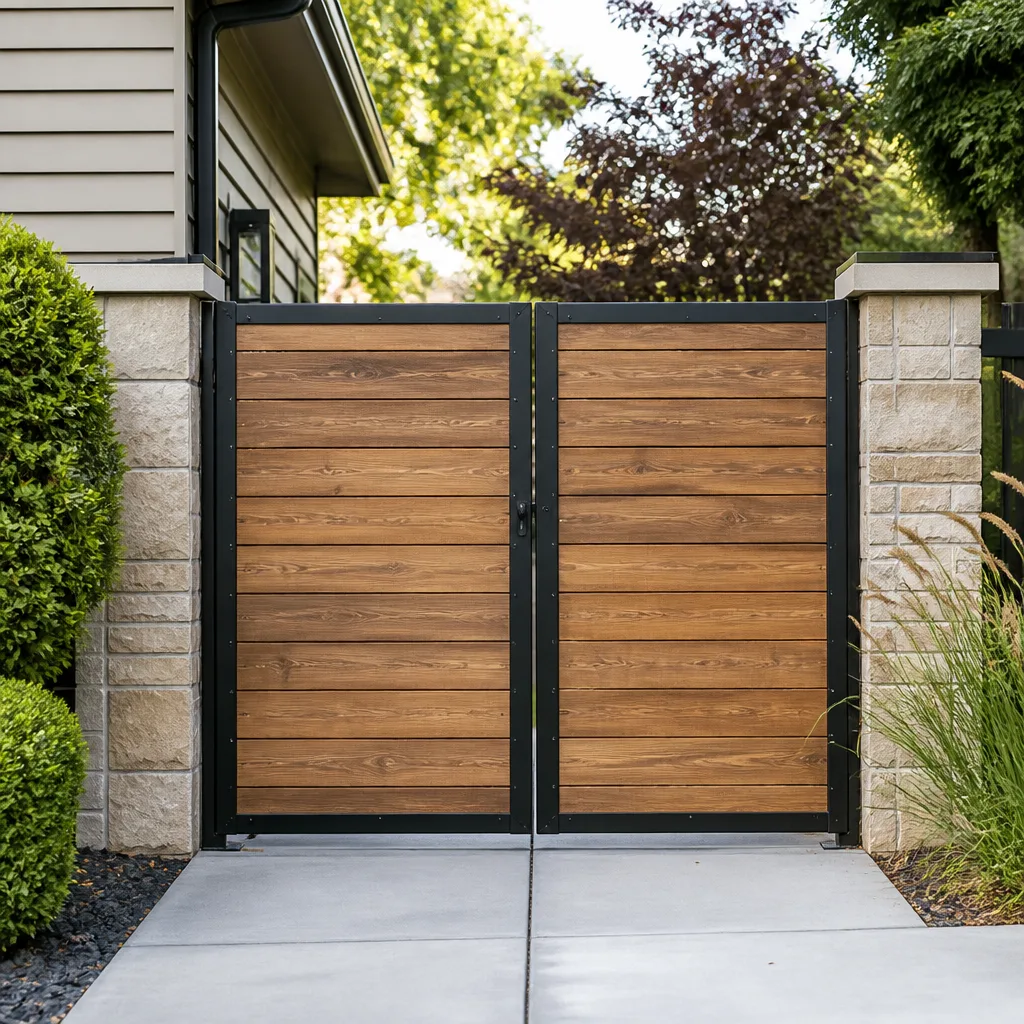 Wood & steel frame
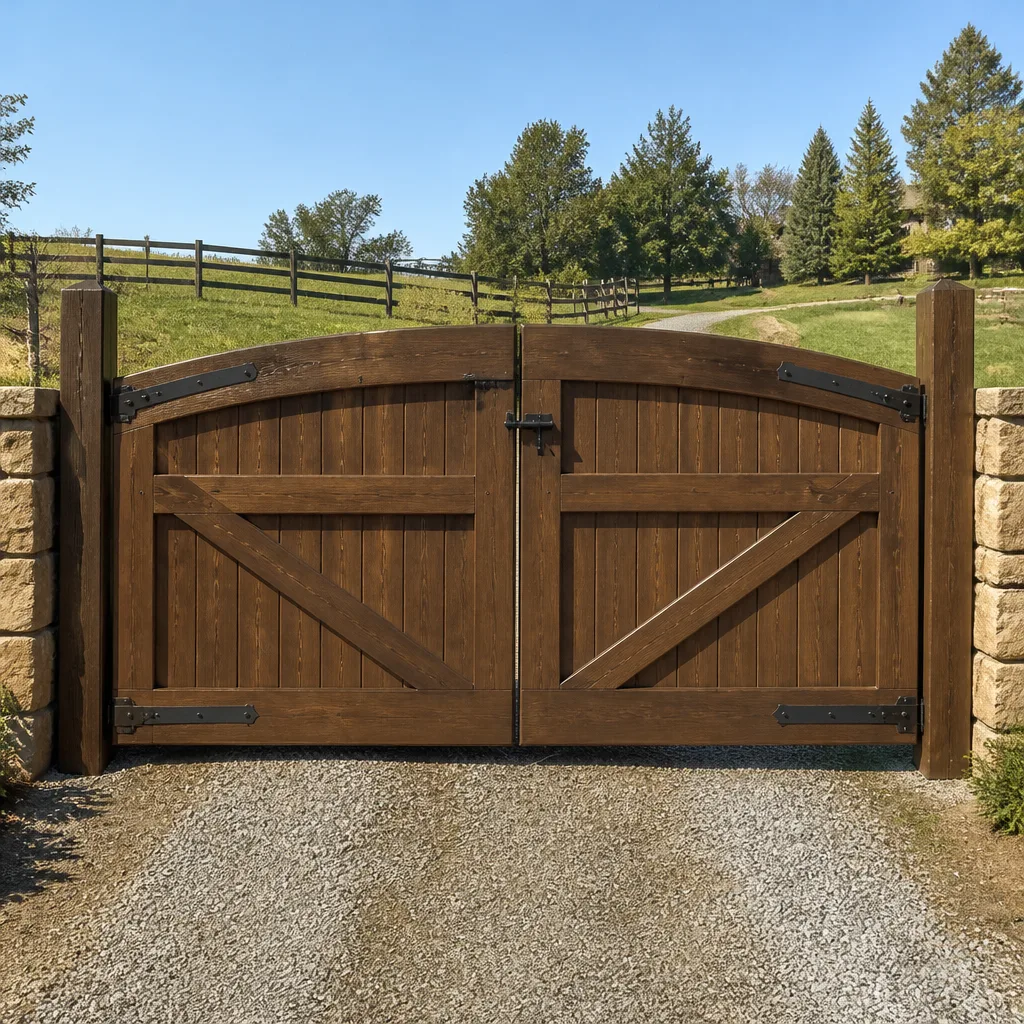 Farm & ranch
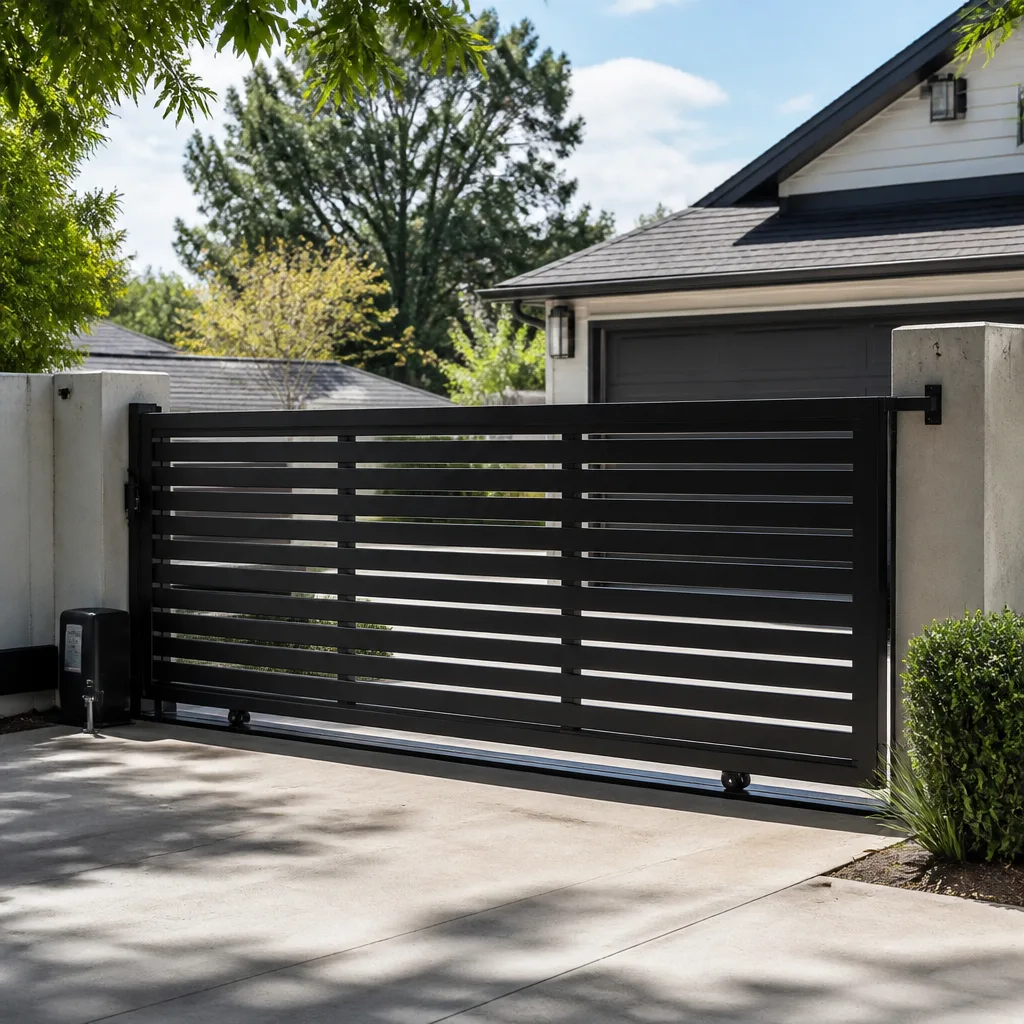 Sliding driveway gates
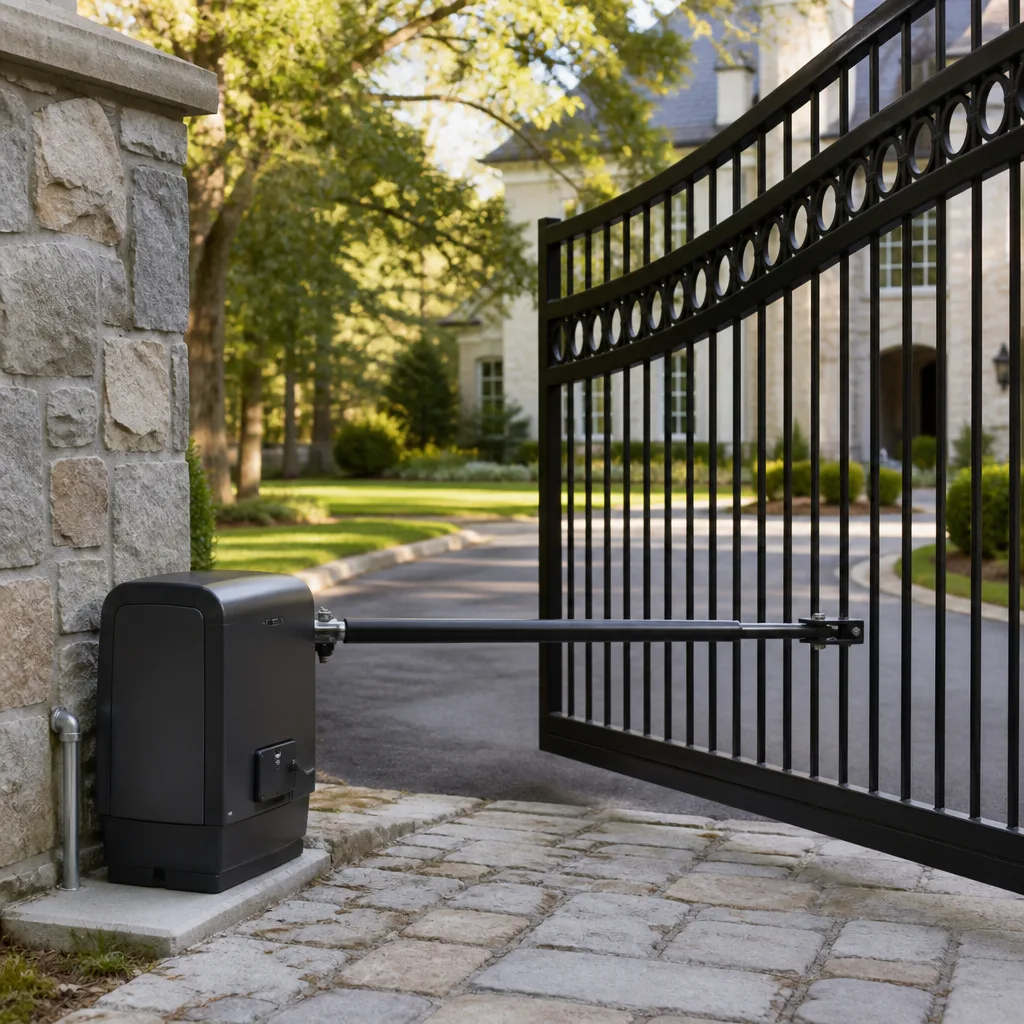 LiftMaster operators
Free on-site gate assessment - hinges, posts, and your LiftMaster or Nice gate operator checked before anything is quoted
The assessment is free and the quote is the invoice.
Get your free estimateGate Repair Cost Breakdown: The Livermore Homeowner’s Reference for 2026
Here’s the number most Livermore homeowners never hear: two gates can fail in exactly the same week, get described to a contractor in exactly the same words (“the opener just stopped working”), and land on invoices that are $1,500 apart. The difference isn’t markup or dishonesty. It’s whether a $3 control-board fuse blew, or a commercial-duty motor armature burned out after fifteen years of Tri-Valley heat cycles. This guide maps the actual components that fail, what each one costs to fix in the Livermore market in 2026, and how to read a Gate Repair services quote line by line before you approve it. By the time you finish, you’ll know which repairs are flat-rate commodities, which ones require paid diagnosis first, and what a fair number looks like for every common failure.
Quick Answer
Gate repair costs in Livermore range from $85 for a basic hinge replacement or sensor realignment to $2,500 – $4,000+ for a full commercial slide-gate operator replacement, with most residential repairs landing between $225 and $700. Labor rates in the Tri-Valley typically run $95 – $150 per hour, and flat-rate repairs like hinge swaps or photo-eye realignment are usually quoted as a fixed price rather than hourly. Electric gate repairs (control boards, motors, loop detectors) are the costliest category and typically require a $75 – $125 diagnostic visit before an accurate quote is possible. For ongoing care, see our Gate Repair Maintenance Checklist for Livermore Homeowners.
Styles & brands we work with
- Wrought iron
- Wood & steel frame
- Farm & ranch
- Sliding driveway gates
- LiftMaster operators
Table of Contents
- Repair Type & Cost Summary Table
- Gate Repair Cost by Component: What Actually Breaks in Livermore
- Labor Rates: What Livermore Contractors Charge vs. Out-of-Area Quotes
- Flat-Rate Repairs vs. Diagnostic-Required Jobs
- Parts Pricing: OEM vs. Aftermarket and the Six-Month Callback Problem
- How to Read a Gate Repair Invoice Line by Line
- Climate Factors That Drive Gate Failures in Livermore
- Common Mistakes to Avoid
- When to Call a Professional
- Frequently Asked Questions
- The Bottom Line
Repair Type & Cost Summary Table
These are the numbers we quote most often in Livermore. They assume a standard residential swing gate or slide gate in working-to-poor condition but not catastrophically damaged. Commercial jobs with heavier operators, longer track runs, or access-control integration land at the upper end or beyond these ranges.
- Hinge replacement (residential swing gate): $85 – $250 per hinge pair, depending on gate weight and whether posts need shimming
- Roller replacement (slide gate): $120 – $350 depending on roller count and track condition
- Track repair or realignment (slide gate): $150 – $500
- Photo-eye or safety sensor replacement: $110 – $260 per sensor, including alignment
- Control board replacement (residential): $300 – $750 depending on the operator brand
- Control board replacement (commercial: FAAC, BFT, Viking): $500 – $1,400 parts plus labor
- Motor replacement (residential swing gate): $400 – $900
- Motor replacement (commercial slide gate): $1,200 – $3,000+ depending on horsepower and brand
- Loop detector replacement (vehicle exit loop): $250 – $600 including saw-cutting and re-sealing if the loop itself has failed
- Full operator replacement (residential): $1,100 – $2,400 installed
- Full operator replacement (commercial slide): $2,500 – $4,500+ installed
- Diagnostic visit (no repair done yet): $75 – $125, usually credited toward the repair if you proceed
These ranges reflect 2026 pricing in the Tri-Valley. The same repair in a lower-cost market might run 20-30% less, which is why a quote from an out-of-area contractor can look deceptively cheaper until you factor the trip fees and follow-up visits.
Gate Repair Cost by Component: What Actually Breaks in Livermore
“The gate stopped working” is not a diagnosis. It’s an event description. Underneath it, one of maybe eight components actually failed, and each has a different parts cost, labor profile, and urgency. Here’s the component-level reality we work with every day.
Hinges and rollers fail slowly and then suddenly. A steel gate weighing 400 pounds sits on two hinge-points; when a hinge bearing wears out, the gate sags, which puts compound stress on the operator, which then works harder and burns out faster. Hinge replacement is one of the cheapest repairs on the board ($85 – $250) and one of the most neglected. Homeowners in neighborhoods like Sunset East and Del Prado tell us their gate “has always dragged a little” not realizing the drag is what will eventually kill the $800 motor. Rollers on slide gates have the same failure profile: they wear flat on one side, the gate rides rough, the chain or belt takes extra load, and the operator’s gearbox pays for it.
Control boards are the most misdiagnosed part in gate repair. A board can fail from a power surge, a lightning proximity strike, moisture intrusion, or just component aging. The failure might present as a dead keypad, a gate that opens but won’t close, or a gate that moves six inches and stops. Board replacement on a residential LiftMaster or a commercial Viking unit can be a same-visit repair once diagnosed. Parts run $300 – $1,400 depending on brand. The labor is usually 45 – 90 minutes. What makes board repair costly is the diagnosis: without proper testing, a technician might replace a board only to discover the real fault was a shorted limit switch or a failing transformer that then destroys the new board within weeks.
Motors are the expensive failure everyone fears and many people mis-locate. A true motor-armature failure or gearbox seizure on a commercial BFT or FAAC operator is a $1,200 – $3,000+ repair because the motor assembly is the core of the unit, and in many commercial operators the motor and gearbox are a sealed assembly that replaces as one. On residential units, motor failure is less common than board failure but still happens, particularly on Mighty Mule and older Ghost Controls units that have cycled thousands of times. The good news: a motor that hums but doesn’t move is often a bad capacitor (a $25 part) rather than a dead motor. This is exactly the kind of distinction a component-level diagnostic catches.
Safety sensors and loop detectors round out the high-frequency failure list. Photo-eyes get knocked out of alignment by a bumped post or a landscaper’s wheelbarrow; the part itself may be fine. Loop detectors fail when the saw-cut wire in the driveway breaks or the detector module itself ages out. In Livermore, where lots are larger and slide gates with vehicle exit loops are common in the county pockets east of Vasco Road, loop failures are a frequent call. The saw-cut and re-seal work is straightforward but requires a concrete saw and sealant that stands up to Tri-Valley summer heat without cracking.
Labor Rates: What Livermore Contractors Charge vs. Out-of-Area Quotes
The Tri-Valley runs its own economics. Residential gate repair labor in Livermore, Dublin, and Pleasanton typically bills at $95 – $150 per hour, with many reputable shops billing flat-rate for common jobs rather than open-ended hourly. Commercial gate work may bill somewhat higher, reflecting the liability profile and the cost of maintaining a shop with the diagnostic equipment and parts inventory for FAAC, BFT, and Viking systems.
What we see from out-of-area contractors bidding into Livermore is a pattern: a lower headline hourly rate with a trip charge, a “service area fee,” or a fuel surcharge layered on top. A $75/hour shop from the Central Valley sounds cheaper until the invoice shows a $90 trip fee, a $45 “rural route” surcharge, and the job takes five hours because the tech’s first time on a BFT operator includes an hour of phone support back to their shop. The all-in cost frequently lands at or above what a local specialist would have quoted with a flat-rate number.
A good rule for 2026: if a gate repair quote has more than three line items before the parts list starts, ask what each one means. Legitimate shops charge for labor, parts, and occasionally a diagnostic or disposal fee. Four, five, six separate surcharges is a contractor padding a low sticker price. Gate Repair in Livermore should be a straightforward conversation: here’s what’s broken, here’s what it costs to fix, here’s when we can do it.
Flat-Rate Repairs vs. Diagnostic-Required Jobs
One of the most useful distinctions a homeowner can understand is which gate repairs should be quoted over the phone as a flat price, and which ones legitimately require a paid site visit before any number is meaningful. The wrong expectation in either direction costs you money or time.
Repairs that are legitimately flat-rate
- Hinge and roller replacement: if you can describe the gate type and weight, a competent shop can quote this from a photo.
- Photo-eye realignment or replacement: a standard part with a standard installation time.
- Keypad replacement or code reset: typically 30-60 minutes, fixed labor.
- Basic gate re-alignment: adjusting the gate on its hinges or shimming the post, assuming no structural damage.
- Chain or belt tightening on a slide gate: a maintenance item with known labor.
These jobs have predictable labor and commodity parts. If a contractor refuses to quote even a ballpark for a hinge replacement without a $100 site visit, that’s a red flag unless the gate is visibly complex or integrated with an access-control system.
Repairs that genuinely require diagnosis first
- “The opener does something weird” – intermittent faults are the hardest to diagnose. A board that fails only when hot, a sensor that faults only in direct afternoon sun, a loop detector that misses only certain vehicles. These require testing on site.
- Multiple symptoms at once – gate opens but won’t close, keypad works but remote doesn’t, gate stops partway. Multiple simultaneous symptoms usually mean multiple failures or a wiring issue that requires tracing.
- Commercial operator failures on FAAC, BFT, or Viking systems – these units have multi-layer safety logic, and guessing at a board when the problem is a limit switch wastes a $700 part.
- Any failure after a storm or power event – surge damage can affect the board, the transformer, the capacitor, and the sensors in ways that only sequential testing can isolate.
For these, a $75 – $125 diagnostic visit that’s credited toward the eventual repair is not a fee grab. It’s the cheapest way to avoid replacing a perfectly good board while the actual fault sits in a $14 limit switch.
Parts Pricing: OEM vs. Aftermarket and the Six-Month Callback Problem
Every gate part has two price tags. The original equipment manufacturer (OEM) part, made by or for the company that built the operator, and an aftermarket equivalent, made by a third party. The aftermarket part is almost always cheaper, typically by 30-60%. Sometimes it’s identical quality. Sometimes it’s not.
The pattern we see in Livermore: aftermarket control boards for residential operators like LiftMaster and Mighty Mule generally perform fine when they’re from a recognized supplier. Where aftermarket gets homeowners into trouble is in three places. First, safety sensors: cheap photo-eyes with weak IR emitters cause false obstruction faults that make the gate reverse at random, and owners spend months chasing a “gate with a mind of its own” before replacing the cheap sensors with OEM. Second, capacitors and transformers: a $9 aftermarket capacitor that fails in six months takes out a $400 motor when it goes. Third, commercial-grade anything: a BFT or Viking operator is a precision unit with specific voltage tolerances, and running an off-brand board in one is a false economy that ends with a burnt motor or a safety hazard at a commercial entrance.
The right question to ask your contractor isn’t “is this the cheapest option” but “what’s the difference between this part and OEM, and what happens if it fails.” A shop that can’t answer that question clearly is either buying whatever their distributor sent or doesn’t want you to think too hard about part quality.
See the difference
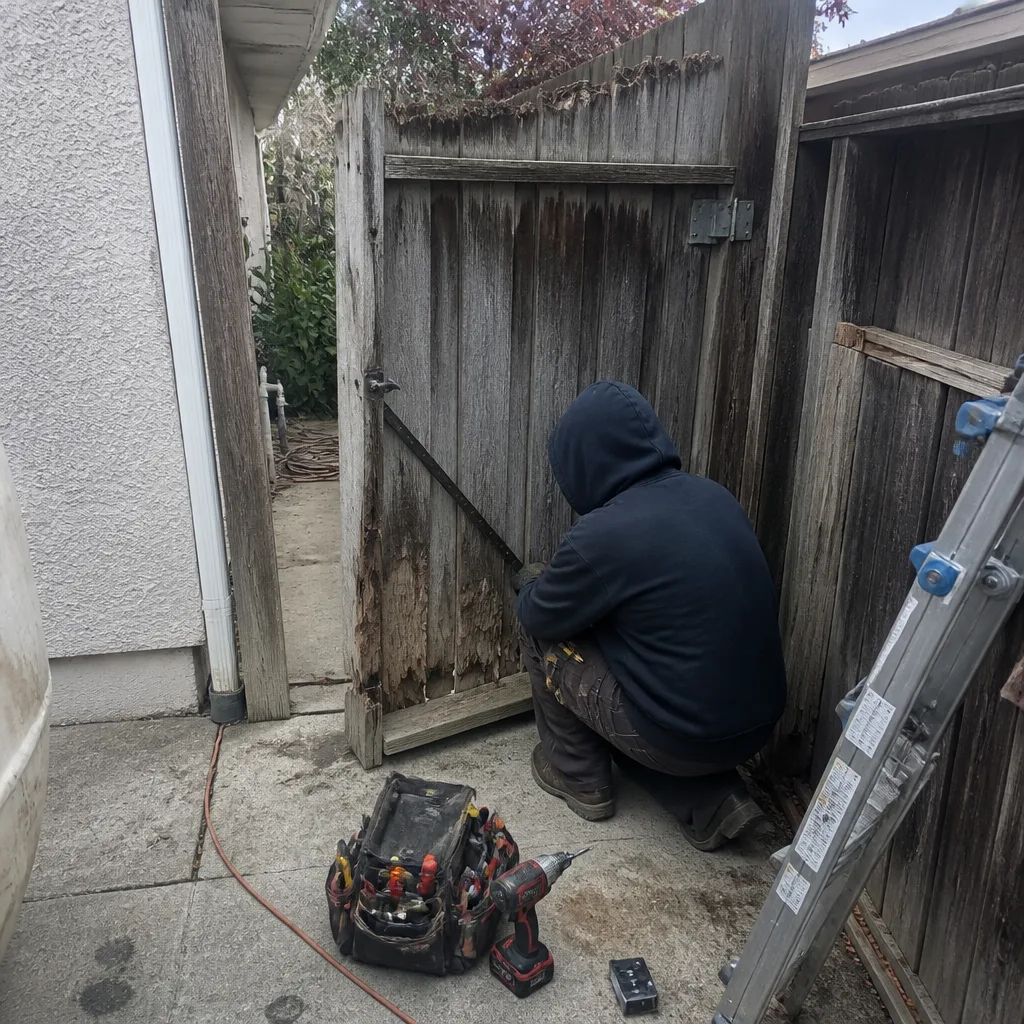 Before
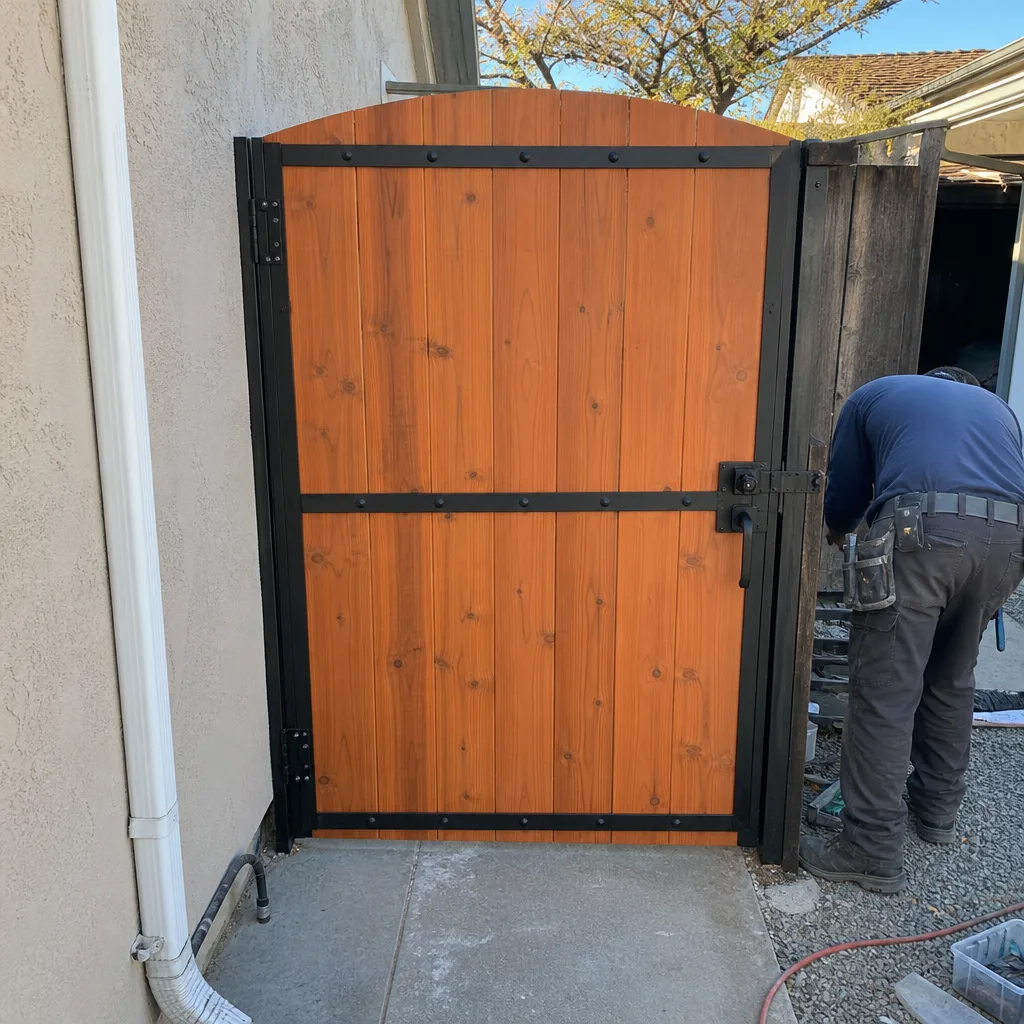 After
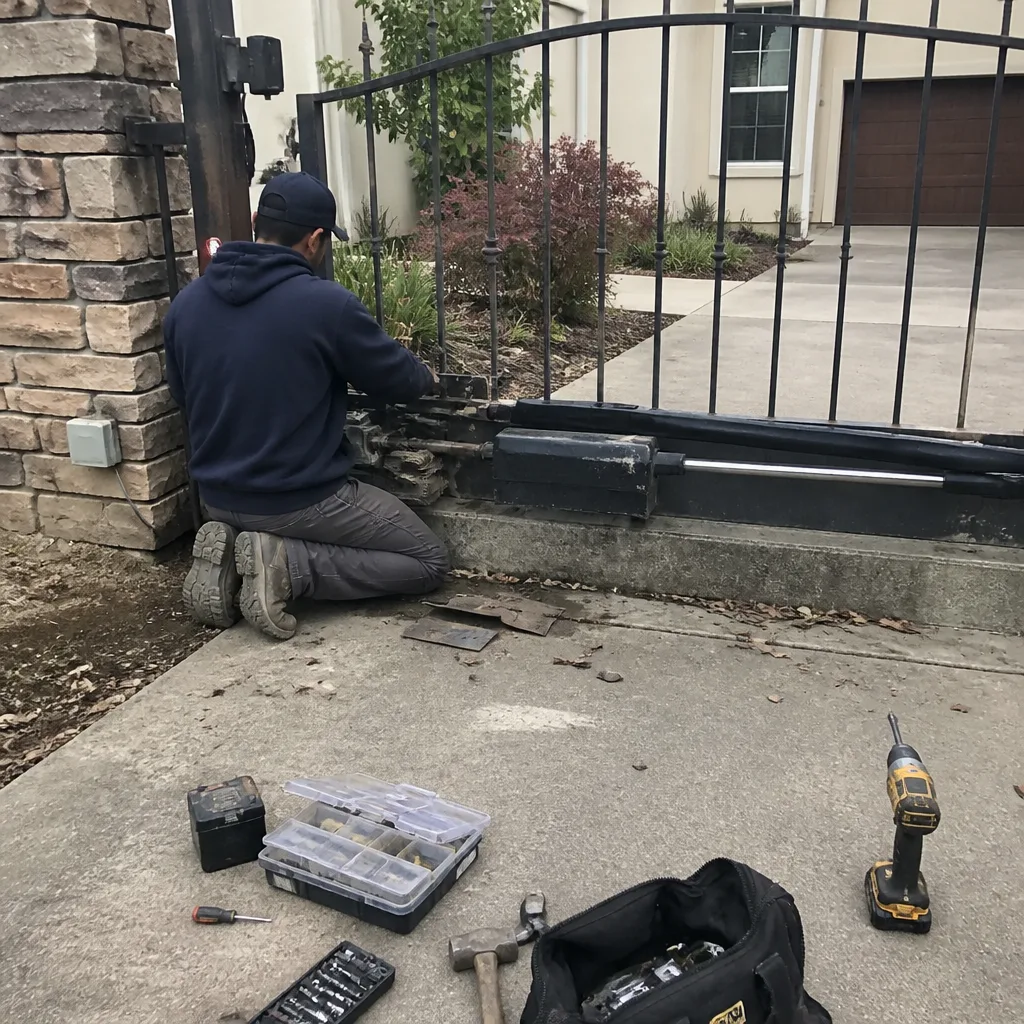 Before
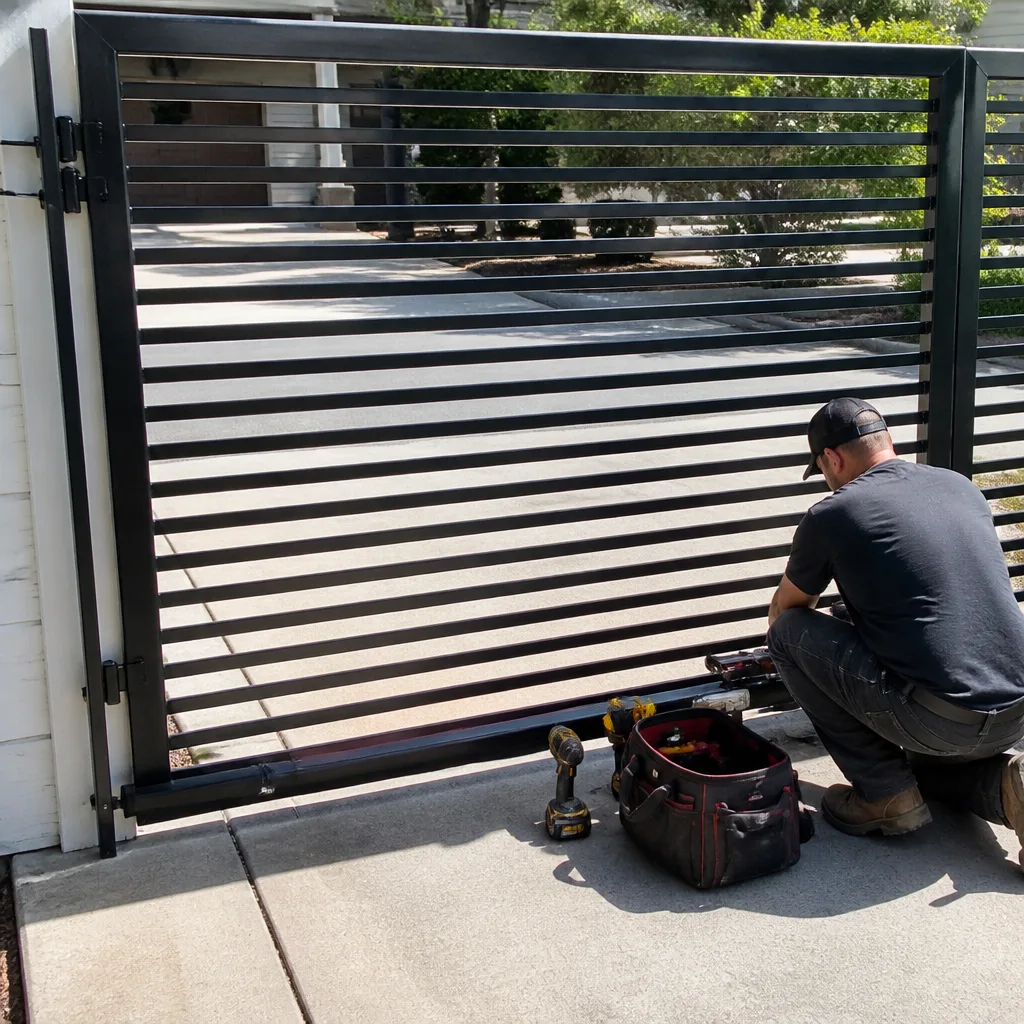 After
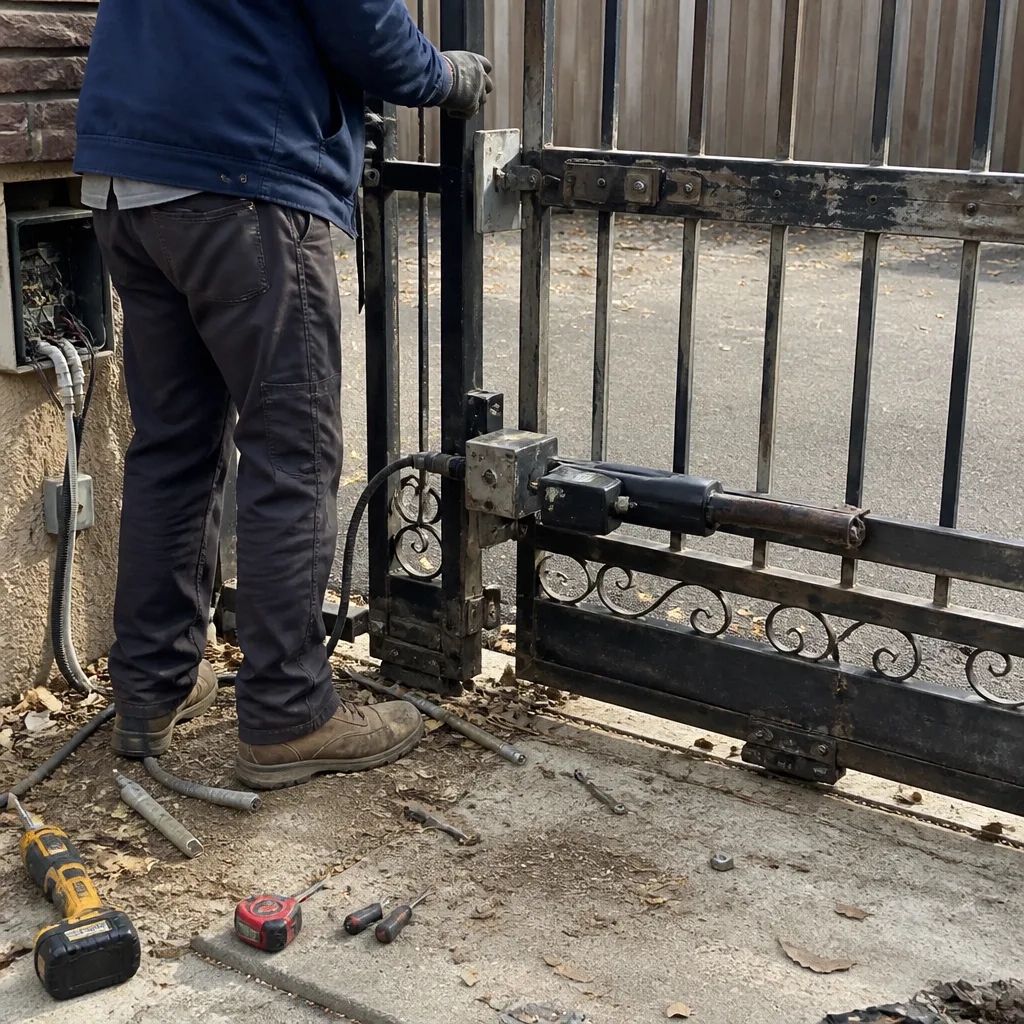 Before
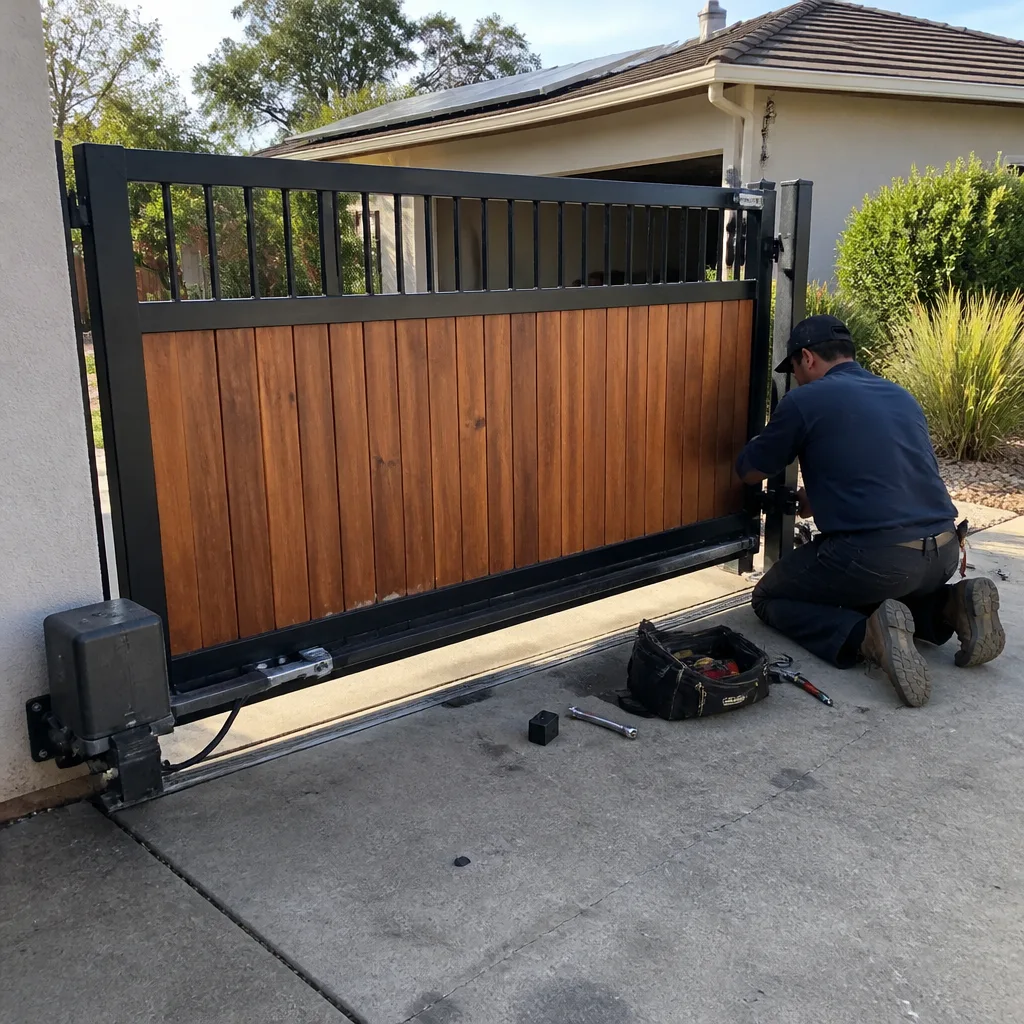 After
How to Read a Gate Repair Invoice Line by Line
Invoices are not mystery documents. Every line should correspond to something that actually happened. Here’s how to verify you’re paying for what was done.
- Diagnostic fee: should be listed separately if charged, and should be credited back if you proceed with the repair. If it’s buried in the total and no credit appears, ask.
- Labor hours and rate: the hourly rate or the flat labor amount should be visible. “Labor: $X” with no hours and no rate attached is the equivalent of a restaurant bill that says “food: $47.”
- Parts list: every part should be named, not described as “gate repair parts” or “miscellaneous supplies.” A board is a board, a hinge is a hinge. Vague parts lines hide markup.
- Warranty terms: warranty should be written on the invoice or in an attached form. If a contractor offers a “written warranty” verbally but writes nothing down, you don’t have a written warranty.
- Replaced parts: you’re entitled to ask to see the failed part. It’s your property. If the contractor can’t produce it, that’s not automatic fraud (they may have disposed of it) but it’s a legitimate question.
- Total vs. quote: the final total should match the approved quote unless additional work was authorized in writing or by documented phone call. A final price that drifted upward without a conversation is never okay.
The price on a gate repair is quoted and agreed before any work starts. If a contractor won’t commit to that, that’s not a contractor you want inside your gate system.
Climate Factors That Drive Gate Failures in Livermore
Livermore’s climate is not an abstract fact about gate repair. It’s the reason certain failures happen here more than in coastal markets a short drive away, and understanding that helps you choose the right parts and the right contractor.
Summer heat and electronics. Livermore regularly hits the mid-90s and often breaches 100°F in July and August. Control boards mounted inside an enclosed operator box in direct afternoon sun will see internal temperatures well above ambient, and heat is the enemy of capacitors and solder joints. We see board failures in Livermore cluster in the summer in a pattern that doesn’t exist in coastal cities with 70°F summers. When we install a board, we pay attention to ventilation and, where the operator allows it, sun shielding.
The wind, especially east of town. The Altamont Pass corridor is a wind tunnel, and properties along Vasco Road, May School Road, and the area around Brushy Peak carry a wind exposure that few other East Bay cities match. A swing gate in constant wind takes a higher repetitive load on hinges and operators, and light-duty residential operators wear faster in these pockets. This is a big part of why we see more frequent hinge and operator replacements on the east side of Livermore than in the newer subdivisions closer to downtown.
The wet-dry cycle. Livermore’s long dry months followed by concentrated rain puts a particular strain on loop detectors and concrete. Hairline cracks in driveway saw-cuts expand slightly in rain, moisture penetrates, and the loop wire, which was fine in August, becomes an intermittent fault in February. Re-sealing loop cuts with a flexible waterproof sealant is a small investment that prevents a much larger loop replacement later.
Common Mistakes to Avoid
- Ignoring a dragging or sagging gate. A gate that’s hard to move isn’t a minor annoyance; it’s the most common early warning of a looming motor or hinge failure that costs five times more to fix once it fails completely. In windy parts of Livermore, the damage compounds faster than you’d expect.
- Replacing an operator without addressing the gate itself. Installing a new motor on a gate with a bad hinge or a warped frame just means the new motor will fail early for the same reason the old one did. If the gate doesn’t move freely by hand, automate nothing until it does.
- Accepting a phone diagnosis for a “weird” problem. Any contractor who tells you “it’s the board, we’ll bring one out” without testing is guessing and spending your money on the guess. Legit diagnostics take time on site.
- Scoping a repair by price rather than cause. Starting from “what’s the cheapest way to make it open” rather than “what failed and why” produces workarounds that hold for six months and then fail worse. This is the single most common path to a callback repair.
- Buying aftermarket parts for commercial operators or safety systems. The savings on a third-party board or sensor for a FAAC, BFT, or Viking unit is a rounding error compared to the cost of a second failure, the downtime of a gate that won’t open for a delivery, or a safety sensor that fails to detect a vehicle.
- Not asking what’s included. “Gate repair” can mean 90 minutes of labor or a full operator replacement. Get the scope in writing with the parts list before you approve.
When to Call a Professional
Gate repair sits at the intersection of heavy machinery, low-voltage electronics, and vehicle safety. The hinge on a 400-pound steel gate holds dangerous stored energy when the gate’s off its track or the spring is loaded wrong. Electric operators carry line voltage, control boards that can be damaged by a single mis-wired connection, and safety systems that, if disabled or adjusted wrong, can close a gate on a car, a child, or a pet. If your gate is off its track, if the operator is sparking or smoking, if a safety sensor has failed and the gate closes despite an obstruction, or if you’re dealing with a commercial system that has traffic depending on it, call someone who works on these systems every day. Electric Gate Repair in Livermore is a specialty, not an afterthought. Gate Repair Livermore offers free estimates in Livermore – call (877) 752-3814 and we’ll tell you what you’re looking at.
Frequently Asked Questions
A residential swing gate motor replacement in Livermore typically costs between $400 and $900 installed, while a commercial slide gate motor can run $1,200 to $3,000 or more depending on horsepower and brand. The wide range reflects the difference between a light-duty Mighty Mule motor and a commercial FAAC or BFT unit. Call (877) 752-3814 for an exact quote once we know your operator – estimates are free.
Emergency gate repair calls in Livermore can often be scheduled same day, especially for stuck-open gates that leave a property unsecured or stuck-closed gates blocking vehicles. Call (877) 752-3814 early and describe what the gate is doing, and we’ll give you a realistic arrival window.
A full Gate Installation in Livermore includes the gate frame or panel, hinges or rollers, the operator and control board, safety sensors, and usually a keypad or remote entry system, with the power run and safety edges handled as part of the same job. We quote the complete scope in writing before work starts, so there’s no surprise line item at the end.
Yes. The power run from the house to the operator, the conduit, and the safety edge sensors are part of what we quote and install. This is the part of gate work that separates a specialist from a fence contractor, because a botched low-voltage run or an un-tested safety edge is a code issue and a hazard, not a cosmetic one.
Compare the quote against the component-level ranges in this guide, confirm whether the repair is flat-rate or diagnostic-dependent, and ask for a parts list with brand names. A fair quote names the part, the brand, and the labor, and its price is locked before work starts.
If the operator is 15-20 years old and the repair is the second one in two years, replacement is usually the smarter money. Board failures on old residential units tend to cascade; you fix the board, then the transformer goes, then the capacitor. A new operator drops in with a warranty and current safety compliance. If the failure is the first one and the unit’s otherwise healthy, repair makes sense. We’ll tell you which side of that line your gate sits on before spending a dollar.
The Bottom Line
Gate repair pricing in Livermore is knowable. The spread between an $85 hinge fix and a $4,000 commercial operator replacement isn’t random and isn’t contractor greed; it’s a function of which component failed and which system it lives in. Learn the component categories, understand which repairs are flat-rate versus diagnostic-dependent, buy OEM parts where they matter, and read your invoice with a skeptical eye. And when the problem is genuinely electrical or structural, hire a shop that works on the Gate Repair Livermore home turf every day: someone who can tell a bad capacitor from a dead motor, and who can fix what you already have rather than selling you a replacement you don’t need. For a free estimate, call (877) 752-3814 and describe what your gate is doing. We’ll take it from there.
Written by the team at Gate Repair Livermore. Explore more guides & resources.