Last updated November 2, 2026
 Wrought iron
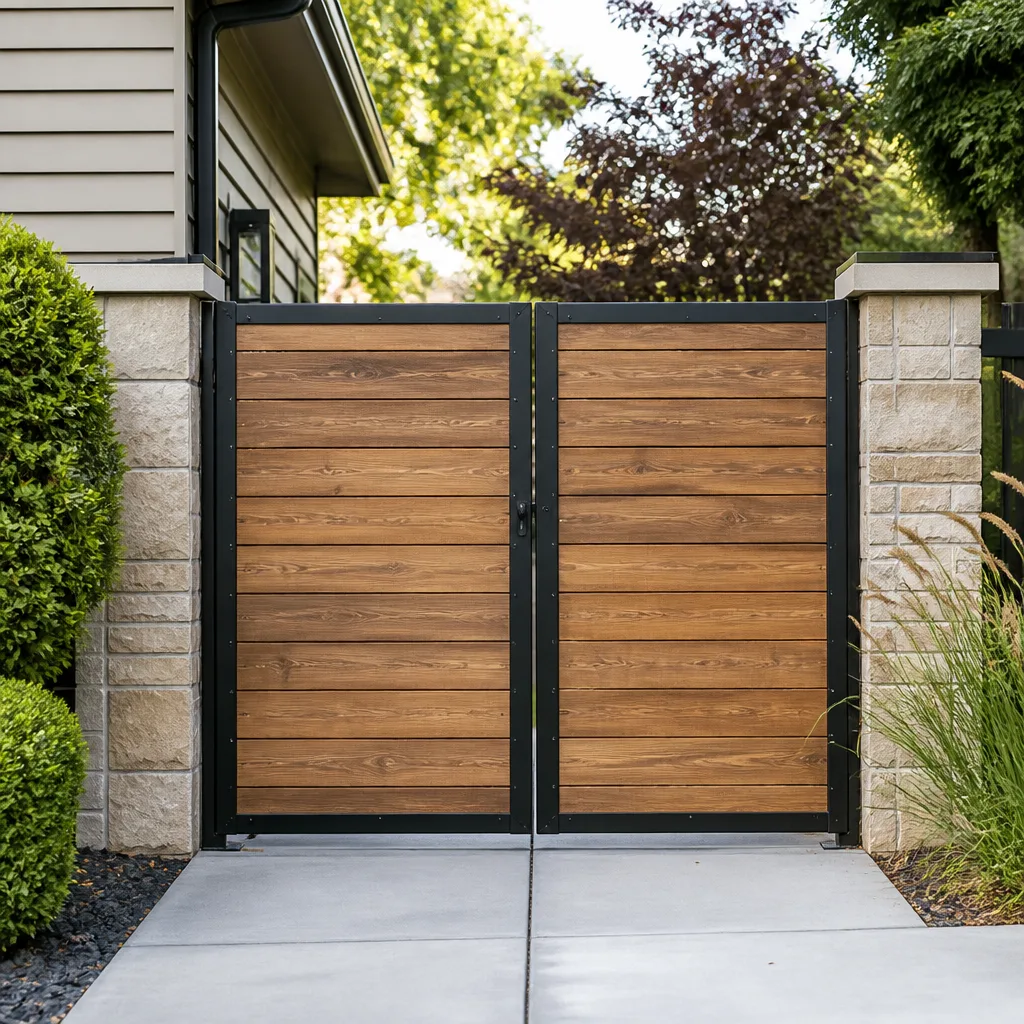 Wood & steel frame
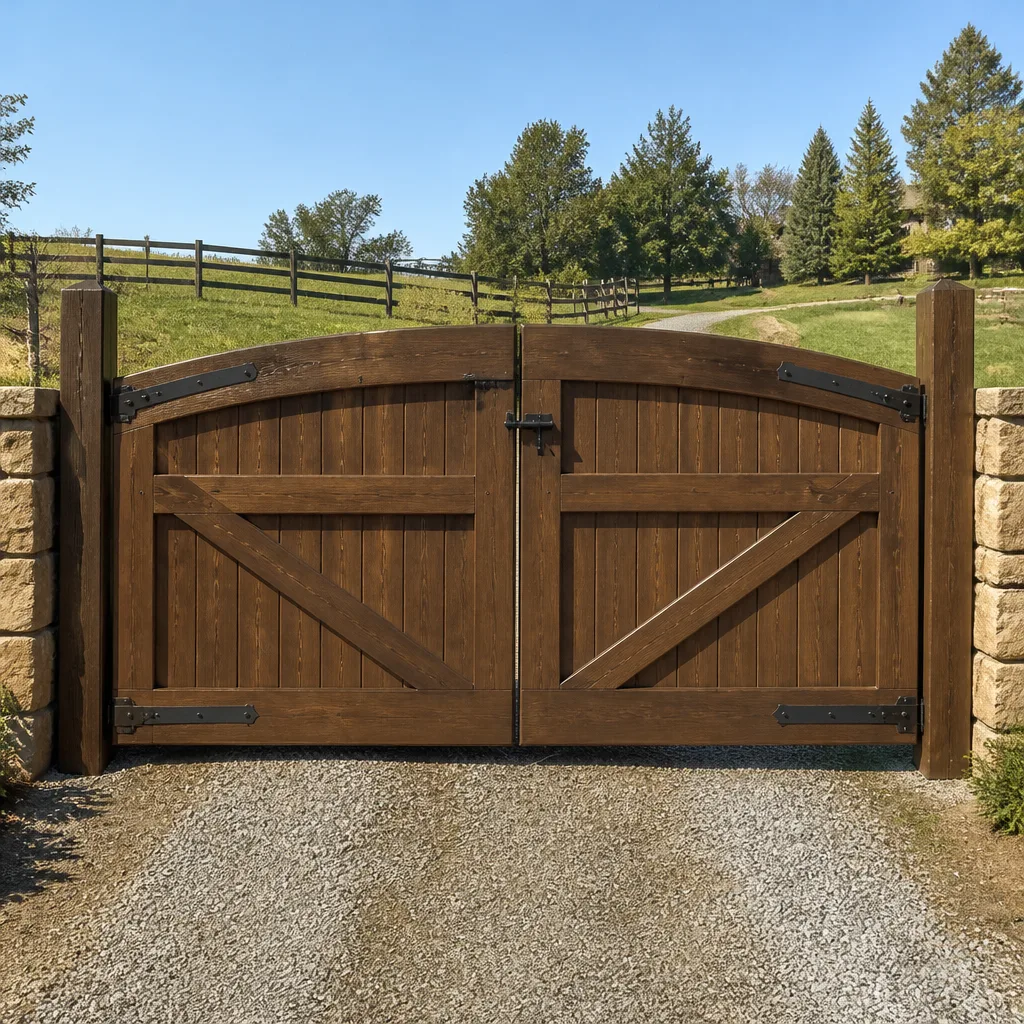 Farm & ranch
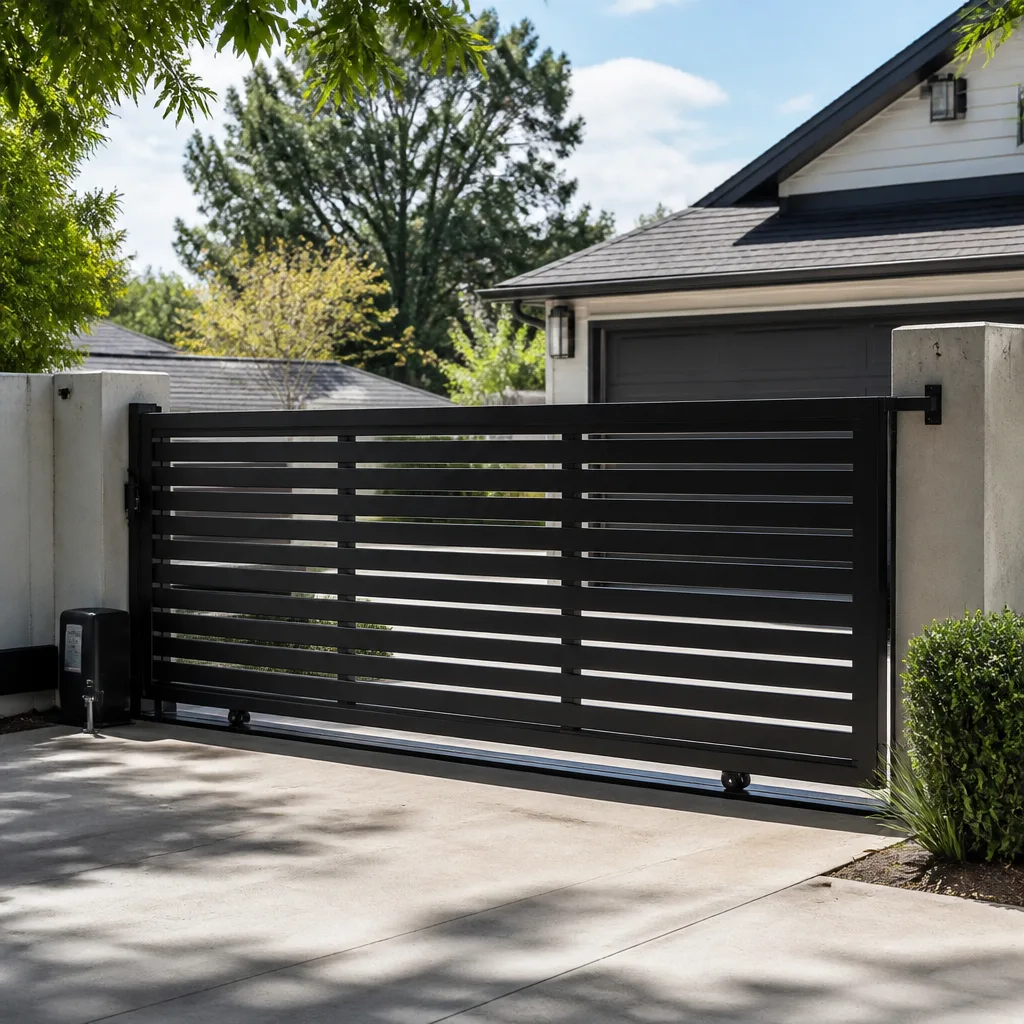 Sliding driveway gates
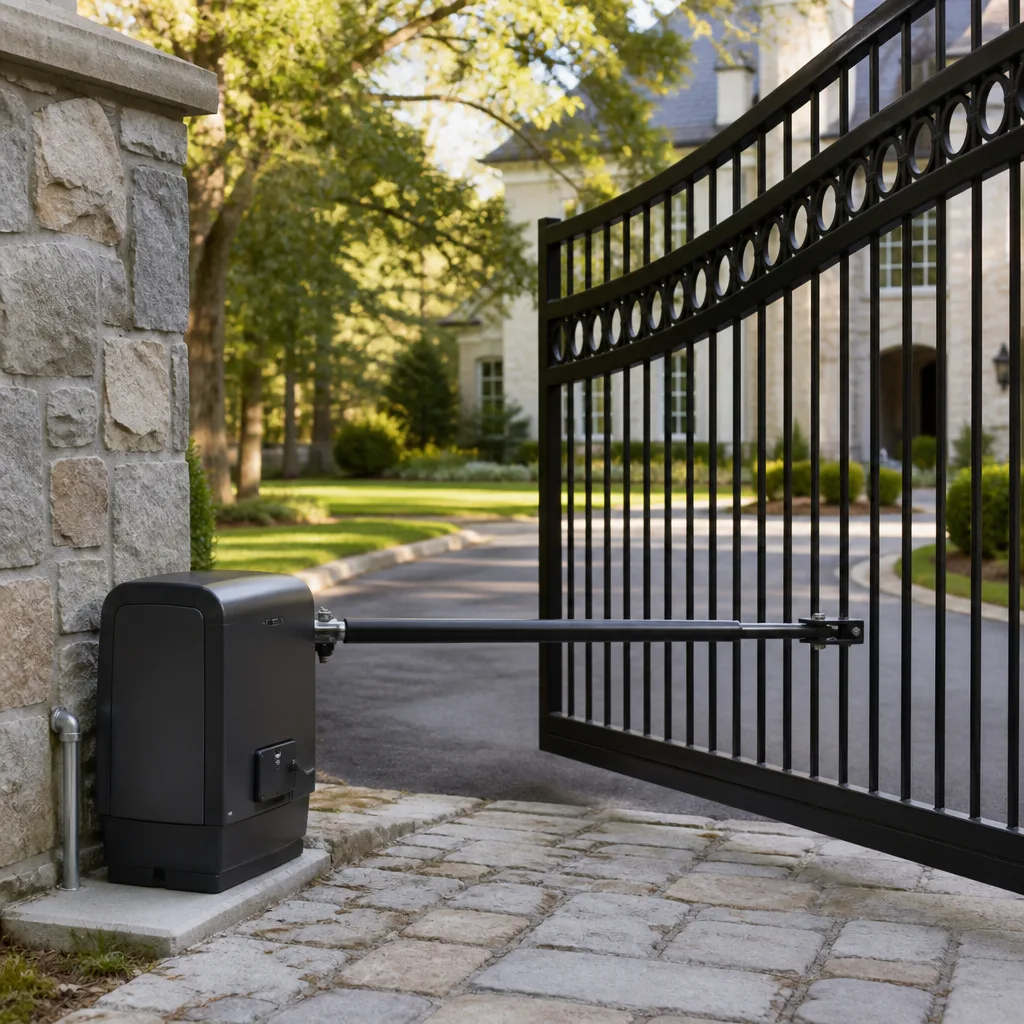 LiftMaster operators
Free on-site gate assessment - hinges, posts, and your LiftMaster or Nice gate operator checked before anything is quoted
The assessment is free and the quote is the invoice.
Get your free estimateSeasonal Gate Repair Care for Livermore: Year-Round Homeowner’s Guide
Livermore regularly hits 100°F or more in July and August. That is not Bay Area weather by any stretch, and it’s exactly the kind of heat that pushes automatic gate operators past their duty-cycle limits, thins out grease until it runs off the bearing surfaces, and leaves homeowners with a dead gate in September, long after the damage was done. The service calls in Livermore spike the first week kids go back to school. This complete gate repair guide for Livermore homeowners breaks down what actually degrades a gate system month by month in this specific climate, what to check yourself, what to leave alone, and when a repair call now saves a full replacement later.
Styles & brands we work with
- Wrought iron
- Wood & steel frame
- Farm & ranch
- Sliding driveway gates
- LiftMaster operators
Quick Answer
Seasonal gate care in Livermore means checking operator duty cycles and lubricant condition during the 100°F summer stretch, clearing dust and Diablo-wind debris from tracks and sensors each fall, inspecting battery backups and hydraulic fluid before winter overnight lows, and rebalancing swing gates after spring ground movement from the wet season. Most mid-year gate failures trace back to one skipped seasonal check, not one sudden break.
Table of Contents
- Summer: Heat, Duty Cycles, and Photocell Interference
- Fall: Diablo Winds, Dust, and Control Board Stress
- Winter: Cold Snaps, Batteries, and Hydraulic Systems
- Spring: Ground Movement, Hinge Wear, and Rebalancing
- The Right Lubricant for Livermore’s Temperature Range
- Battery Backup: Specs That Matter in This Climate
- The 15-Minute Seasonal Inspection Checklist
- Common Mistakes to Avoid
- When to Call a Professional
- Frequently Asked Questions
- The Bottom Line
Summer: Heat, Duty Cycles, and Photocell Interference
Livermore’s summer is the most punishing season for automated gate equipment in the entire Bay Area. A gate operator mounted in direct sun on a 102°F day can reach internal temperatures well above 140°F. Most residential operators are rated for intermittent duty: open, wait, close, rest. When the gate gets cycled repeatedly during a backyard gathering or a busy afternoon of contractor traffic, the motor never gets its rest interval. Thermal overload protection trips. The gate stops mid-cycle. Sometimes the control board errors out and requires a manual reset at the box.
What we see most often in Livermore summers, in no particular order:
- Operators that worked fine in May start failing in July because the duty cycle gets exceeded daily, not monthly.
- Grease that was perfectly appropriate for a 65°F spring day turns thin and drips off hinge pins and slide-gate rollers by August.
- Photocell safety sensors wired at the gate posts get blinded by low-angle evening sun, sending a false obstruction signal that keeps the gate from closing.
- Control boards mounted in metal enclosures with no ventilation accumulate enough heat to corrupt settings or fry capacitors.
The summer care routine is not complicated, but it is specific:
- Limit cycling during peak heat. If the gate is used more than 10 to 12 full cycles per hour in July and August, you are exceeding what most residential operators can handle. Flag this for the household or crew.
- Check for grease migration. Look at the bottom hinge on a swing gate and the rail on a slide gate. If you see a runny streak of lubricant below the bearing, the grease has failed in the heat. It needs to be cleaned off and replaced with a high-temperature product, covered below.
- Shield or re-aim photocells. The sun sets directly behind many west-facing gates in Livermore during summer. A simple hood or slight re-aim solves more “the gate won’t close” calls than any part replacement.
- Inspect the control box interior. Dust plus heat is rough on boards. A quick visual check for bulging capacitors or a burned smell costs five minutes and catches failures before they strand the gate open.
If your operator has been shutting down intermittently and then working again after it cools, do not ignore it. That is the classic thermal-overload warning pattern, and it only gets worse. Our Electric Gate Repair in Livermore work routinely starts with heat-stressed operators that could have been saved with one summer service visit.
Fall: Diablo Winds, Dust, and Control Board Stress
Fall in Livermore brings the Diablo winds: dry, gusty, and carrying fine dust from the Altamont and the hills east of town. That dust does not stay outside the gate. It works its way into slide-gate tracks, coats limit switches, clogs photo-eye lenses, and settles onto control boards where it holds heat against components. The first real wind event of October pushes more debris into a gate track than the previous six months combined.
We have opened control boxes in Livermore in November and found a quarter inch of silt across the bottom. That dust is conductive enough to cause intermittent shorts on boards that were otherwise fine. It also absorbs moisture on the first damp night, which makes the problem worse.
Fall maintenance focuses on removal, not adjustment:
- Clean the track on slide gates. A stiff brush and a shop vac clear the rail. Do not power-wash the track; water drives dust into the rollers and the chain.
- Wipe the photo-eye lenses. A clean microfiber cloth removes the film that wind-blown dust leaves on the safety sensors. Do this monthly through November.
- Blow out the control box. Compressed air, or a can of electronics duster, removes dust from the board, transformer, and terminal blocks. Kill power at the breaker first.
- Check limit switches. On operators that use mechanical limits, dust buildup alters exactly when the gate stops. A gate that used to close flush now stops two inches short because a limit switch is gunked up.
- Inspect the chain or belt tension. Temperature swings from hot days to cool nights shift tension on chain-drive operators. A chain that is too tight in October was perfect in June.
One specific failure pattern we see every fall: a Diablo wind event kicks a branch or a tumbleweed into the gate path. The gate hits it, stalls, and the operator’s obstruction detection goes into fault. By the time the homeowner finds the gate dead, the fault has been sitting long enough to damage the board on some brands. Clearing the gate path before wind season starts is the cheapest preventive move in this guide; for more, see our guide to choosing the right gate repair brand in Livermore.
Fall is also the right time to schedule any deferred repair work before the holidays. A gate that fails on Thanksgiving week is a gate that waits longer and costs more to fix. If the operator has been making a new noise since August, fall is when you find out why. Our Gate Repair in Livermore work picks up every October with exactly these calls.
Winter: Cold Snaps, Batteries, and Hydraulic Systems
Livermore does not freeze often, but it gets colder at night than most people expect. Overnight lows in the high 20s and low 30s are common from December through February, especially in the flatlands and out toward the vineyards. Those temperatures do two things: they reduce battery capacity, and they thicken hydraulic fluid.
Battery backup systems. If your gate operator has a battery backup for power outages, that battery’s usable capacity drops measurably when it is cold. A 12V 7Ah battery that tests fine at 70°F can struggle to complete a full gate cycle at 32°F. If the battery is more than two or three years old, the first cold snap is often the first failure. Test the battery under load in January. Not with a multimeter across the terminals, but by actually running the gate on battery power with the AC breaker off.
Hydraulic operators. Most residential gates in Livermore use electromechanical operators, not hydraulic ones. But on some larger estates and a few commercial properties, hydraulic operators from brands like FAAC and BFT are still in service. Cold hydraulic fluid flows slower. The gate opens and closes noticeably slower in January than in July. That is not necessarily a fault, but if the gate hesitates or struggles on the first cycle of a cold morning, schedule a look before the pump is damaged by cavitation.
Winter checklist, specific to Livermore’s overnight lows:
- Test the battery backup in January. Kill the breaker, run two full cycles, restore power. If the gate barely finishes, replace the battery before a winter storm outage forces the issue.
- Listen to the operator on cold mornings. A slower than normal first cycle is expected. A grinding or straining sound is not.
- Check the manual release. Cold weather is when homeowners discover their manual release mechanism is seized after months of disuse. Lubricate and cycle it once in December.
- Inspect wires and conduits. Overnight freeze-thaw cycles stress any wiring exposed at the hinge or in cracked conduit. A quick visual pass prevents a dead gate on the coldest morning of the year.
- Keep the gate path clear of puddles. Livermore’s winter rain creates puddles that freeze in low spots. A frozen puddle in the track of a slide gate stops the gate cold, and the operator’s obstruction sensor may fault out.
What rarely happens in Livermore winters, but happens enough to mention: a wet storm followed by a hard freeze jams a swing gate’s latch or ground stop. Forcing the gate by hand bends hardware. Melt the ice with warm water. Do not lean on the gate.
Spring: Ground Movement, Hinge Wear, and Rebalancing
Spring in Livermore is when the wet season’s damage shows up. The clay-heavy soils in many parts of town expand during winter rains and contract as they dry. Gate posts move. Not much, but enough. A post that shifts half an inch changes the gate’s swing arc, which changes how the operator loads against the leaf. The operator then works harder every single cycle. It does not fail in March. It fails in August, because it has been overworking for five months.
The first warm, dry weeks of April are the right time to check:
- Gate level and gap. The gap between the gate leaf and the post or the latch should be even top to bottom. If it is wider at the top or dragging at the bottom, something moved over winter.
- Hinge pins. Lift the gate slightly at the latch end. Movement at the hinge of more than a few millimeters means worn hinge blocks or bearings. Hinges wear faster when the gate is out of balance, so check balance after checking hinges.
- Swing-gate balance. Disengage the operator and swing the gate by hand. It should move smoothly through the full arc and hold its position when released. A gate that swings open or closed on its own is out of balance, and the operator has been fighting that every cycle.
- Post plumb. Use a simple level on the gate posts. More than a degree or two out of plumb is worth investigating. Foundation movement or a heavy wet season can shift posts.
Rebalancing a swing gate is not just tightening a spring or a turnbuckle. It is a geometry problem: hinge alignment, leaf weight, operator mount position, and the ground the posts are set in all interact. When we handle Gate Installation in Livermore, the hinge and post work is the part that determines whether the operator lasts five years or fifteen. The same principles apply to an existing gate.
Spring is also the season to reapply lubricant after winter rain washed whatever was there away, and to run a full end-to-end test of the gate system: open, close, obstruction reversal, manual release, keypad, remotes, and any intercom or access hardware.
The Right Lubricant for Livermore’s Temperature Range
Most gate failures that look like “the operator is dying” are actually a lubrication problem. Livermore’s swing from 25°F winter mornings to 105°F summer afternoons spans an 80-degree annual range. A general-purpose lithium grease does not hold up well across that spread. It gets stiff and sticky in winter, thin and runny in summer. Both failure modes remove the lubricant from where it needs to be.
What we use and recommend for Livermore conditions:
- Hinge pins and swing-gate bearings: A synthetic, high-temperature bearing grease rated to at least 300°F. It stays put in August but still flows enough to relubricate the bearing surface in January.
- Slide-gate rollers and rail: A dry-film or silicone-based lubricant in summer, sparingly applied. Grease on a slide rail collects Diablo dust and turns into grinding paste within weeks.
- Chain-drive operators: Chain-specific spray lubricant. It penetrates the links and resists fling-off. A heavy grease on a chain is a dust magnet.
- Worm-gear and gearbox oil: Check the operator manual. Some gear drives are sealed for life. Others need an oil check at a specific interval. Never top up a sealed unit.
- Manual release mechanism: A light machine oil or spray lubricant, worked through a full cycle twice a year.
What we see in Livermore all the time: someone sprays WD-40 on everything that moves. WD-40 is a water displacer and a light penetrant. It is not a bearing lubricant. It washes away whatever grease was there and leaves the surface nearly dry within weeks. If you have been using it on hinges and rollers, clean the parts and apply the right product this season.
Livermore’s dry air also means less rust than coastal areas, which is one of the few advantages we have. But dust is abrasive, and the right lubricant strategy accounts for dust as much as for heat.
Battery Backup: Specs That Matter in This Climate
Battery backup on an automatic gate is the difference between a gate that works during a PG&E outage and a gate that strands you outside or, worse, inside. Livermore’s outage pattern, driven by wind events and summer grid strain, makes battery backup genuinely relevant here. The battery also ages faster in heat. A battery that would last four years in Daly City might last two and a half in a Livermore summer if the control box sits in direct sun.
The standard residential gate operator battery is a sealed lead-acid (SLA) unit, usually 12V 7Ah or 12V 8Ah. What matters in Livermore:
- Age: Two to three years is a realistic service life in this heat. If yours is older, plan to replace it preemptively.
- Enclosure temperature: Batteries in metal boxes bolted to south-facing or west-facing posts cook in summer. Relocating the box, adding a shade, or insulating the battery compartment extends life more than any brand of battery.
- Load test, not voltage test: A battery can read 12.7V at rest and still fail to deliver enough current to move a gate leaf. Test by running the gate on battery power with AC disconnected.
- Replacement spec: Match the original battery’s voltage, capacity, terminal type, and physical dimensions. Never substitute a higher-voltage battery to “get more power.” That burns out the controller.
Some newer operators use lithium iron phosphate (LiFePO4) batteries. They handle heat better than SLA and last substantially longer, but they are not a drop-in replacement unless the operator manufacturer specifically supports that chemistry. The charging profile is different. If you are curious whether your operator can run lithium, check the manual or call a specialist.
The 15-Minute Seasonal Inspection Checklist
This is the list we would hand a Livermore homeowner who wants to catch problems before they become service calls. It takes about 15 minutes, four times a year. If anything on this list is confusing or you find something wrong, gate repair is exactly what a service call is for.
- Stand at the gate and look at it closed. Even gap at top and bottom? Posts straight? No visible sag or drag marks in the dirt or concrete?
- Disengage the operator (manual release) and move the gate by hand. Smooth motion, no grinding, no binding, no drift on a swing gate. Re-engage after.
- Run one full automatic cycle while watching and listening. Smooth start, steady speed, clean stop at both ends. No hesitation, no slamming, no new noises.
- Test the obstruction reversal. Place a gloved hand or a block in the gate path while closing. The gate must reverse. Do this every season.
- Check the photo-eye lenses. Clean with a dry microfiber cloth if dusty or filmed over.
- Open the control box. Dust? Insects? Burned smell? Corroded terminals? Kill power first if you are touching anything.
- Inspect the chain or belt tension if applicable. Not sagging against the rail, not guitar-string tight.
- Test remotes, keypad, and any intercom from the street side and the property side.
- Look at the hinges and the operator mount bolts. No cracks, no looseness, no rust beyond surface level.
- Clear the gate path of debris, low branches, or anything that grew into the swing arc since last season.
Print this list. Tape it inside the control box or pin it in the garage. For more guides & resources, visit our blog; the goal is not to turn you into a gate technician. It is to give you enough signal to know when to call one.
Common Mistakes to Avoid
- Waiting for the gate to stop working before doing anything. Gates fail slowly. The noise, the hesitation, the slow close, they are all warnings. By the time the gate is dead, the repair is bigger than the tune-up would have been.
- Using WD-40 on hinges and rollers. It strips the real lubricant and leaves the parts nearly dry. Then the heat of a Livermore summer finishes the job the WD-40 started.
- Ignoring a gate that reverses for no reason. In Livermore, summer evening sun on photo-eyes causes false reversals. But a real obstruction, a failing board, or a misaligned sensor causes the same symptom. If it only happens at sunset, shield the lenses. If it happens all day, call someone.
- Adjusting limit switches on a guess. Limit switches define exactly where the gate stops. A wrong adjustment causes the gate to slam, stall, or overrun. This is one of the adjustments most likely to create a new problem.
- Blocking the gate open during a party or event. Running an automatic gate manually while the operator is engaged is how gears get stripped and arms get bent. Disengage the operator properly if the gate needs to stay open.
- Assuming a new gate needs no maintenance for years. New gates have break-in periods. Hinges settle. Chains stretch. Bolts loosen. The first year is the most important year for seasonal checks. A gate installed without a maintenance plan is a gate that needs repair sooner than it should.
- Running a 30-year-old manual gate with a new automated opener without checking the gate hardware. The operator does the work, but the hinges and posts carry the load. Old hardware fails under the new duty cycle.
When to Call a Professional
Seasonal maintenance covers the surface. Some conditions require a specialist with the tools and experience to fix the root cause, not just the symptom. Call a professional when the gate makes a grinding noise that does not go away after cleaning, when the operator trips its thermal overload more than once a month, when the gate leans visibly or drags on the ground, when the control board shows error codes that persist after a power-cycle, or when any electrical component sparks, smells burned, or trips a breaker. Gate springs, high-tension hardware, and the electrical side of the operator side are genuinely dangerous to work on untrained. The force stored in a gate leaf or a torsion spring can break bones. Gate Repair Livermore offers free estimates in Livermore, call (877) 752-3814.
Frequently Asked Questions
A seasonal gate tune-up in Livermore typically runs between $150 and $350 per visit, depending on gate type, operator brand, and condition. Most homeowners schedule two visits per year: one in spring after the wet season and one in fall before wind season. A full maintenance plan that includes lubrication, adjustment, and inspection costs less over a year than one emergency repair call. Call (877) 752-3814 for an exact quote on your gate, estimates are free.
Twice a year is the right cadence for most Livermore automatic gates: once in spring for post-winter inspection and rebalancing, and once in fall for dust removal and pre-wind checks. High-traffic commercial gates or gates that cycle more than 30 times per day may need quarterly service. Residential gates in Livermore’s dry, dusty conditions rarely need monthly attention unless they are mission-critical.
Yes. We work on the brand you already have. Service calls regularly involve operators from FAAC, BFT, Linear, Viking, LiftMaster, Ghost Controls, DoorKing, Elite, and Mighty Mule. Brand-agnostic diagnosis means we fix the actual problem, not the solution one manufacturer pushes. A gate installed by another company, or built by the previous homeowner, is a normal service call.
Yes, and it damages them in specific ways. High heat causes lubricant to thin and migrate away from bearing surfaces, pushes operators past their duty-cycle limits, stresses control boards inside unventilated enclosures, and shortens battery life. The damage shows up in August and September, but it starts in June. Livermore’s summer is more demanding on gate equipment than almost any other Bay Area city’s.
Direct low-angle sun hitting the photo-eye lenses is the most common cause of afternoon false reversals in Livermore, especially on west-facing gates in summer. The fix is usually simple: clean the lenses, re-aim the sensors, or add a shade. If the reversing happens at all hours, the issue is more likely a real obstruction, a misaligned sensor, or a failing board, and that needs a service call.
In Livermore, battery backup is worth it. PG&E outages from wind events and summer grid strain affect gates just like everything else. A gate with no battery becomes a manual gate during an outage. If access depends on the gate, a working battery backup matters. Test it seasonally and replace it every two to three years in this climate. Call (877) 752-3814 if you need help checking yours.
A full inspection covers the gate leaf and hardware, hinges, posts, the operator unit, chain or belt, limit switches, photocells, battery backup if present, control board, remote or keypad system, and a complete cycle test including obstruction reversal. We also check for wear patterns specific to Livermore’s climate, including heat-stressed components, dust accumulation in the control box, and ground movement after the wet season. The inspection produces a written report and a prioritized list of what to address now, soon, and later.
The Bottom Line
Livermore’s climate punishes automatic gates in predictable, seasonal ways. Summer heat overworks operators and thins lubricants. Fall winds blast dust into tracks and boards. Winter cold stresses batteries and hydraulic systems. Spring reveals the ground movement that winter rain set in motion. Four 15-minute seasonal checks per year, using the checklist in this guide, catch most failures before they strand you. When a problem is beyond a visual check, a specialist who works on your exact brand and system is the fastest route back to a working gate. Ignore the seasons, and the gate will eventually remind you. On its own schedule, usually at the worst possible moment. Learn more on our Gate Repair Livermore home page or call (877) 752-3814 to schedule a seasonal tune-up.
Written by the team at Gate Repair Livermore.
See the difference
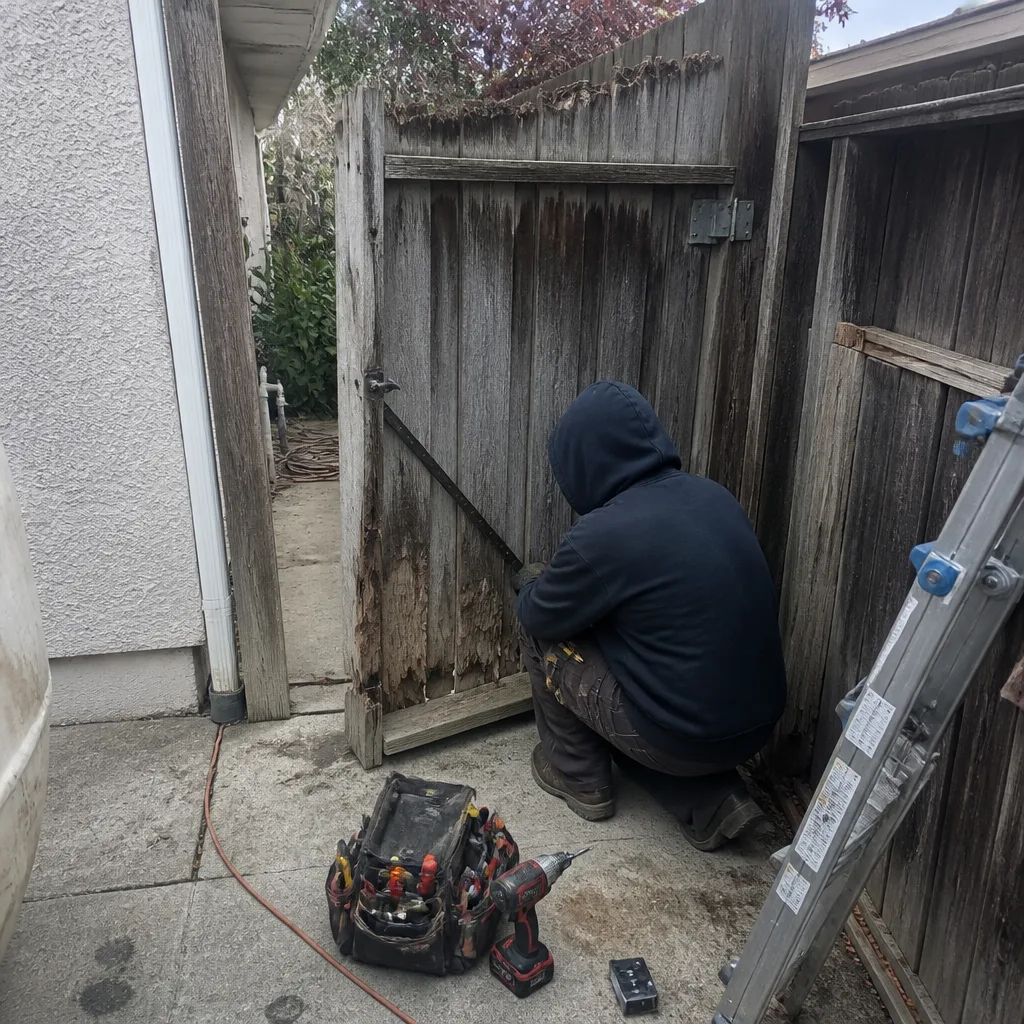 Before
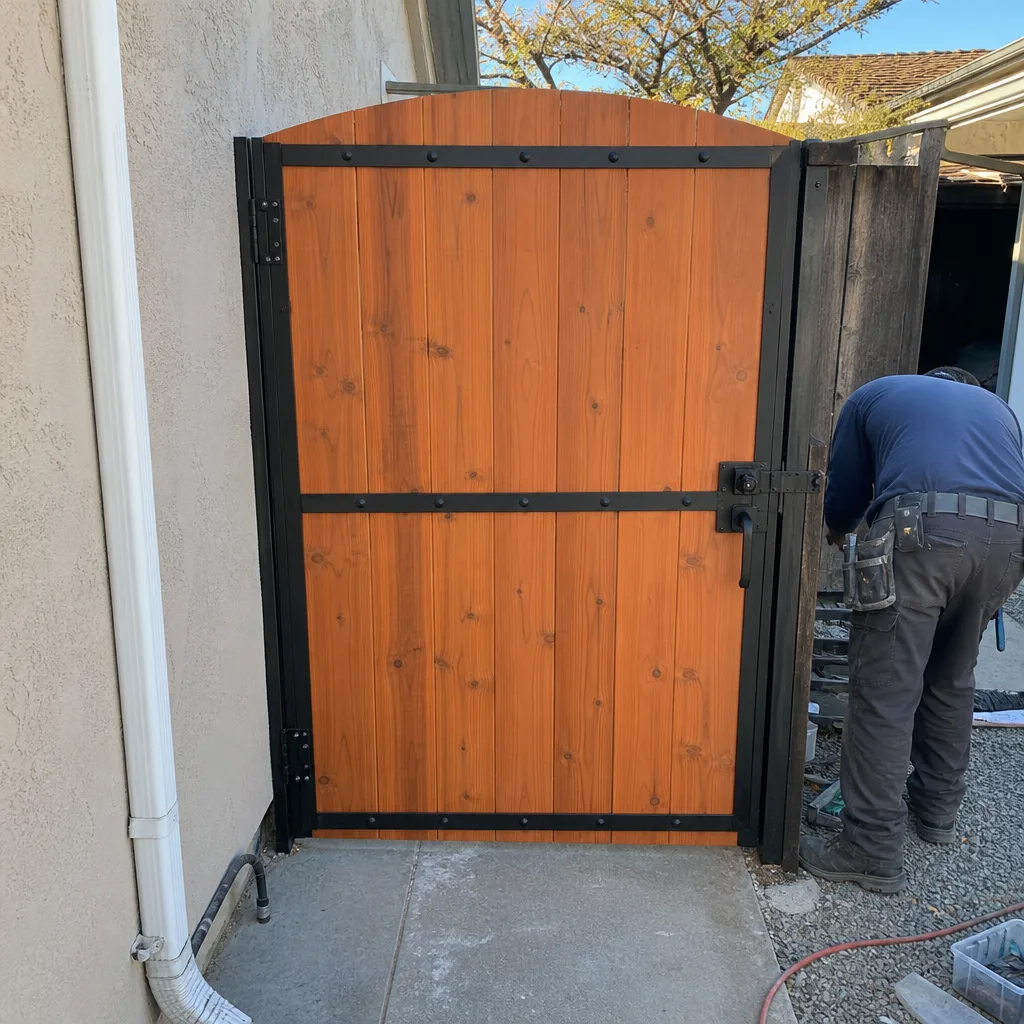 After
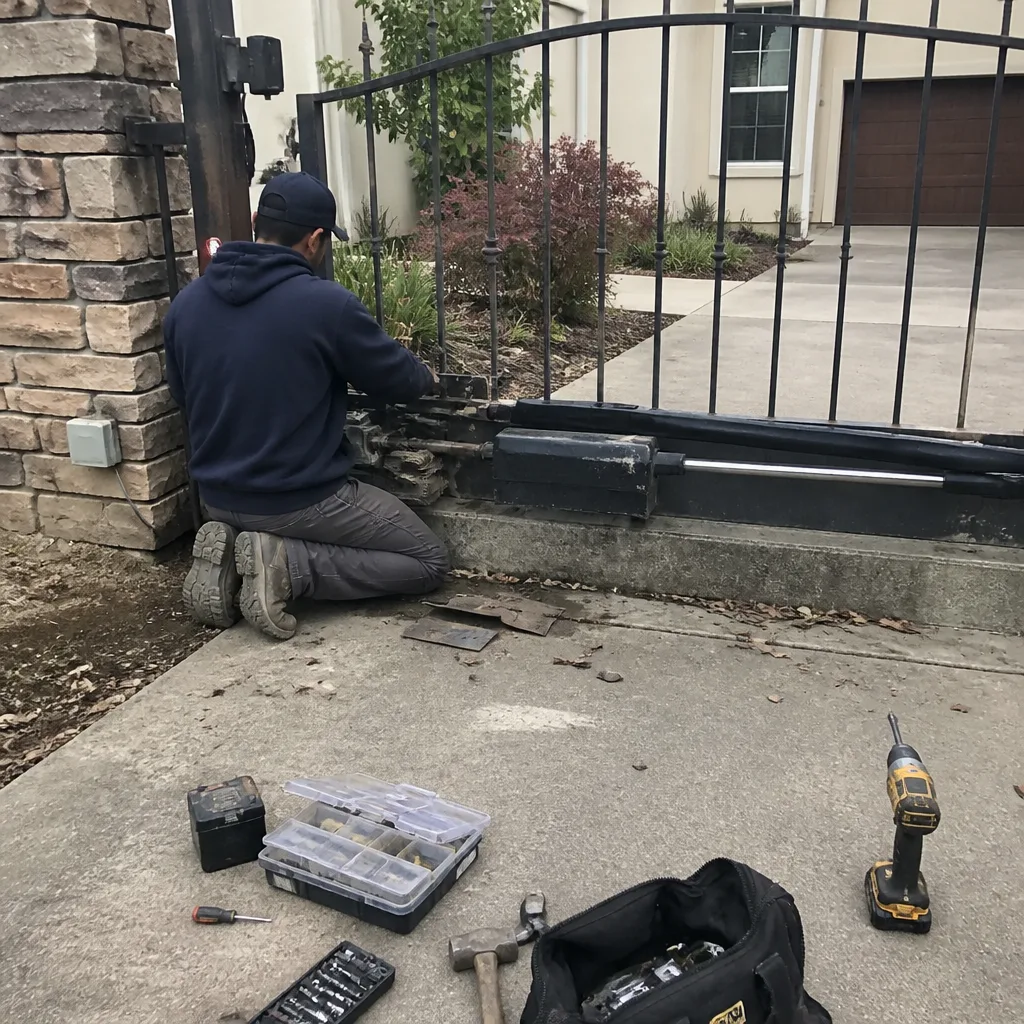 Before
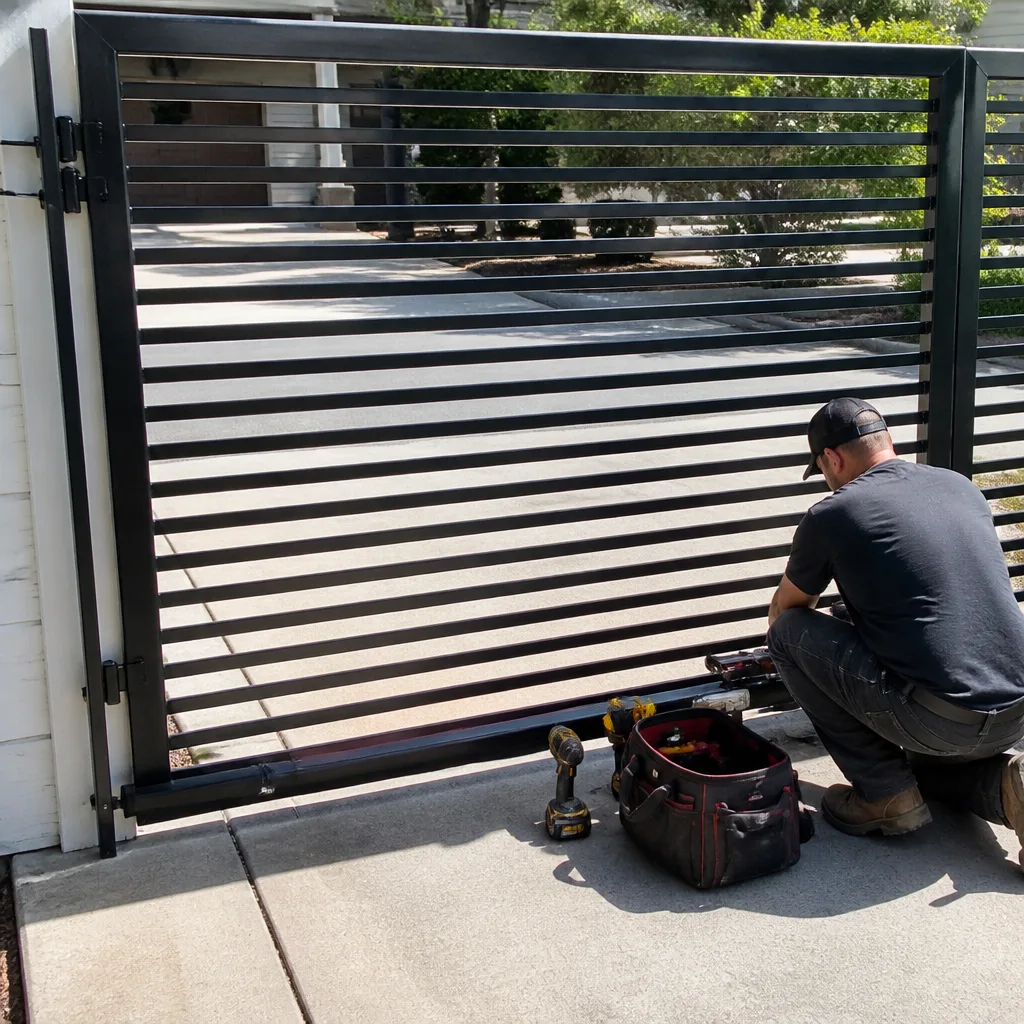 After
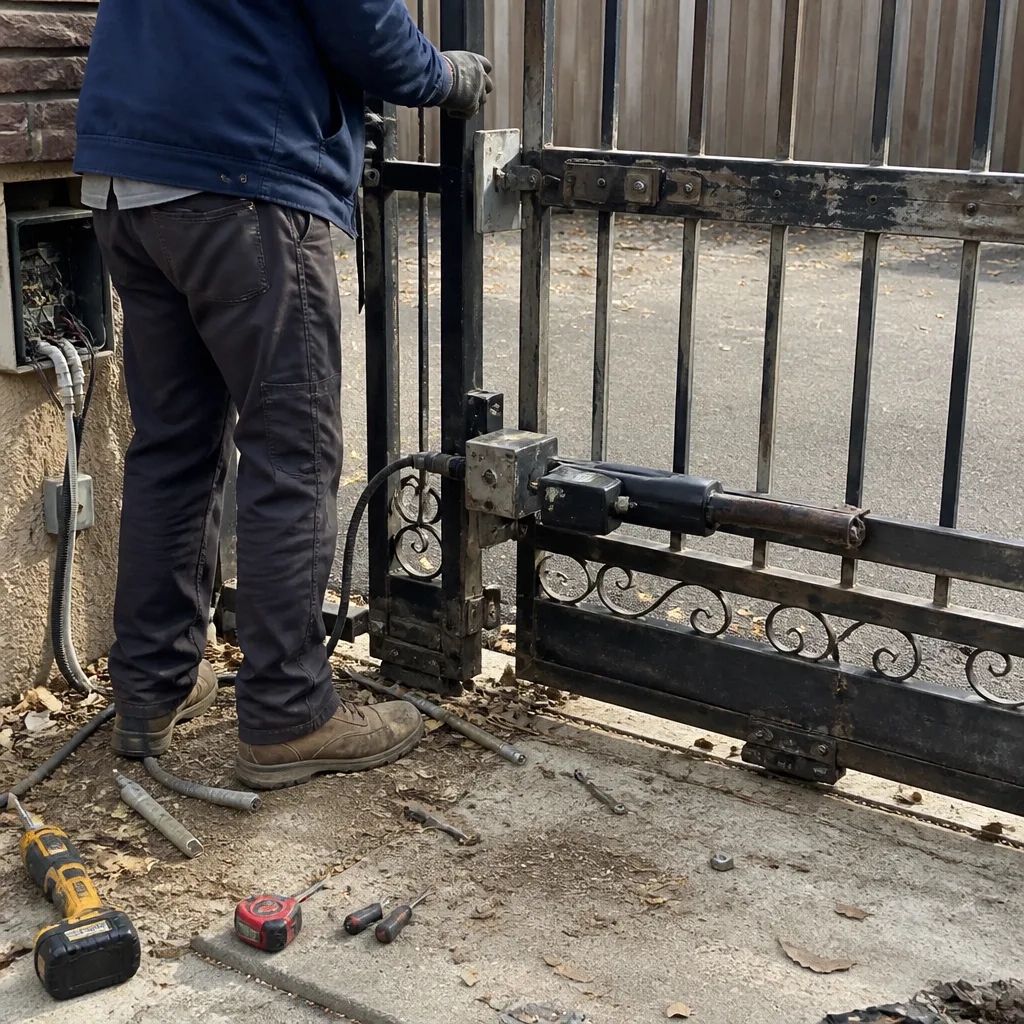 Before
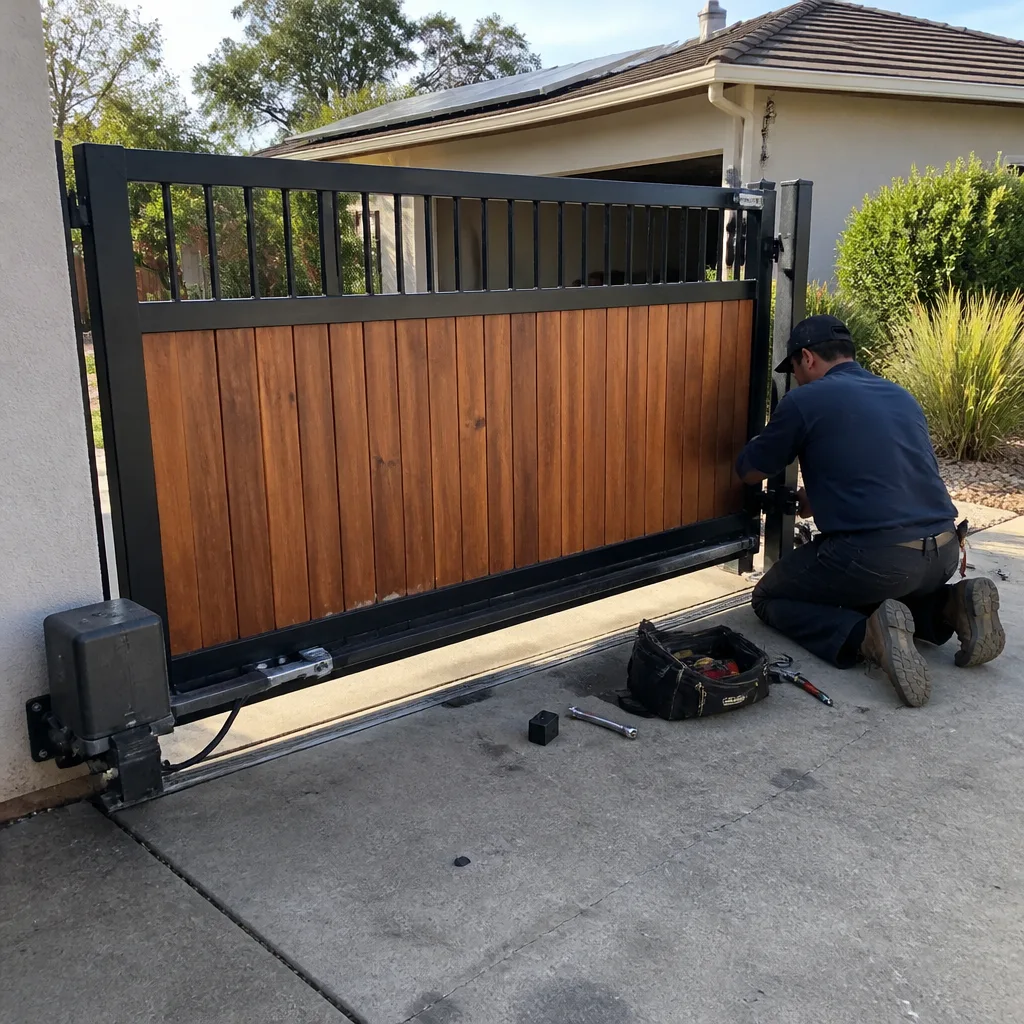 After