Last updated November 2, 2026
 Wrought iron
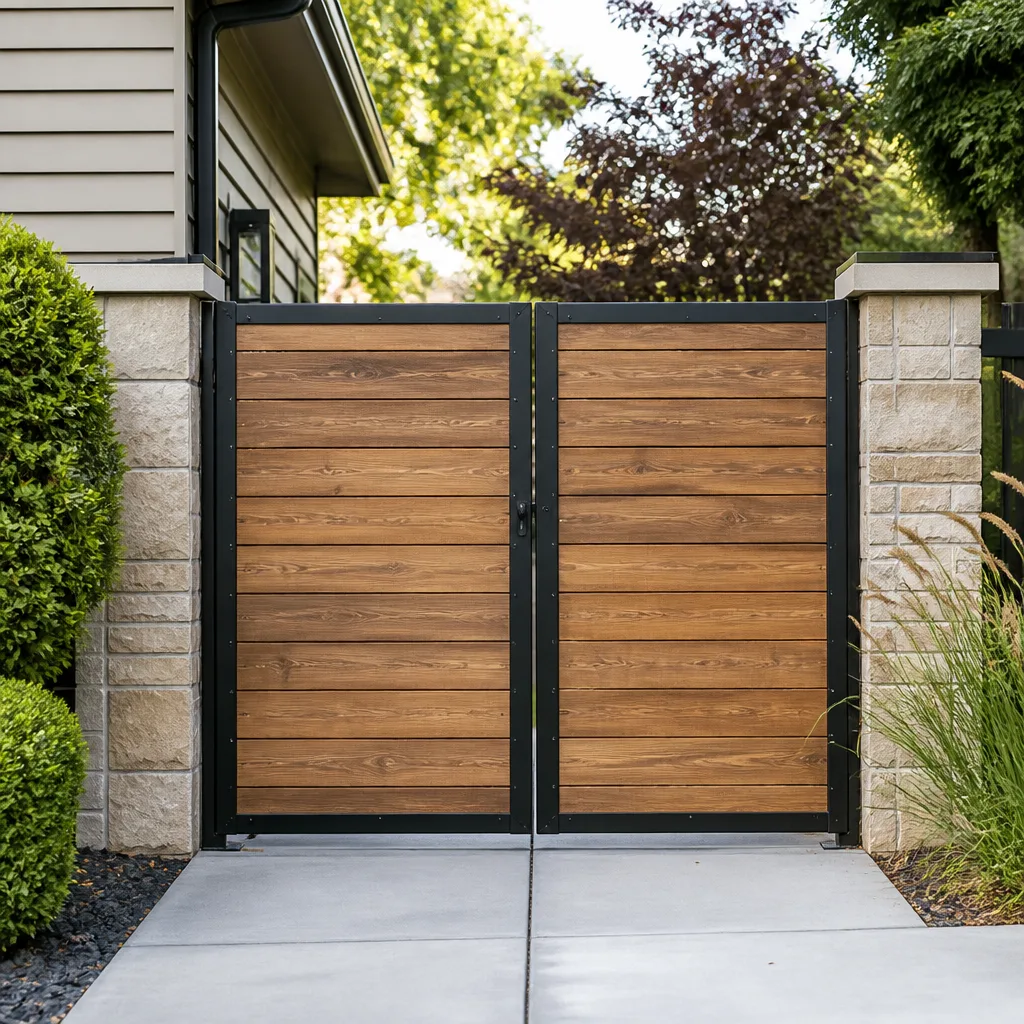 Wood & steel frame
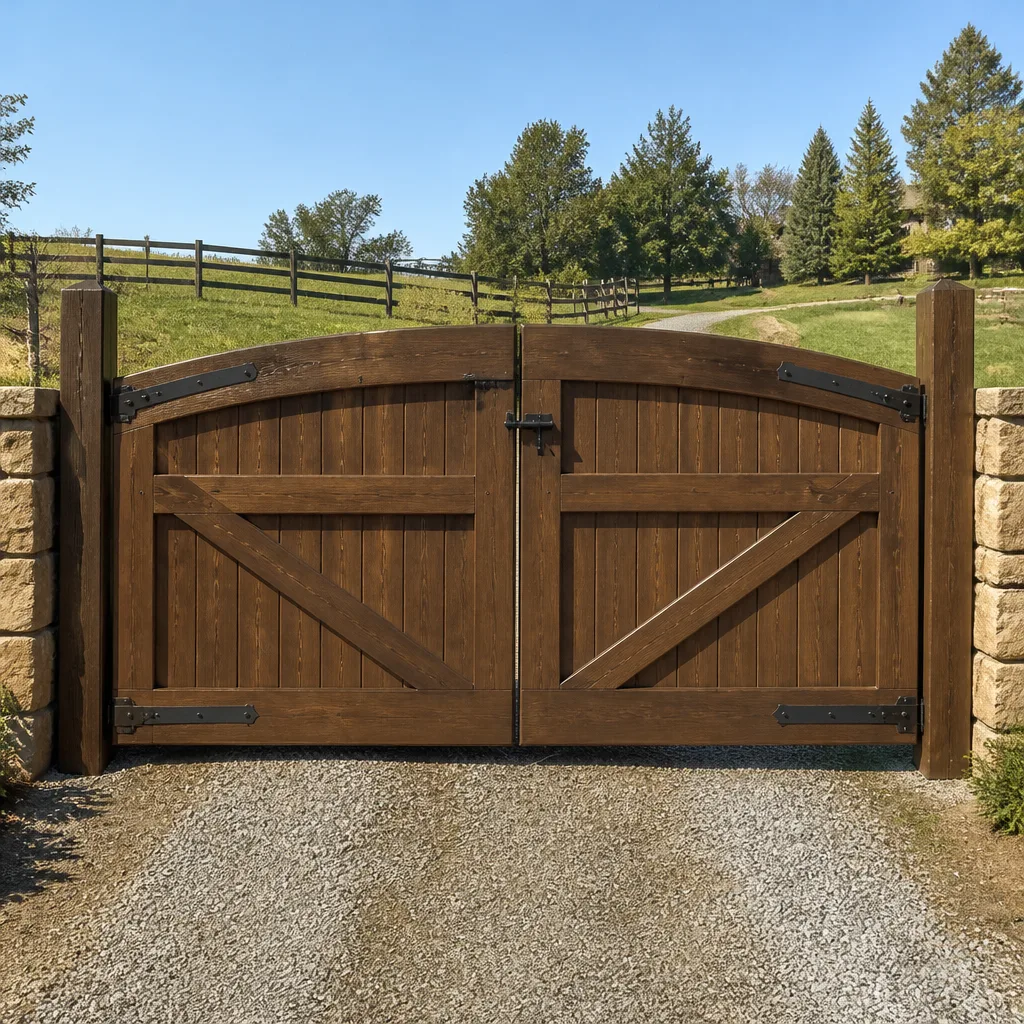 Farm & ranch
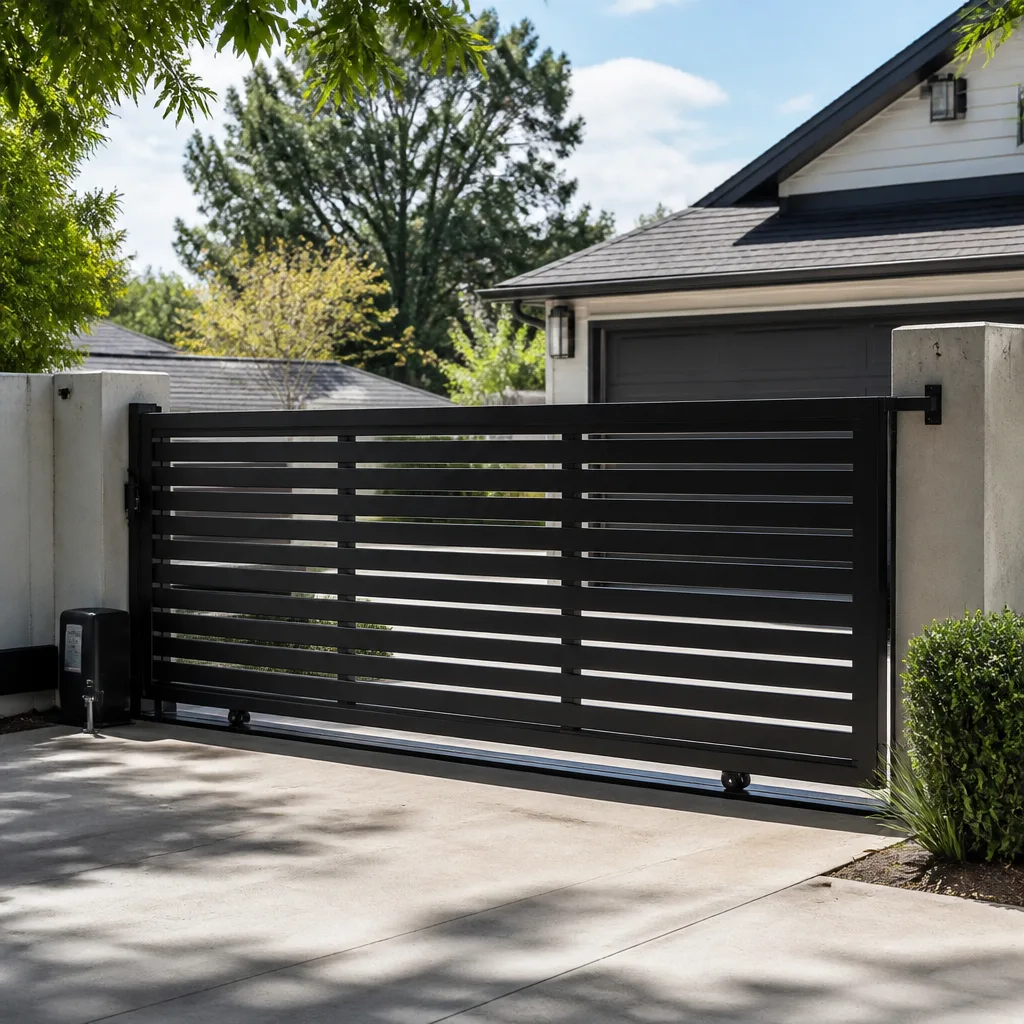 Sliding driveway gates
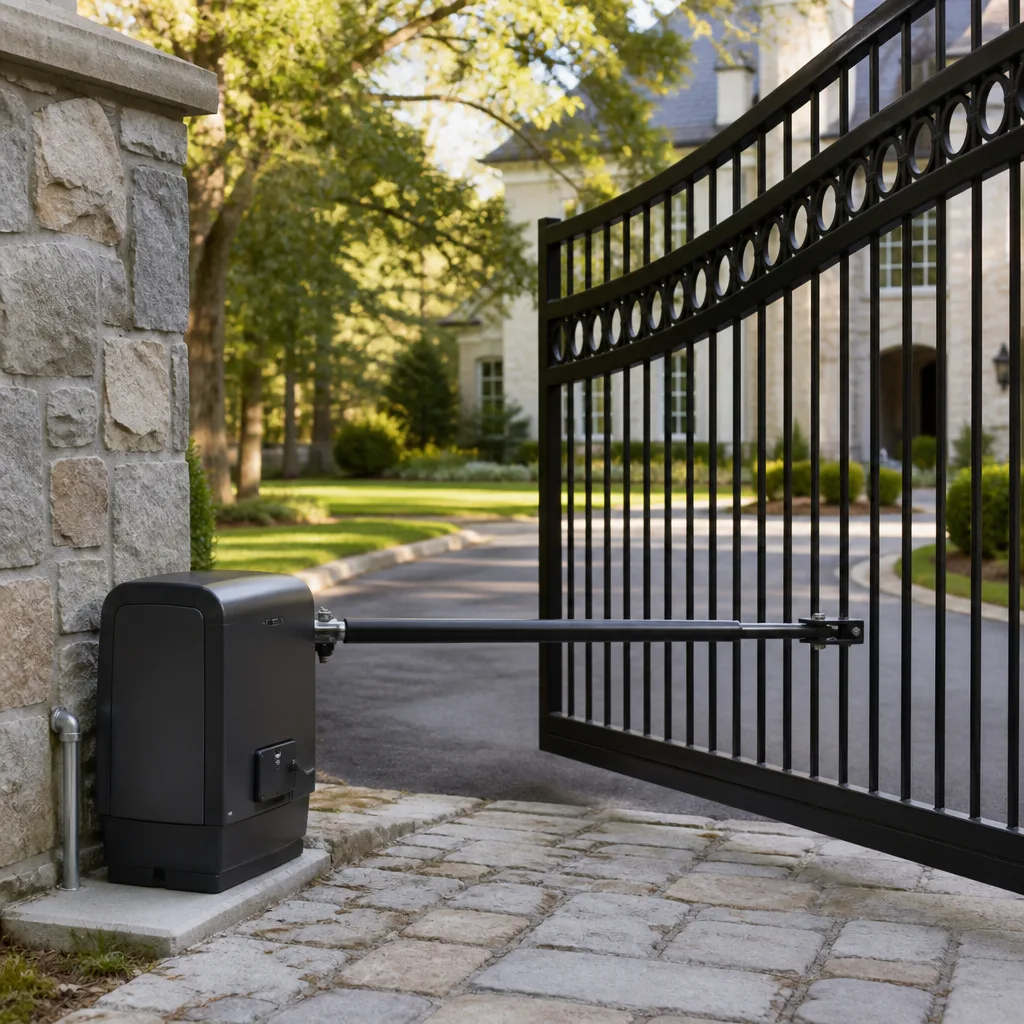 LiftMaster operators
Free on-site gate assessment - hinges, posts, and your LiftMaster or Nice gate operator checked before anything is quoted
The assessment is free and the quote is the invoice.
Get your free estimateThe Complete Gate Repair Guide for Livermore Homeowners
Livermore hits 100°F for weeks at a stretch every summer. That heat does something to gates that most national repair guides miss entirely: steel expands, swing arms drift, circuit boards overheat, and small misalignments become full-blown failures. A hinge set that worked in April can bind hard by July. This guide maps the actual failure patterns we see in the Tri-Valley, the repair decisions that save money versus the ones that waste it, and the maintenance rhythm that works for Livermore’s specific climate, not a generic quarterly checklist. You’ll learn what breaks first on each gate type, what repairs cost, what permits apply, and how to tell whether you need a technician or a full operator swap.
Quick Answer
Most gate repair in Livermore comes down to heat-related misalignment, worn hinge bearings, failed operator circuit boards, or dead safety sensors. A targeted repair typically runs $150 to $400; a full operator replacement runs $800 to $2,400 installed depending on system type and brand. The smartest first move is diagnosing the actual failure mode before replacing parts, because many gate problems in our climate share overlapping symptoms with very different fixes.
Styles & brands we work with
- Wrought iron
- Wood & steel frame
- Farm & ranch
- Sliding driveway gates
- LiftMaster operators
Table of Contents
- Why Livermore’s Climate Breaks Gates Differently Than the Bay’s
- Swing Gates: What Fails First and What It Costs to Fix
- Slide Gates: The Cantilever Wear Stage and What to Watch
- Vertical Pivot Gates: Lifted Design, Different Failure Mode
- Gate Operators: Repair the Board, Replace the Unit, or Upgrade?
- Livermore Permits for Gate Automation and Operator Replacement
- A Livermore-Specific Maintenance Calendar That Actually Works
Every section below is standalone, so you can jump to the system you have. But if you read one thing end to end, make it the climate section: it explains why most generic advice falls short here, and it reframes every repair decision that follows.
Why Livermore’s Climate Breaks Gates Differently Than the Bay’s
Coastal Bay Area gate advice assumes a narrow temperature band, fog, and high humidity. Livermore is a different animal. We get sustained triple-digit heat in summer, overnight lows that swing 30 degrees or more, hard water from the Hetch Hetchy system, and soil that shifts through dry-wet cycles on hillside lots. Each of those factors attacks a specific part of your gate.
Thermal expansion is the big one. A 16-foot steel swing gate exposed to direct afternoon sun can grow by an eighth of an inch across its width. That sounds trivial until you realize the latch post and the catch have maybe a quarter-inch of tolerance to begin with. Any gate that wasn’t set with summer heat in mind will bind in July and August, even if it swung freely in March. The fix is usually latch adjustment or hinge shimming, not a new gate. But if you keep forcing a binding gate open with the operator, you burn out the motor, the gear train, or both. That turns a $180 adjustment into a $1,200 operator replacement.
Hard water matters too. Mineral buildup from irrigation overspray and our water chemistry accelerates corrosion on hinge pins, wheel bearings, and limit switch contacts. Gates near lawns or drip lines see this first. The preventative answer is different lubrication and a seal check, not just a shot of WD-40 twice a year.
Hillside soil is the third Livermore variable. Clay-heavy lots expand in winter and contract in summer. Gate posts set in clay can move enough over three or four seasons to make a previously square gate hang crooked. When we see a gate that drags at one corner but the hinges look fine, the post footing is usually the culprit, not the gate leaf.
The takeaway: Gate Repair Livermore technicians diagnose for heat, water chemistry, and soil movement before replacing parts, because a part swap without fixing the underlying condition is a repair you’ll pay for twice.
What the Heat Does to Circuit Boards
Operator control boards don’t like sustained temperatures above 110°F. Direct sun on a metal control box can push internal temperatures well past that. The failure pattern is specific: the gate works in the morning, dies mid-afternoon, and works again after sunset. If you’ve seen that cycle, the board is overheating, not the motor or the gearbox, and you have a few options before replacement.
Shading the control box extends board life significantly. So does checking that the enclosure’s ventilation isn’t blocked by dust or spider webs (both common in Livermore’s dry season). When a board does fail, we replace it with a brand-matched board rather than a generic aftermarket unit whenever possible. That matters because limit settings and safety sensor timing are calibrated to the manufacturer’s firmware. A mismatched board on a sliding gate can run the gate too fast into its stop, and that cascades into bent rollers and cracked wheels.
Swing Gates: What Fails First and What It Costs to Fix
Swing gates are the most common residential style in Livermore and also the most sensitive to post movement and hinge wear. Here’s the failure sequence we consistently see.
The hinge bearings go first. A heavy gate leaf supported by two or three hinges puts constant load on the bottom hinge. Once that bearing starts to wear, the gate sags. People notice it as a gate that scrapes the ground at the outer edge or won’t latch cleanly. Replacing the worn bearing set and realigning the leaf typically runs $120 to $260 per leaf in our market. Caught early, the operator and the gate itself are untouched. Caught late, the sagging leaf has already bent the latch hardware and stressed the operator arm.
Operator arms fail second. Once the gate is sagging, the operator arm fights extra friction every cycle. The arm itself bends or the internal drive screw strips. You’ll hear a grinding or ratcheting sound when the gate moves. Arm replacement or rebuild runs $180 to $350 depending on whether we can salvage the operator body. If the gate has been run this way for months, the operator motor often follows within a season.
Swing Gate Repair Cost Reference:
- Hinge bearing or bushing replacement (per leaf): $120 – $260
- Latch or catch realignment: $90 – $180
- Operator arm replacement or rebuild: $180 – $350
- Post reset (single post, concrete footing): $250 – $500
- Full operator replacement (single leaf): $800 – $1,800 installed
There’s an important diagnostic distinction: a swing gate that binds in heat but swings fine in the morning is usually a thermal expansion or post-shift issue. A gate that grinds constantly regardless of temperature is mechanical wear. The fix paths are completely different, and misdiagnosing one as the other is the most common customer frustration we see.
Brand Notes on Swing Operators
Homeowners who self-installed a Mighty Mule or Ghost Controls opener often call us when the unit’s built-in diagnostics point to a motor fault. In many of those cases, the motor is fine; the gate drifted out of travel limit and the opener has been ramming against its stop. We recalibrate the limits and the system returns to normal. On the professional-installation side, LiftMaster and FAAC swing operators are what we see most on estate lots and gated communities. Those tend to fail through controller board degradation rather than mechanical wear, and the fix is board-level rather than mechanical.
Slide Gates: The Cantilever Wear Stage and What to Watch
Slide gates run on wheels along a track or on a cantilever system that hangs the leaf with rollers. They’re popular on wider driveways and commercial properties. They also have a failure pattern that’s distinct from swing gates.
The first thing to go is the wheel or roller set. A gate rolling over a ground track collects grit, dirt, and irrigation overspray. That grit grinds wheel bearings and flat-spots the wheels over time. You’ll hear a rumble or a scraping sound when the gate moves, and it won’t close all the way because of the added rolling resistance. Wheel replacement runs $180 to $400 depending on gate weight and wheel type.
The second failure point is the track itself. If the track is misaligned, bent, or clogged with debris, the gate fights every cycle. On cantilever systems there’s no ground track, but the support rollers inside the gate frame wear instead. Those rollers are harder to inspect and harder to replace, which makes regular lubrication and adjustment the cheap insurance policy.
Slide Gate Repair Cost Reference:
- Wheel or roller replacement (set): $180 – $400
- Track realignment or repair: $150 – $350
- Limit switch replacement: $90 – $180
- Cantilever roller replacement: $200 – $500
- Full operator replacement: $1,000 – $2,400 installed
One thing we see a lot in Livermore’s dry months: slide gates that suddenly stop midway. The cause is usually not the operator at all. Dust and construction debris accumulate in the track until the rolling resistance exceeds the operator’s torque limit, and the safety system trips. A simple track cleaning and wheel inspection solves it, but the same symptom could indicate a dying capacitor on the operator. That’s why the first diagnostic step is always mechanical before electrical.
Vertical Pivot Gates: Lifted Design, Different Failure Mode
Vertical pivot gates lift up and over rather than swinging or sliding. They’re the right answer for driveways with limited side clearance or steep slopes where a swing leaf would hit the ground. They’re also less common, which means fewer general contractors know how to work on them.
The dominant failure mode is in the lifting mechanism. The counterbalance spring, the lift arm, or the pivot bearing takes the full gate weight with every cycle. That’s a much higher load concentration than a swing gate spreads across multiple hinges. When a vertical gate starts to drift downward, drop unexpectedly, or lift unevenly, the counterbalance is losing tension and that’s an immediate safety concern. A vertical pivot gate that drops unexpectedly can injure people and damage vehicles.
We treat vertical pivot gate repairs as safety-critical work. That means immediate attention when a gate shows drop or drift symptoms, before it fails further. Repair costs for these systems trend higher than swing or slide repairs because the parts are more specialized and the diagnostics are more involved. Typical vertical pivot lift mechanism repairs run $350 to $900. If the entire gate needs replacing, that’s a gate installation project rather than a repair.
Gate Operators: Repair the Board, Replace the Unit, or Upgrade?
The operator is the motorized brain and muscle of an automatic gate. When it dies, you have three paths: board-level repair, full operator replacement, or upgrade to a better system. Here’s how to think about the decision.
Board-level repair makes sense when the motor and gear train are physically fine and the failure is electronic. Signs of a board failure are a gate that doesn’t respond to remotes or keypads, a gate that opens but won’t close, or intermittent operation tied to temperature. Board repair or replacement typically runs $150 to $450 depending on brand. For FAAC and BFT systems, board replacement is usually straightforward and keeps a solid mechanical unit in service.
Full operator replacement makes sense when the gear train, motor, or transformer has failed, or the operator is more than 15 years old and parts are discontinued. In that case, repairing one component often just shifts the failure to the next one. New operator prices vary widely by brand and duty rating. A residential swing or slide operator runs $800 to $1,800 installed. A commercial-grade system for a heavy gate or high-traffic application runs $1,800 to $3,500 installed.
Upgrade makes sense when the existing system no longer meets your needs. Maybe you have a manual gate and want automation. Maybe you have an old keypad and want a smartphone-based access system. Maybe your gate has gotten heavier with a new facing and the old operator is undersized. This is where our brand-agnostic approach matters: we’re not limited to a single manufacturer’s ecosystem, and we spec the operator to the gate’s actual weight, cycle duty, and Livermore’s heat profile rather than defaulting to whatever’s in stock.
Cost Threshold Guide
- Under $200: typically a limit switch, remote programming, sensor alignment, or track cleaning.
- $200 to $500: board replacement, hinge rebuild, wheel set, operator arm, or latch system.
- $500 to $1,000: post reset, vertical pivot mechanism, or a partial operator system repair.
- Over $1,000: full operator replacement or new gate installation.
We quote every repair price before work begins. That’s a shop rule, not a courtesy: you’ll know the exact figure for any electric gate repair before we touch a screwdriver.
Livermore Permits for Gate Automation and Operator Replacement
Adding an automatic operator to an existing manual gate in Livermore triggers a permit requirement in most cases. Replacing an existing operator with a like-for-like unit usually does not require a permit, but upgrading to a different system or adding new safety devices can. Here’s the working breakdown.
What typically requires a permit:
- Adding automation to a previously manual gate.
- Installing a new gate or replacing gate posts in a footing.
- Electrical work that adds a new circuit or modifies an existing one.
- Any gate serving a vehicular entrance where safety loops are being added or modified.
What typically does not require a permit:
- Replacing a failed operator with a compatible unit of the same type.
- Board, sensor, remote, or hinge replacement.
- Track realignment or wheel replacement.
The permitting agency is the City of Livermore Building Safety Division. Processing times and fees change, so we confirm current requirements before any new installation or automation project begins. For a gate that’s existing and being repaired, we don’t pull permits for component-level work. For a new automated gate on a driveway, we do. Getting this wrong means a stop-work order and a failed inspection, and that’s avoidable with a phone call before the project starts.
A Livermore-Specific Maintenance Calendar That Actually Works
Generic gate maintenance checklists say things like “lubricate hinges quarterly” and “check the sensor monthly.” That’s fine advice for Monterey, but Livermore’s heat cycle means the work should be timed to the seasons, not the calendar.
March to April: Pre-Heat Inspection
- Check hinge and wheel play with the gate unloaded. Any movement beyond 1/8 inch means service is due before summer.
- Clear track grooves and drain holes. Winter debris and silt accumulate during rains.
- Test operator limits and safety sensor response. A gate that reverses or stops properly in mild weather may lag in heat.
- Lubricate moving parts with a dry or ceramic lubricant, not wet grease that holds dust and grit through summer.
June to August: Heat-Demand Monitoring
- Watch for binding or slowing during afternoon heat. Note the time of day any issue appears; that’s diagnostic information.
- Check the control board enclosure temperature with a bare hand. If it’s too hot to hold, shade the box or add ventilation.
- Listen for new grinding or ratcheting sounds. Heat stress accelerates failure of already-worn parts.
October to November: Post-Summer Inspection
- Inspect all weld points and fasteners for cracks or loosening from thermal cycling.
- Check post plumb and gate alignment after a summer of expansion and contraction.
- Test the gate’s manual release mechanism. If the power fails, you need to know the gate opens by hand.
In our experience, the homeowner who does these three seasonal passes catches most repairs at a $150 hinge level instead of a $1,200 operator level. The calendar is built around how Livermore actually behaves, not how a generic maintenance guide thinks it should.
Common Mistakes to Avoid
- Forcing a binding gate open. A gate that resists manual operation is telling you something. Forcing it through the operator burns out motors and strips gears. Diagnose the bind first.
- Spraying wet lubricant everywhere in summer. Wet grease and oil collect dust and grit. In Livermore’s dry months, that turns into a grinding paste that accelerates wear. Use dry lubricants on open joints.
- Replacing the operator when the gate is out of alignment. A misaligned gate puts load on a new operator from day one. Fix the mechanical issue before you touch the electrical one, or you’ll replace the operator twice.
- Ignoring a drifting vertical pivot gate. A vertical gate that drops or drifts is a safety hazard. Improperly adjusted, these gates can fall unexpectedly. Treat them as urgent.
- Skipping the permit on a manual-to-automated conversion. Adding automation without a permit in Livermore can halt a project and trigger code enforcement. Confirming requirements upfront is faster than fixing compliance after the fact.
- Mismatching an operator to the gate’s weight. Undersized operators on heavy estate gates fail early, especially in heat. Spec the unit to the actual gate, not to the cheapest available model.
See the difference
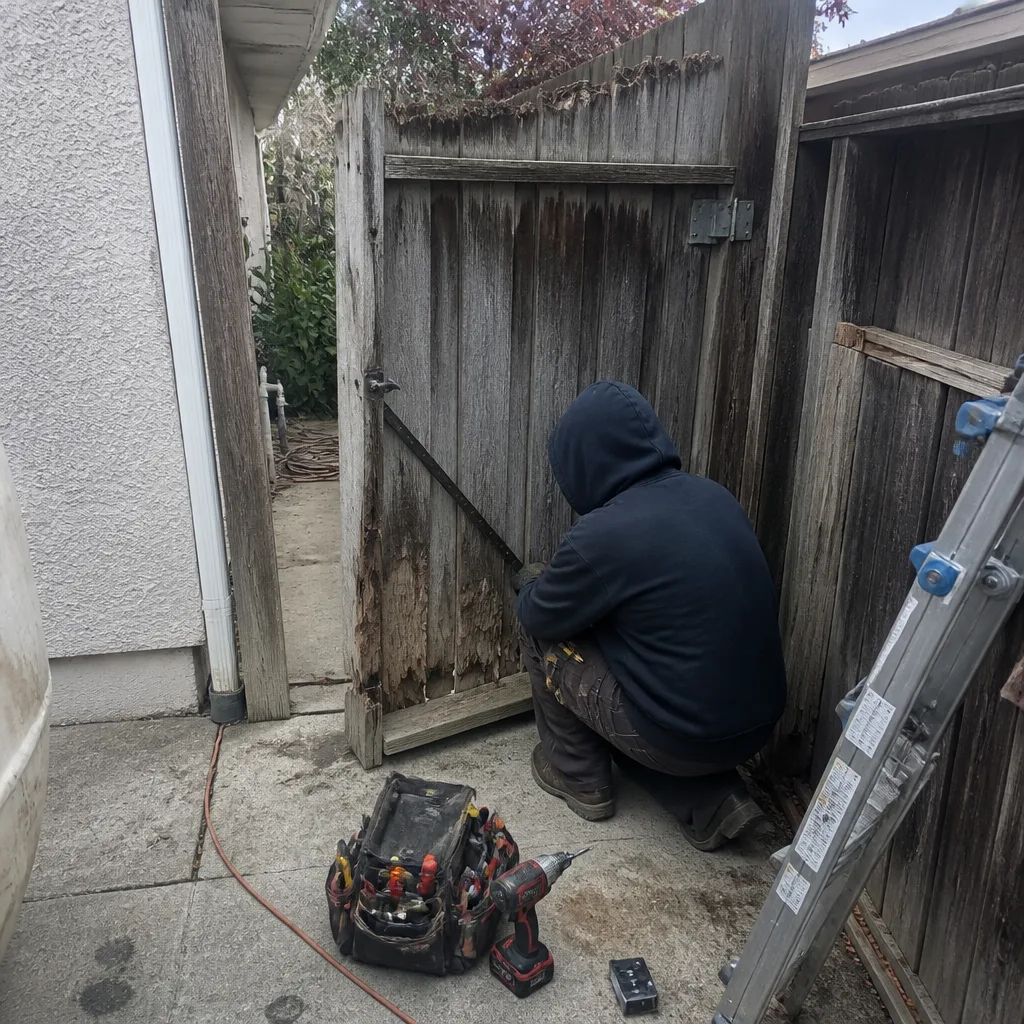 Before
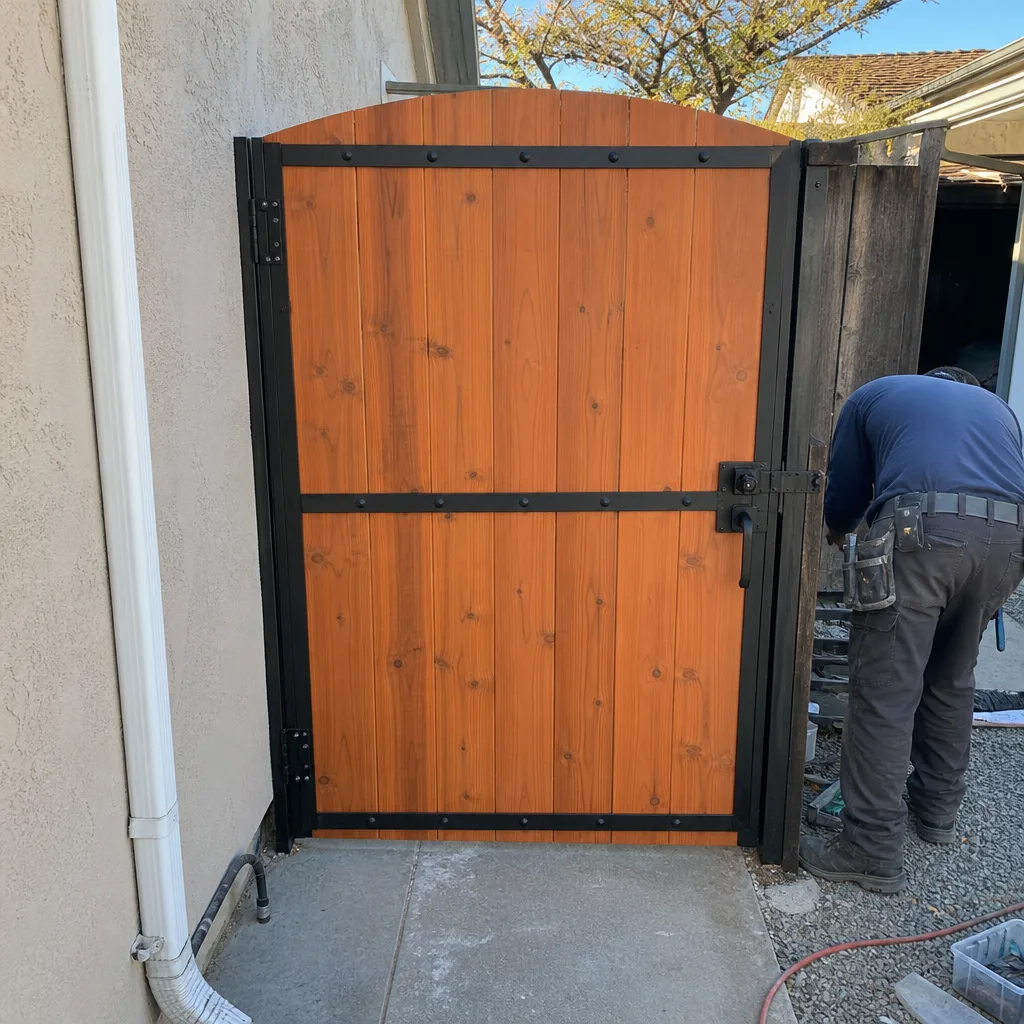 After
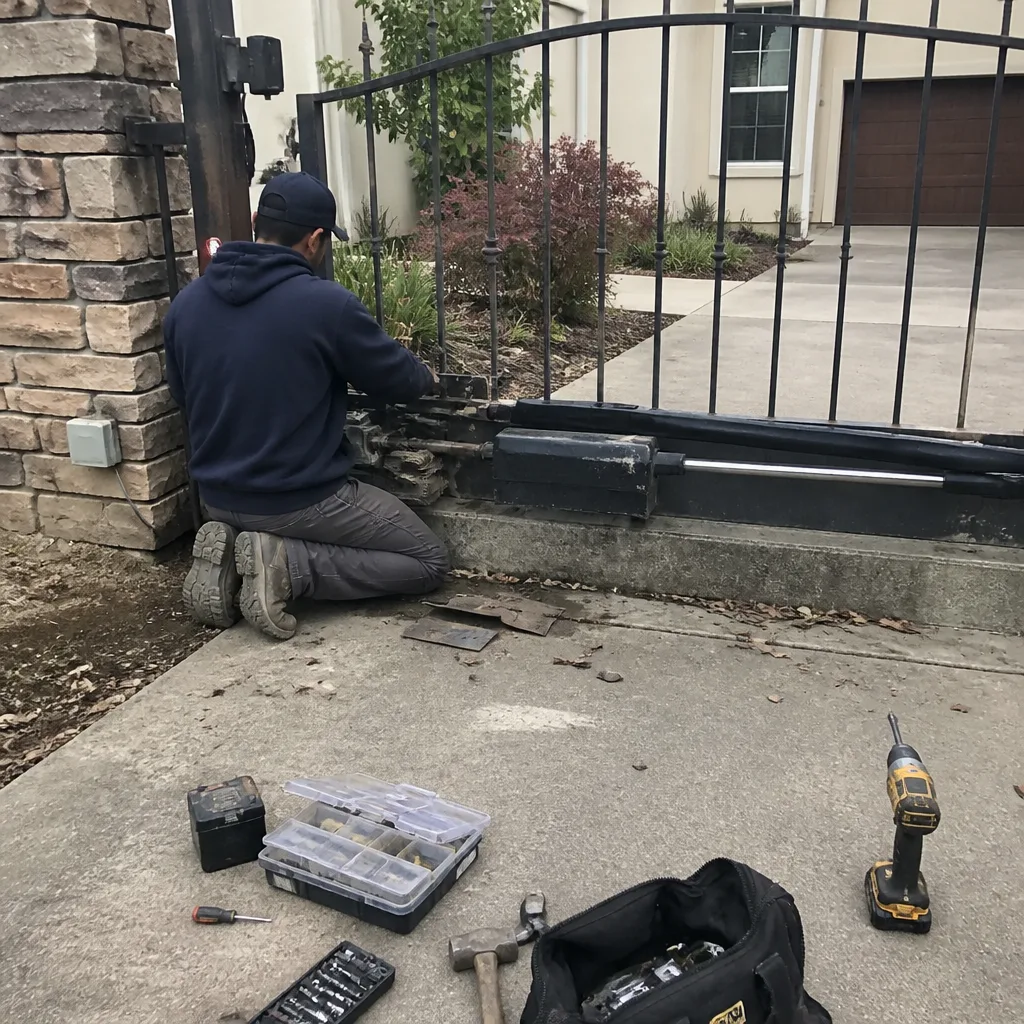 Before
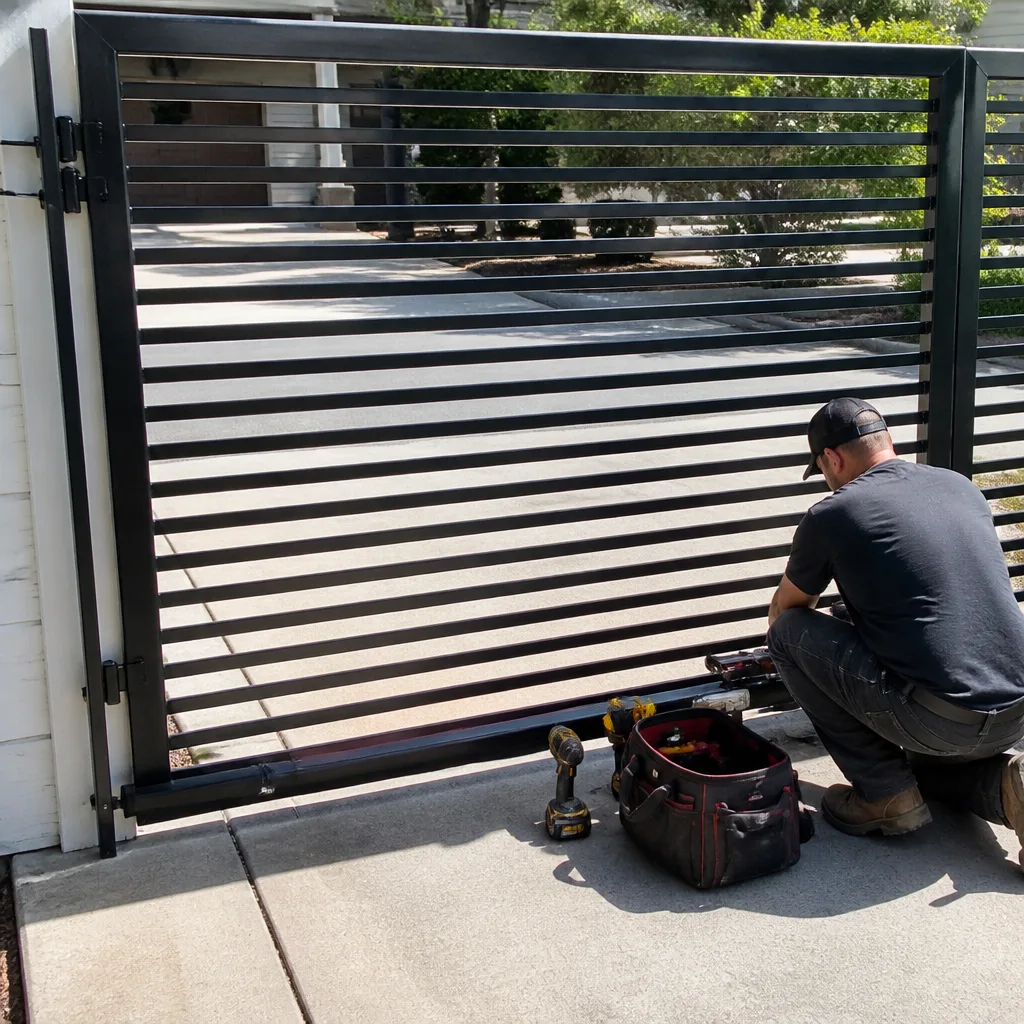 After
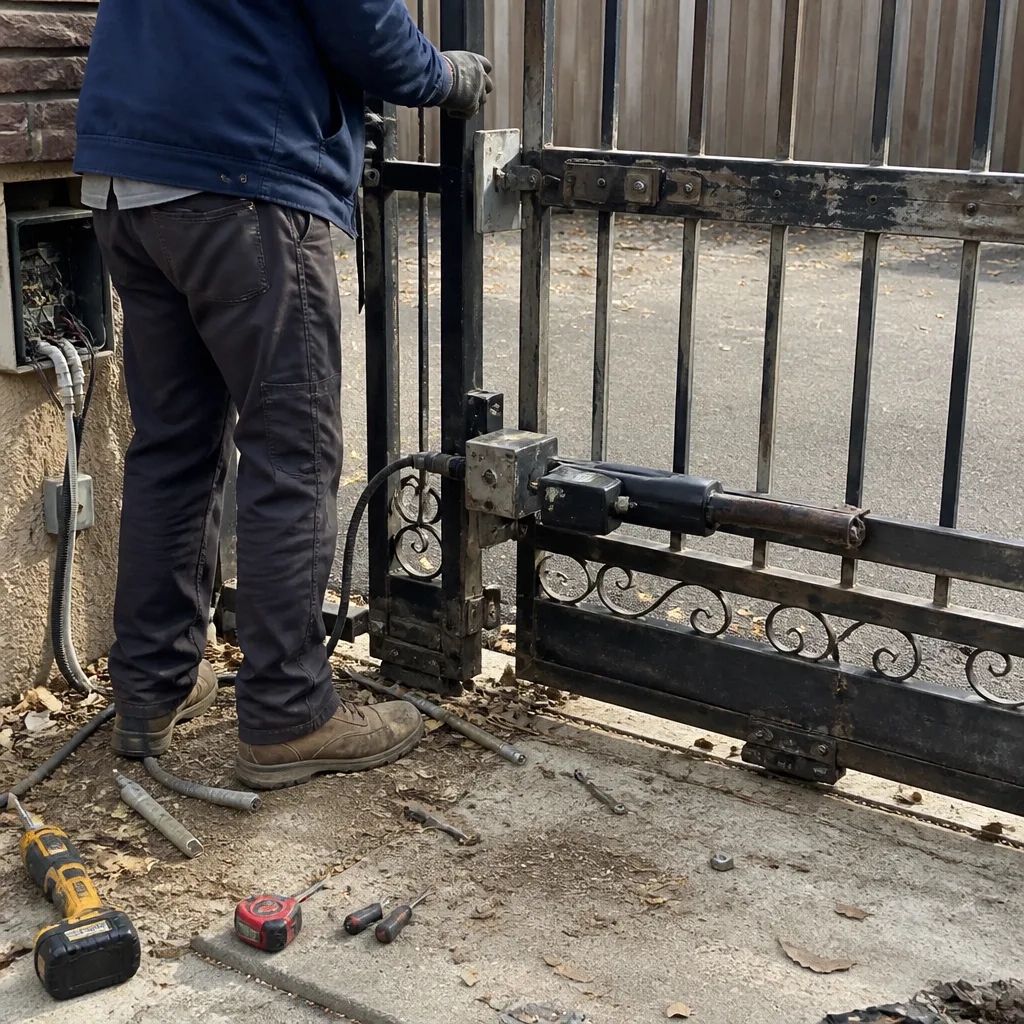 Before
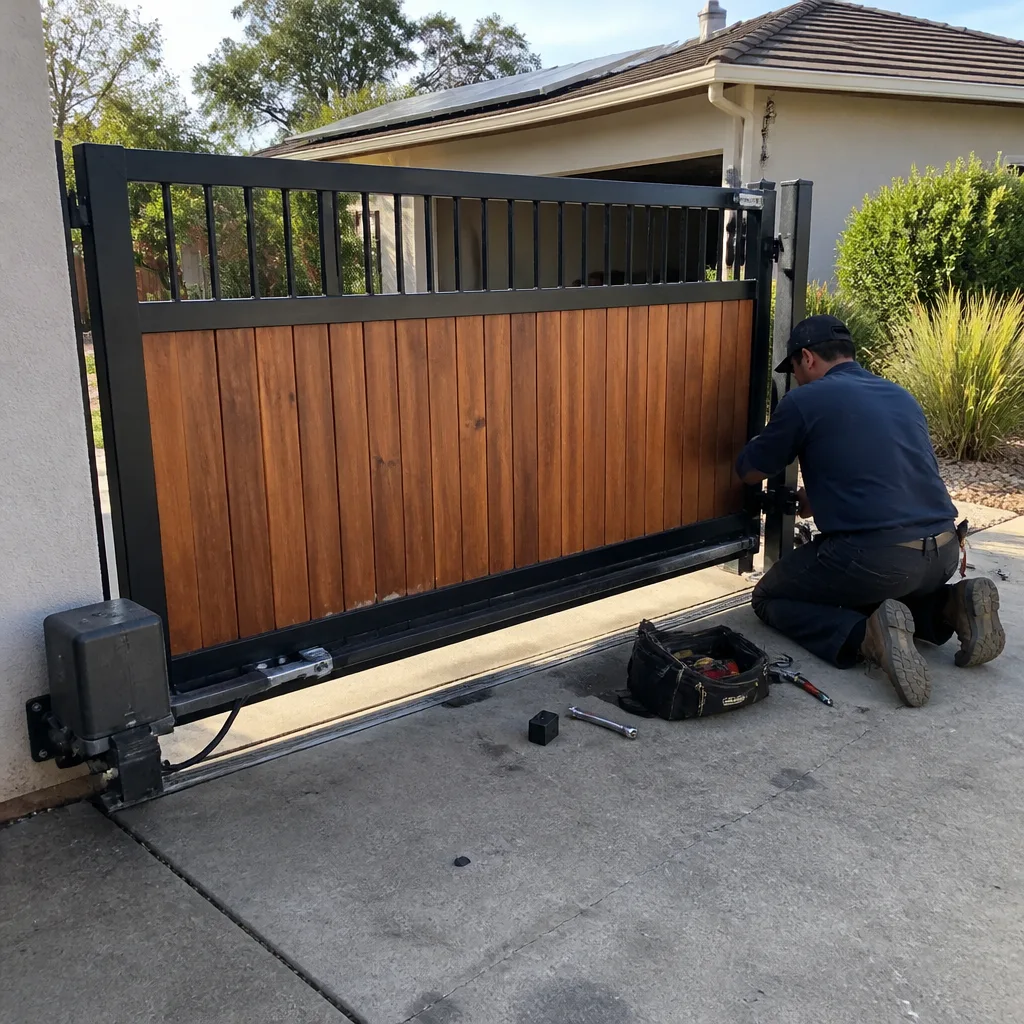 After
When to Call a Professional
You need a gate specialist when the gate binds without an obvious obstruction, when you hear grinding or ratcheting that persists, when the operator works intermittently in heat, or when a vertical pivot gate drifts or drops. Safety sensors that malfunction, remotes that won’t program, and new automation projects are all professional-grade work. Gate Repair Livermore offers free estimates in Livermore. Call (877) 752-3814 before a small problem becomes a full operator replacement.
Frequently Asked Questions
Minor gate repairs in Livermore like limit switch replacement or latch realignment typically run $90 to $200, while mid-range repairs like hinge rebuilds or board replacement run $150 to $500. Full operator replacements run $800 to $2,400 installed depending on the system. Every price is quoted and agreed before any work starts, so you’ll know the exact figure upfront.
Most repairs can be scheduled within 24 to 48 hours, but urgent situations like a gate stuck open are a different schedule. Call (877) 752-3814 to check current availability and describe the problem, and we’ll tell you honestly whether it’s a same-day fix.
We do. Those brands are common on self-installed residential gates, and we repair them regularly. Many Mighty Mule and Ghost Controls failures are travel limit or sensor issues rather than motor failures, and we fix those systems rather than pushing a replacement you don’t need.
We work on the brand you already have. Our team carries working knowledge of LiftMaster, FAAC, BFT, Linear, Viking, Ghost Controls, DoorKing, Elite, and Mighty Mule. That means we diagnose the actual problem rather than defaulting to a single manufacturer’s solution.
Yes. Adding automation to a manual gate is a full project that includes the operator, the power supply, the safety edges or photo sensors, and the control system integration. This is electric gate repair and installation work that’s a specialty, not an afterthought.
A complete gate installation in Livermore includes the gate leaf or slide frame, hinges or rollers, posts and footings, the operator system, safety sensors, and programming. We handle everything from initial measure to final inspection. The price is quoted before work starts, and you’ll have a written scope before any materials are ordered.
The Bottom Line
Most gate failures in Livermore aren’t mysterious. They’re the predictable result of heat expansion, hard water corrosion, hillside soil movement, and wear patterns specific to each gate type. Gate Repair in Livermore done right starts with identifying the actual failure before spending on parts. A $150 hinge rebuild caught early beats a $1,200 operator replacement caught late. And in a climate this hard on mechanical systems, the maintenance schedule that works is the one built for Livermore’s actual seasons, not a generic list. If your gate is binding, grinding, or dying in the afternoon, get a free estimate and a straight diagnosis first. Call (877) 752-3814.
Written by the team at Gate Repair Livermore.